1971 Stanford Prison Experiment Participant Calls Netflix Show a ‘Bad Idea’ - Newsweek
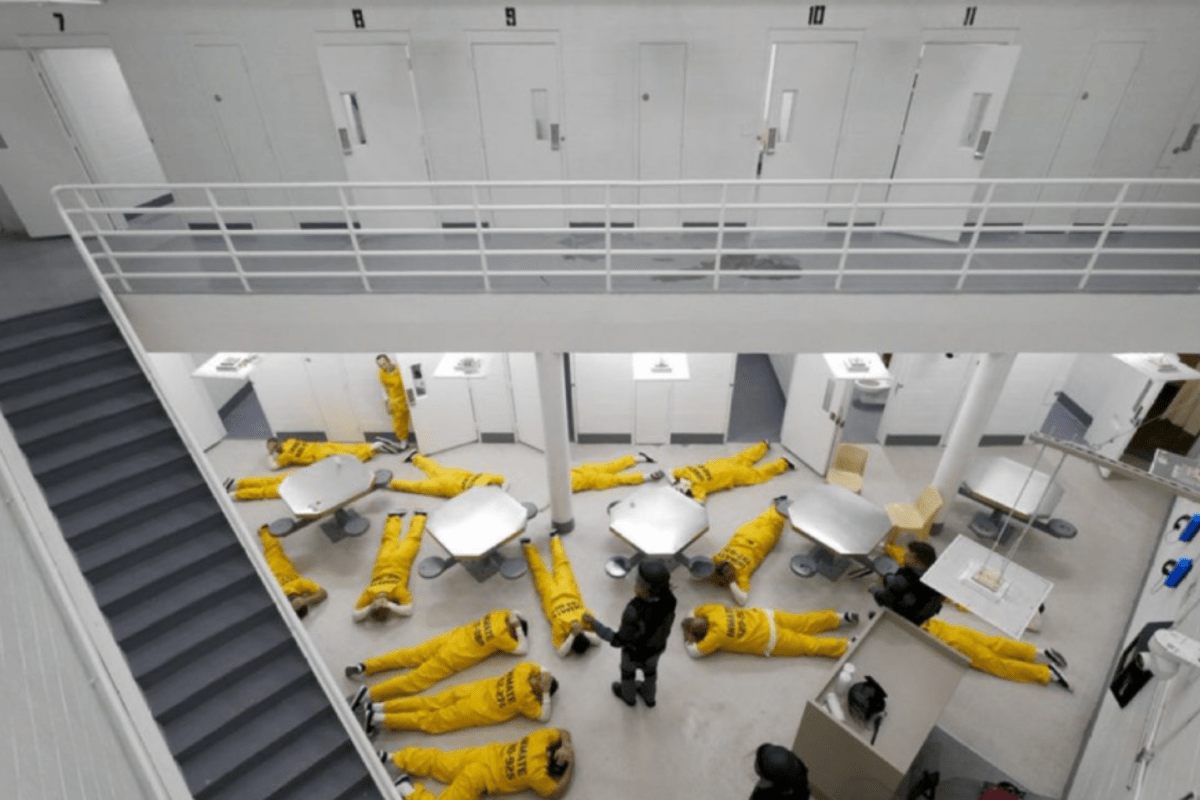
Netflix's upcoming reality series based on the Stanford Prison Experiment has drawn criticism from a participant in the original 1971 study, who told Newsweek he fears it could blur the line between entertainment and science.
Clay Ramsay was Prisoner 416 in the original experiment in which volunteers were randomly assigned to play guards and prisoners in a mock prison. Participants quickly fell into abusive and distressed behaviors, with Ramsay holding a hunger strike. The study's findings have since been heavily challenged on scientific and ethical grounds.
Now Netflix's The New Stanford Prison Experiment is set to debut on October 21 and consist of six 45-minute reality TV episodes based on the infamous experiment. “Thirty willing participants enter a real prison and are randomly assigned as guards or prisoners," the official synopsis of the series read.
Asked what he thought of Netflix's upcoming series, he told Newsweek: "Bad idea."
He was equally critical of the original experiment. "The whole thing, top to bottom, side to side, it was always stupid," he said.
Ramsay said his concerns centered on how the series would be presented to viewers. "I hope that it is just presented as a reality TV show, so having about as much relationship to science as a [Real] Housewifes show," Ramsay said. "That would be like the most okay way they could do it."
He added: "I'm afraid they're going to pretend that this has some kind of scientific value, which has been the problem with the whole thing from the very start, 1971."
Newsweek reached out to the show's production company, Alfred Street Industries, via email.
Researcher on 1971 study Craig Haney told Newsweek the experiment "illustrates some important truths about the power of certain kinds of situations to greatly impact people’s behavior" and should be remembered.
"That said, I continue to be concerned about the attention given to a fifty-one year-old psychology experiment that involved twenty college student participants instead of focusing on the widespread injustices of a larger prison system that impacts millions. I hope the Netflix series doesn’t contribute to that," he said.
Ramsay argued that treating the concept as science rather than entertainment risks misleading audiences.
"It screws up people's understanding of what is the difference between science and just doing a kind of public demonstration," he said.
When it comes to the participants, Ramsay was less critical. "If these people are signing on to it, understanding that they are sort of like actors playing themselves, you know, I think that could be all right," he said.
Instead, he said the key issue would be how the production handles participants behind the scenes. "The question is, is there a lot of deception?" Ramsay said. "Are people being told that their participation is something that it really isn't going to be?"
He added that if that were the case, "that does make it more like the original experiment."
The new show's synopsis said of participants: "Thrust into a system of power, hierarchy, and control, they’ll discover whether ordinary people inevitably conform to the roles they’re given—or whether empathy, morality, and individuality can withstand the forces pushing them in the opposite direction. As the pressure builds and the balance of power begins to shift, the central question feels more urgent than ever: Does power corrupt?”
The Stanford Prison Experiment remains one of psychology's most famous studies for decades, but it has also faced sustained criticism from researchers, participants and ethicists.
The 1971 experiment, led by psychologist Philip Zimbardo, assigned student volunteers to act as either guards or prisoners in a mock prison housed in Stanford University's psychology department.
The study was scheduled to last two weeks but was halted after six days when some participants began exhibiting signs of distress and guards adopted increasingly harsh behavior.
While the experiment was long cited as evidence that ordinary people can abuse power when placed in positions of authority, critics have since questioned both its methods and conclusions.
Zimbardo himself, who died in 2024 aged 91, told The Independent in 2016: “No such research can ever be done again. The human subjects committees have gone to the far extreme. You cannot do anything in research that causes undue stress to participants. It eliminates so many key questions on human nature.”
Ramsay, meanwhile, encouraged viewers to watch documentary The Stanford Prison Experiment: Unlocking the Truth to get a better idea of what really happened in the original experiment before forming conclusions about Netflix's adaptation.
"Go watch the Unlocked documentary...and then watch this if you want to," he said.