‘24 hours means 24 hours’: The hotel checkout rule dividing travellers - IOL
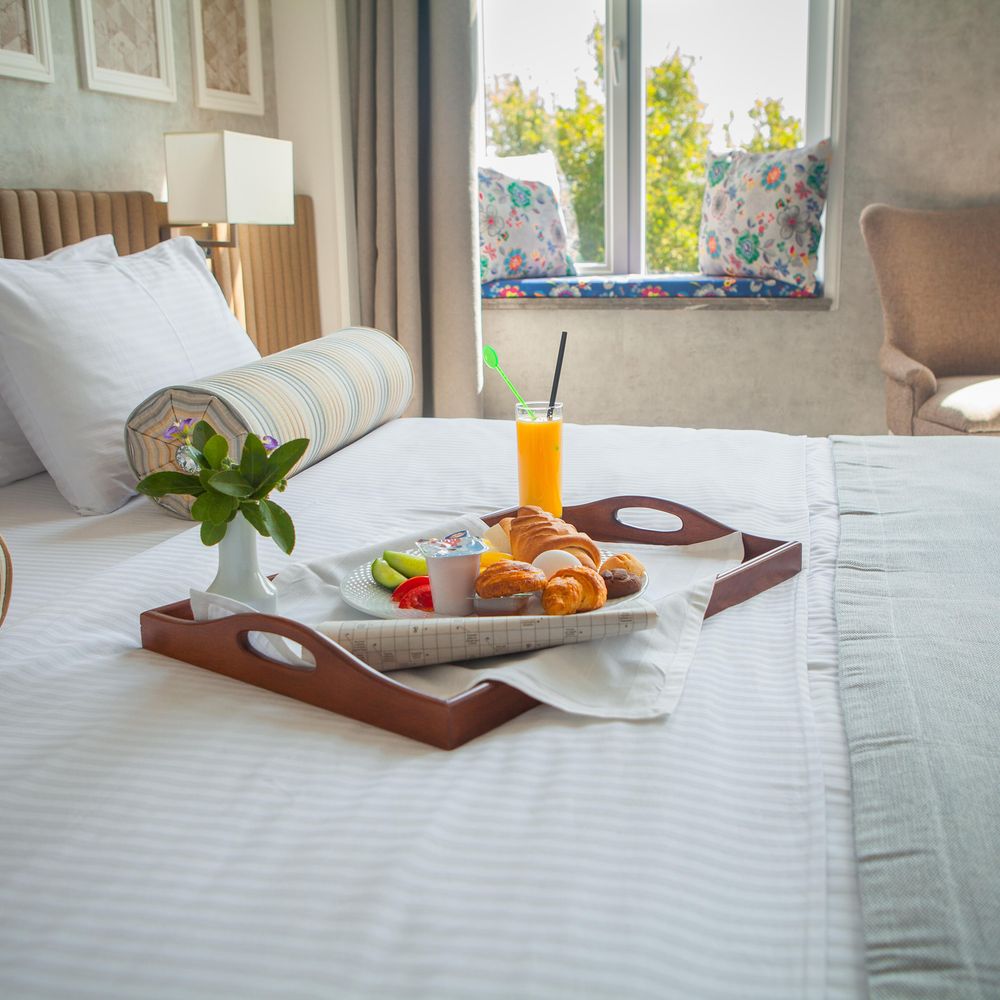
A breakfast tray with croissants, fruit, and orange juice ready to be enjoyed by a guest in the comfort of their room.
A question about hotel checkout times has sparked a lively debate online, with travellers questioning why guests are often expected to leave at 10am or 11am regardless of what time they checked in.
Kicking off the conversation was South African podcaster and media personality, Penuel The Black Pen.
"Hotels should let you check out at the same time that you checked in. Not this thing of forcing everyone to leave at 11am, no matter what time they checked in," he shared on X.
The post quickly gained views, with people weighing in on everything from housekeeping schedules to customer service and whether guests are actually getting a full night's stay.
For some, the issue is particularly frustrating for travellers who arrive later in the day.
“If I check in at 7pm I should check out at 7pm. 24 hours should mean 24 hours,” one user argued. Another person suggested that hotels could simply allow a later checkout and use the time afterwards to prepare the room for the next guest.
The original poster questioned why the few hours between the traditional checkout and check-in windows could not be used more flexibly.
“I don’t see how this is an issue. If you check out at 3pm, they can allow the room to be prepped by 6pm. What’s special about the 3hrs between 11am and 2pm?” they asked.
That prompted another user to question the realities of hotel housekeeping, pointing out that cleaners may be responsible for multiple rooms and need time to complete their work.
“A lot of ignorance, after reading the comments, check in at 13h00 and check out at 10h30 is reasonable considering, 1 cleaner might be responsible for 8-10 rooms,” the user wrote, also noting that housekeepers need their lunch and tea breaks.
But the housekeeping argument did not convince everyone.
“So cleaners only work from 11am until 2pm every day?” the original poster responded.
The back-and-forth continued, with another user putting the argument more bluntly: “And clean when for the next guest?”
“After you check out, duh,” came the response.
While the exchange captures the frustration on both sides, others took a more practical view of how hotels operate.
“Hotels sell a night, not your personal 24h timer,” one user explained. They argued that if every guest checked out exactly 24 hours after arriving, housekeeping teams would be constantly moving between rooms and hotels could struggle to have rooms ready for incoming guests.
Another user similarly pointed to the operational challenges, saying that extending every stay to 24 hours could affect “housekeeping schedules, laundry turnaround and linen availability”.
For some travellers, however, the issue isn't necessarily about demanding a 24-hour stay. It is about whether hotels can be more accommodating when guests have unusual arrival or departure times.
One user said they have generally found hotels willing to grant late checkout when requested, while another suggested a more structured solution: hotels could set aside a portion of their rooms for guests who specifically want a 24-hour stay, with those rooms priced accordingly.
The debate also moved beyond checkout times and into the quality of the service guests receive once they arrive.
One user claimed that hotels “don’t seem to clean those rooms as thoroughly anymore”, saying guests can sometimes encounter dusty surfaces, while towels may be “hard and clearly quite old”.
At the centre of the discussion is a clash between two very different ideas of what customers are paying for.
For the traveller, checking into a room at 8pm and leaving at 11am can make the stay feel considerably shorter than 24 hours. For the hotel, meanwhile, a fixed checkout time creates a predictable window to clean rooms, change linen and prepare for the next guests.
Late checkout already offers one solution in many properties, although availability and additional charges can vary.