A journalist once barred from the White House says this media ban is different
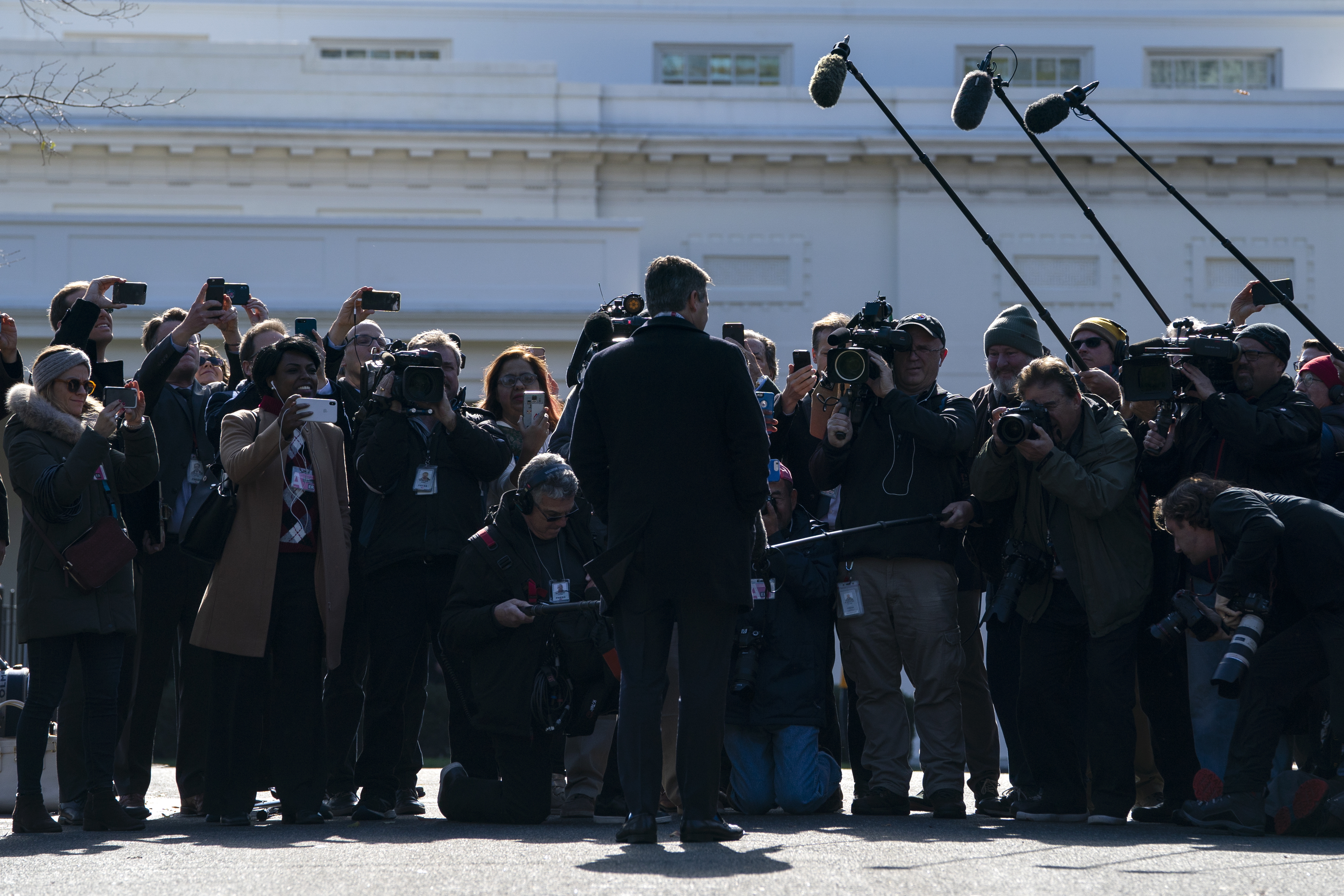
Then-CNN White House correspondent Jim Acosta talks with reporters as he returns to the White House after his press pass was restored on Nov. 16, 2018, in Washington. Evan Vucci/AP hide caption
Media CNN, MS NOW and Politico sue Trump after being barred from White House Jim Acosta knows what it is like to be kicked out of the White House.
In 2018, President Trump revoked Acosta's press pass after a contentious news conference, when Acosta was CNN's chief White House correspondent. A federal judge temporarily restored his access, and the White House ultimately backed down.
Now, with CNN, MS NOW and Politico barred from the White House, Acosta says the stakes are broader, and so is the response. The three organizations have sued, alleging violations of their First and Fifth Amendment rights. Major television networks also declined to replace CNN in the White House video pool.
Opinion: Why I'm handing in my Pentagon press pass NPR is not using audio from White House events until further notice, in solidarity with several news organizations barred from White House grounds.
"This is aimed at three specific news organizations, and we just can't allow that to happen," Acosta told Morning Edition. "And so, it's a good thing to see the press showing some solidarity."
Acosta said that solidarity should have come sooner, pointing to restrictions imposed on the Associated Press after it refused to use Trump's preferred name, Gulf of America, for the Gulf of Mexico.
Politics Study: News Coverage Of Trump More Negative Than For Other Presidents Trump has said the outlets were barred because of coverage he considers unfair and overly negative.The White House has also cited a study by the conservative media watchdog group Media Research Center saying 92% of coverage of Trump during the first 100 days of his second term was negative. The administration argues that the First Amendment protects the outlets' right to publish but does not entitle them to White House access.
Code Switch The Modern Newsroom Is Stuck Behind The Gender And Color Line Acosta rejected the idea that journalists should think of coverage as positive or negative, saying their job is to report news that matters to the public. He said Trump's objections, "by and large," are to being fact-checked.
"Do we just allow truth to become lies and lies to become truth," Acosta asked, "or are we there to provide sort of a safety valve for the American people to make sure they're getting fair, accurate information at all times, no matter who's in charge, without fear or favor?"
Listen to the interview by clicking the blue button above.
The digital version was edited by Treye Green.
NPR does not offer or accept money for coverage or interviews. Anyone who makes such an offer or request is not an NPR employee and does not represent NPR.