After ‘Satluj’ row, Jaswant Khalra’s brother slams politicians: ‘They forgot him for 31 years’ - The Indian Express
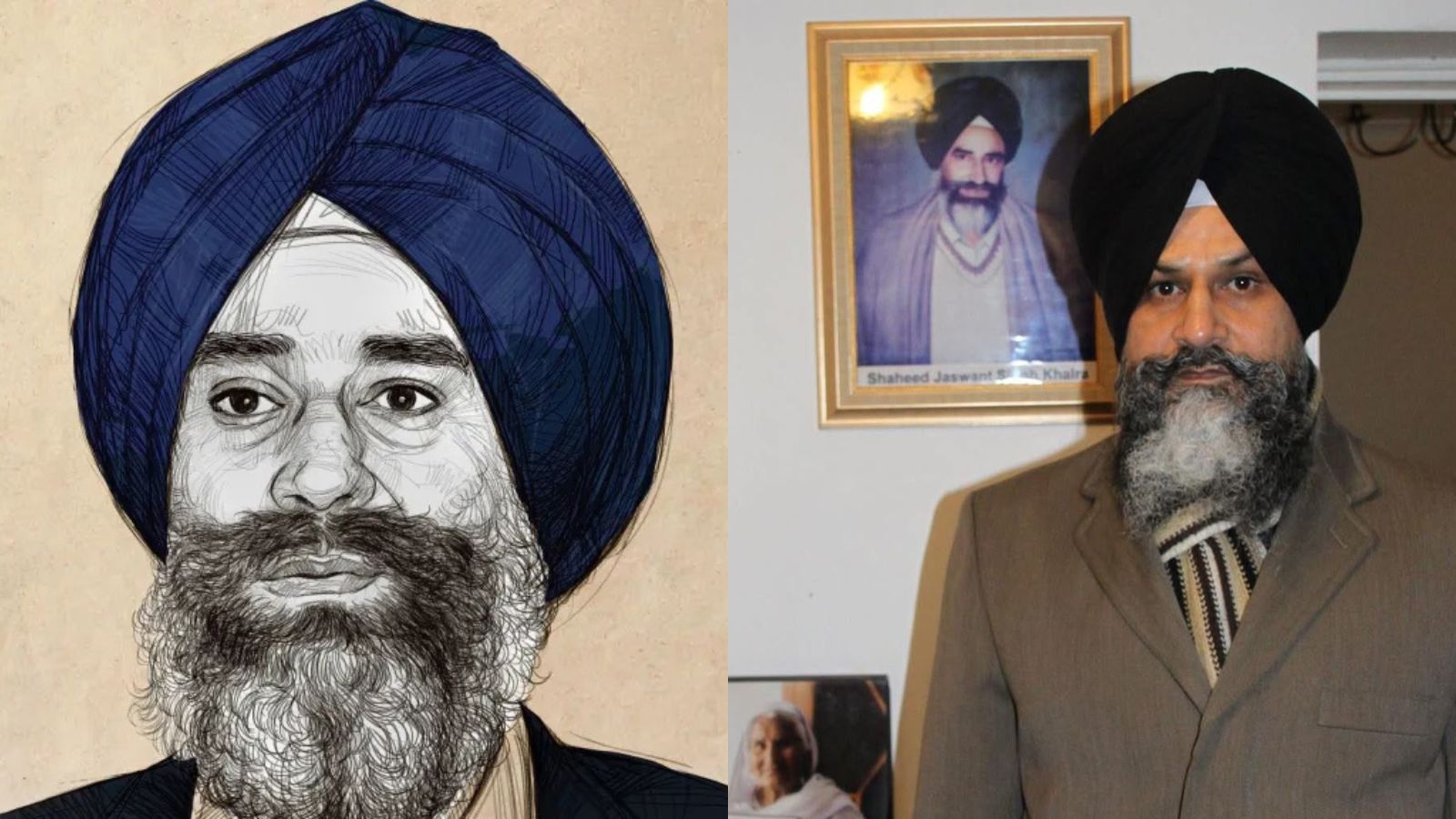
The kidnapping and custodial death of human rights activist Jaswant Singh Khalra, who was picked up by the Punjab Police from his Amritsar house on September 6, 1995, completed 31 years earlier this week. Khalra had exposed the alleged fake encounters and illegal cremations of youths by the Punjab Police during the militancy period.
Two months ago in July, the Government of India-ordered ban on his biopic Satluj led to a political storm in Punjab, with the ruling AAP and Opposition parties Congress, Shiromani Akali Dal (SAD) and BJP, blaming each other for failing to deliver justice to the victims’ families of human rights violations during the insurgency.
With Punjab assembly polls in 2027 a few months away, Khalra’s UK-based brother Amarjit Singh Khalra, 65, exclusively tells The Indian Express why political parties are suddenly remembering his brother after 31 years, and more. Excerpts from an interview.
How many siblings did Jaswant Singh Khalra have? Why did you not react immediately after the Satluj ban?
We were nine siblings- five sisters and four brothers. Jaswant was sixth. First, we were never in favour of any biopic, as we always felt a film can never show the reality of what actually happened. But still, Satluj is 5 per cent close to reality. The scenes portraying police brutality against my brother have been depicted as mentioned in the court documents.
We feel that the Government of India banned the film as it did not want people of other states to know what happened in Punjab during the insurgency. No one remembered him for 31 years. Why suddenly now?
Also Read | Jaswant Singh Khalra: The man who counted the missing You observed Khalra since childhood. What exactly was his ideology?
It is extremely difficult and almost impossible to describe what my brother really was. Initially, in 1968, he was active in the Naxalite movement with students, and later he formed Naujawan Bharat Sabhas in villages with the Left. He was given many tags: Leftist when he spoke for the poor, Khalistani when he spoke against fake encounters of youths by police, and even a sarkaari agent when he would condemn killings of innocents by militants.
But he had just one ideology—the one given to us by our Gurus—to speak against injustice. Khalra spoke whenever someone was oppressed. He was never associated with one particular movement. He had sat on a hunger strike when militants had killed innocent people in Patti. The labourers in Khalra grain mandi still remember him for the fight he led for their rights.
When CPI MLA Arjan Singh Mastana was shot dead by militants, Khalra was the one who had spoken against it. When he exposed fake encounters of youths by police, he never differentiated between Hindus and Sikhs. His only ideology was to stand for human rights. He had formed Punjab’s first human rights Sabha with Bhagat Singh’s nephew Jagmohan Singh.
Do you think political parties ever tried to get justice for him in 31 years?
In India, political parties are so corrupt that all of them have always tried to suppress what he endured. They never want a people’s hero to rise. The saddest part is that Khalra was a part of the SAD when he was murdered, but even then they never spoke for him for 31 years.
Even after the SAD came to power in 1997, they ruled like its predecessor, the Congress. The SAD, in fact, promoted and rewarded the police officers who had committed fake encounters. So how can we expect politicians to do anything to get justice for my brother? And now, with Punjab elections approaching, they will seek votes in his name. And even if they win, they still won’t do anything for him.
So why do you think theyare invoking him now?
For votes. They will now ask for votes by dragging his name into campaigning. Had the film not been made, and elections were not so close, no one would have remembered Khalra even now. Suddenly, after 31 years, the SAD, the SGPC and Akal Takht thought of conducting his bhog ceremony at Harike.
Now, before the polls, they will also start making that memorial at Harike, which has never come up in 31 years. Parties will try to milk his name for political gains in elections, but young voters are aware enough. They know the reality of all these parties, thanks to social media. They won’t be influenced by any party now, especially the SAD. Our family has not supported any party in Punjab for at least 31 years. We had good relations with SAD stalwart Gurcharan Singh Tohra, who had helped us a lot while fighting for my brother.
Do you think all parties failed Khalra? Will they do anything for him in future?
Yes, all parties have proved to be his culprits. He was murdered under the Congress. The SAD did nothing for him, even though he belonged to them. The BJP has banned his biopic. And the AAP must explain how the policemen accused of murdering him were set free. These parties benefit from the current corrupt system, so why would they change?
No, they won’t. These parties won’t do anything, even if they win using his name this time. But no matter what, they won’t be able to kill him ideologically. Khalra’s legacy will keep returning for years to come, in one way or the other. He will never really die.
Why are you particularly angry with the SAD?
It is the party that my brother served. The party claims to be dedicated to Sikhs. But even they did nothing despite being in power for 15 years after Khalra’s murder. In fact, false cases were filed against our supporters during the SAD regime. I met Parkash Singh Badal in 1997 after he became the CM and urged him to initiate departmental action against policemen guilty of murdering my brother after the CBI probe.
He had promised so in their manifesto, but after winning, they took a U-turn. He said, “Main file mangaawanga, main dekhanga”. (I will call for that file; I will see). The file never came, and I never met him after that day.
Will anyone from the family contest the Punjab elections in 2027?
His wife, Paramjit Kaur Khalra, made her own decision to contest in the past. In the future, it will be her call. But our father always felt Khalra’s legacy could be saved only if his family didn’t enter politics. So his siblings won’t contest.
His pro-Khalistan writings are well-circulated by his critics. Did he support the separatist movement?
He was a critic as well as a supporter of every movement and spoke against injustice in every form. Yes, he had written some articles. But then in those very articles, he had criticised and condemned the Khalistani militants when they killed innocents. At the same time, he spoke against the police for fake encounters. He never advocated violence.
He had, in fact, taken out a cycle rally for peace with International Democratic Peace (IDP) when militancy was at its peak. No one exposed the Punjab Police the way he did. That is why they silenced him, forever. When he had come to the UK to live with me for some time, I had advised him not to return to India as the police were after his life, but he told me: “Amarjit, we abuse politicians that they leave people midway. If we do the same, what will people call us? I am fighting for them. I can’t leave them midway.”
Was your family associated with India’s freedom struggle?
Yes, our family has a history of resistance. Our grandfather, Harnam Singh Khalra, was on the Komagata Maru ship with Gurdit Singh, who was denied entry to Canada; it became a symbol of resistance in 1914 and fueled anti-colonial sentiments. The British arrested him and tried him in the Lahore conspiracy case, and he was jailed.
He eventually went to China in 1923, when our father Kartar Singh Khalra was just 7. Our father still completed his education and opened Majha Khalsa High School in Khalra in 1938, the first school in our area. He remained a teacher for life. Even Jawahar Lal Nehru and Sardar Vallabh Bhai Patel used to come to our village during the freedom movement. Our father was a Congress member in those days.
Did Operation Blue Star in 1984 affect Khalra?
The attack on Golden Temple had hurt every Sikh. He had gone to his in-laws’ place in Panjgrain by cycle, and seeing the Army deployed in every corner, he said, “Brother, it feels like we are not in our Punjab, but in some foreign country.”
Divya Goyal is a Principal Correspondent at The Indian Express, based in Ludhiana (Punjab). She is widely recognized for her human-interest storytelling and in-depth investigative reporting on social and political issues in the region. Professional Profile Experience: With over 13 years in journalism, she joined The Indian Express in 2012. She previously worked with Hindustan Times. Education: A gold medalist in English Journalism from the Indian Institute of Mass Communication (IIMC), Delhi. Core Beats: She covers a diverse range of subjects, including gender issues, education, the Sikh diaspora, heritage, and the legacy of the Partition. She has also reported on minority communities in Pakistan and Afghanistan. Awards and Recognition Divya has earned significant acclaim for her sensitivity toward gender and social disparities: Laadli Media Award (2020): For her investigative report "Punjab: The Invisible Drug Addicts," which exposed the gender disparity in treating women addicts. Laadli Media Award (2023): For a ground report on the struggles of two girls who had to ride a boat to reach their school in a border village of Punjab. Signature Style Divya is known for "humanizing the news." Rather than just reporting on policy, she often focuses on the individuals affected by it—such as students dealing with exam stress, farmers struggling with diversification, or families impacted by crime. Her work often bridges the gap between West (Pakistan) and East (India) Punjab, exploring shared heritage and common struggles. X (Twitter): @DivyaGoyal_ ... Read More