Air strikes destroy three terror redoubts
Direct Source Verification:
This story is aggregated from The Express Tribune (tribune.com.pk). Full reporting rights and copyright belong to the primary publisher.
Cross-border action follows terror surge in K-P 28 Fitna al-Khawarij terrorists killed in strikes 9 more terrori
Pakistan on Monday carried out "calibrated" air strikes against terrorist camps and hideouts inside Afghanistan, killing 28 terrorists, including several suicide bombers, in a major escalation following a series of deadly attacks in Khyber-Pakhtunkhwa (K-P).
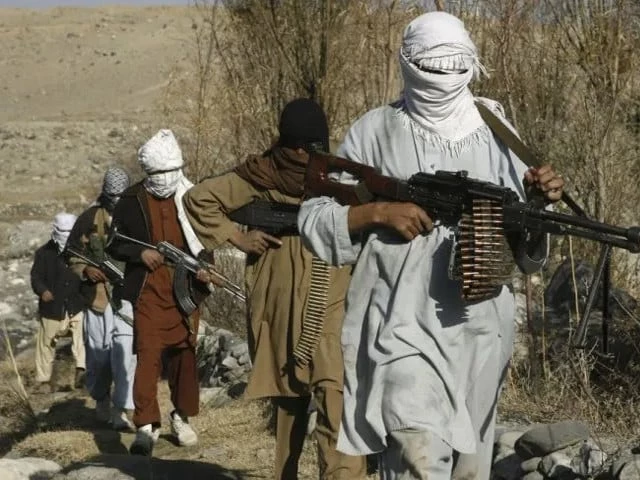
The strikes, according to the Ministry of Information and Broadcasting, targeted three locations belonging to Fitna al-Khawarij – a term used for the outlawed Tehreek-e-Taliban Pakistan (TTP) – and affiliated terrorist groups. One of the targets was identified as a training centre for suicide bombers.
The ministry said large quantities of weapons and ammunition stored at the targeted facilities were also destroyed.
The air strikes came a day after security forces conducted intelligence-based ground operations in Kohat and Hangu. According to the ministry, nine terrorists belonging to Fitna al-Khawarij were killed and several others injured during the operation.
Taken together, the government put the death toll from the ground and air operations at 37 terrorists.
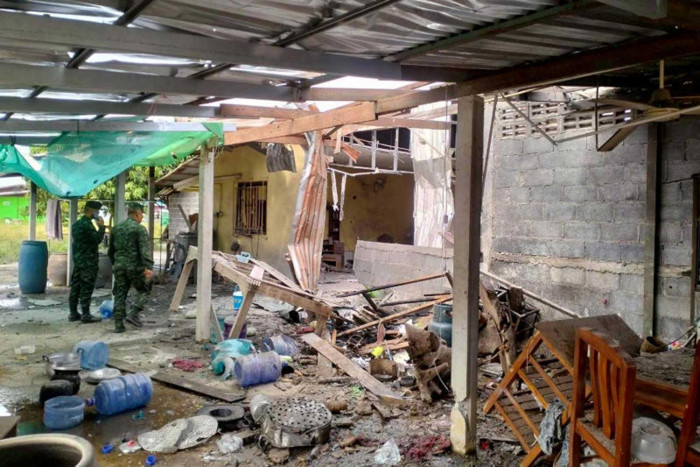
The action followed the deadly terrorist attack on a police facility in Kohat last Friday, when a suicide bomber and armed attackers targeted a mosque and police compound. The assault resulted in heavy casualties and was followed by a prolonged security operation.
Pakistan has blamed terrorist groups operating from Afghan territory for the broader escalation, as one of the suicide bombers has been identified as Afghan national. The Information Ministry statement said that the latest operation was launched "in the aftermath of recent multiple terrorist incidents inside Pakistan against the innocent people of Khyber Pakhtunkhwa".
It said the ground operation around Kohat, Hangu and Thal was followed by selective targeting of terrorist camps and hideouts in the border region with Afghanistan on the basis of "credible intelligence".
"Pakistan has always strived for the maintenance of peace and stability in the region. However, the safety and security of our citizens remains our foremost priority," the ministry said.
It added that Afghanistan continuing to serve as a "hub of terrorism" was a matter of grave concern for Pakistan, arguing that the threat to the country emanated from Afghan territory.
The ministry said maximum precautions had been taken to prevent collateral damage.
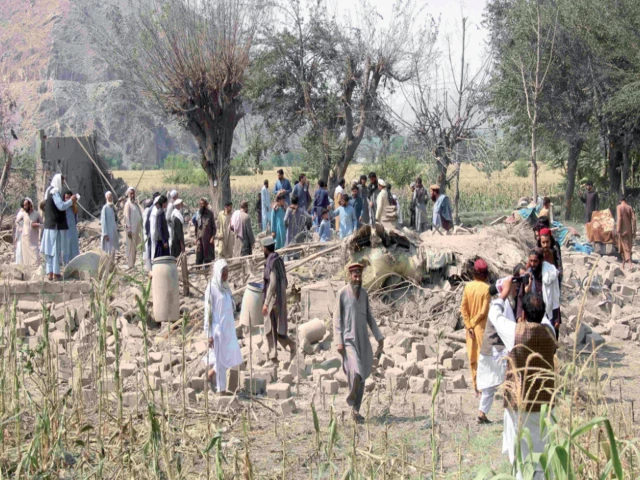
The Afghan Taliban government, however, has disputed Pakistan's account. Afghan officials said the strikes hit areas in Kunar and Paktika provinces and reported civilian casualties, with Taliban spokesman Zabihullah Mujahid condemning the action and warning of a response.
The latest strikes mark another serious deterioration in Pakistan-Afghanistan relations after a period of relative calm along the border. Islamabad has for months maintained that the central problem in its relationship with Kabul is the presence of the banned TTP and other terrorist groups on Afghan soil.
Pakistan has repeatedly demanded that the Taliban government take verifiable action against these groups, particularly the TTP, which Islamabad holds responsible for a sustained campaign of terrorism inside Pakistan.
Kabul has consistently rejected the allegations that it allows Afghan territory to be used against Pakistan and has instead accused Islamabad of violating Afghan sovereignty through cross-border strikes.
The latest military action also comes at a particularly sensitive moment diplomatically.
Turkey and Qatar have recently stepped up efforts to mediate between Pakistan and Afghanistan, while China has also been engaged through the Urumqi channel. Turkish intelligence chief Ibrahim Kalin and Qatar's deputy national security adviser recently held talks aimed at easing tensions between Islamabad and Kabul.
The Kohat attack and Pakistan's subsequent military response have therefore placed those diplomatic efforts under considerable pressure.
For Islamabad, the argument is increasingly that dialogue cannot produce results unless Kabul addresses the presence and activities of terrorist groups operating from its territory. Pakistan has also maintained that it does not seek a confrontation with Afghanistan but will act when attacks inside the country are traced to terrorist sanctuaries across the border.
The ministry said the latest action was part of Pakistan's counterterrorism campaign, Ghazab lil Haq, being conducted under the broader Azm-e-Istehkam framework. The government said the campaign would continue "at full pace" to eliminate what it described as foreign-sponsored and supported terrorism.
Original Source
https://tribune.com.pk/story/2630682/air-strikes-destroy-three-terror-redoubts