
Anant Nag's Dadasaheb Phalke Award is more than an honour. It's a five-decade story
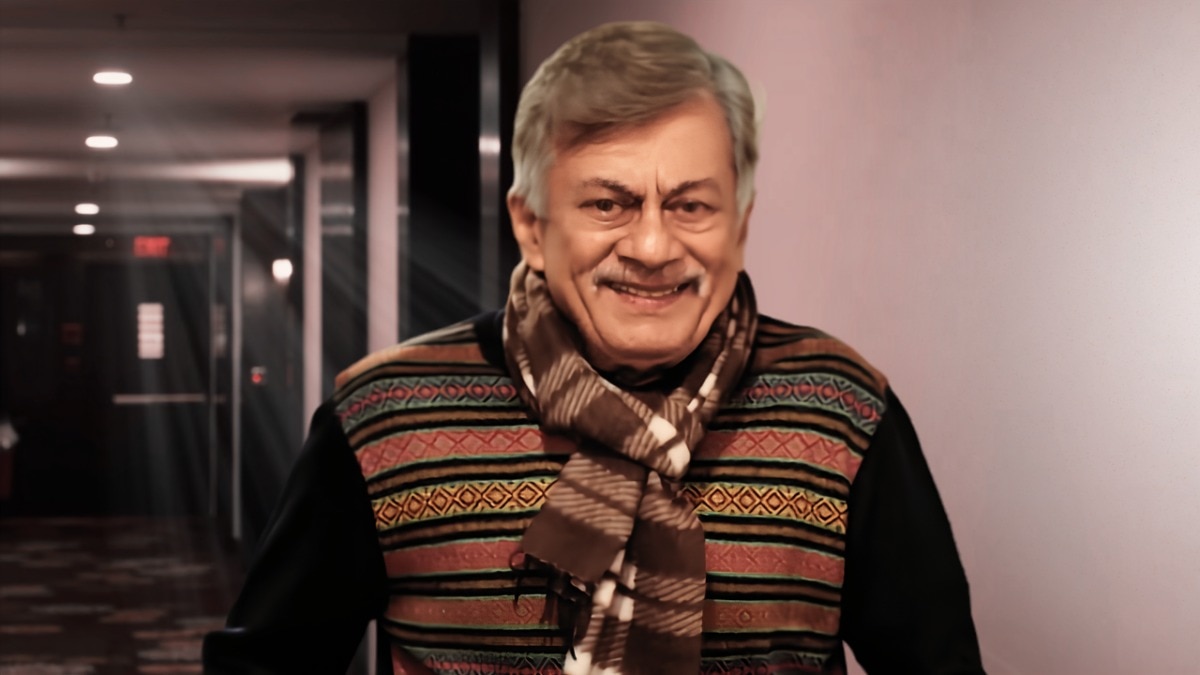
When Anant Nag was conferred the Padma Bhushan in 2025, Karnataka had every reason to celebrate. It felt like a moment that belonged not just to one of the state’s most accomplished actors, but to an entire industry that had watched him evolve over decades. A year later, the news of Nag being honoured with the Dadasaheb Phalke Award has brought another moment of pride to the state.
With the honour, Anant Nag becomes only the second recipient of the Dadasaheb Phalke Award from the Kannada film industry, after Dr Rajkumar received it in 1995. For an actor whose career spans more than five decades, the recognition is significant.
Often regarded as one of the most charming actors to emerge during India's parallel cinema boom, Nag was the chocolate boy of Kannada cinema in his early years. But reducing his career to his looks or his initial image would do little justice to the actor he would become.
More than five decades, multiple awards and several landmark films later, Anant Nag has built a legacy that is difficult to dispute. The Dadasaheb Phalke Award, therefore, is not what defines that legacy. It is a recognition of one already built, character by character, film by film.
Born on September 4, 1948, as Anant Nagarkatte in Shirali, Bhatkal taluk, Anant Nag spent much of his childhood in coastal Karnataka. He had his early education at Ananda Ashrama in Dakshina Kannada and Chitrapur Math in Uttara Kannada.
At around 12, Nag was sent to Bombay for further studies. The transition from Kannada medium to an English-medium school proved difficult, affecting his academics and gradually pushing him towards theatre.
He was drawn into Bombay's theatre movement and, initially, acting was not some grand ambition. But one play led to another. He acted in Konkani, Kannada, Marathi and Hindi plays, working with prominent theatre figures and gradually finding his calling on stage.
By the early 1970s, Anant Nagarkatte had established himself in Bombay theatre. His Kannada film debut came with Sankalpa in 1973. Around the same time, theatre director Satyadev Dubey introduced him to Shyam Benegal, then emerging as an important voice of India's parallel cinema. A poster of Shyam Benegal's Ankur featuring Anant Nag and Shabana Azmi (Photo: IMDb)
Benegal cast him as Surya in Ankur (1974), his first feature film and Shabana Azmi's screen debut. It was also during this association that Anant Nagarkatte came to be known by the screen name Anant Nag. Their collaboration continued over six films — Ankur (1974), Nishant (1975), Manthan (1976), Bhumika (1977), Kondura (1978) and Kalyug (1981) — establishing Nag as a distinctive presence in India's parallel cinema movement.Chocolate hero of Kannada cinema in the 70s
While Nag was making his mark in Bombay through theatre and parallel cinema, Kannada cinema was discovering an actor who would soon become one of its most recognisable young stars.
After Sankalpa, Nag appeared in Y R Swamy's Devara Kannu (1975), playing a doctor. Then came GV Iyer's Hamsageethe (1975), in which he played Bhairavi Venkatasubbaiah, a young musician obsessed with mastering his art. The film won the National Film Award for Best Feature Film in Kannada, while Nag earned critical recognition. A re-edited poster of Anant Nag's Hamsageethe (Photo: IMDb)
If Hamsageethe established him as a performer capable of carrying complex roles, Bayalu Daari (1976) changed the scale of his popularity.
Directed by Dorai-Bhagavan, the film cast Nag as Gopi, a young man caught in a romantic relationship. It became a musical blockbuster, with its Rajan-Nagendra songs becoming enduring hits. More importantly, it became Nag's first major commercial success and firmly established him as a leading star.
The late 1970s saw him comfortably straddle both worlds. Kanneshwara Rama and Anuroopa came in 1977, followed by Kudure Mukha, Maathu Tappada Maga, Premayana and Madhura Sangama in 1978. Then came Naa Ninna Bidalaare and Chandanada Gombe in 1979.
Naa Ninna Bidalaare, directed by Vijay, paired Nag with Lakshmi and became a major success, running for 100 days at several centres. It also earned Nag the Filmfare Award for Best Actor – Kannada. A poster of Anant Nag's Naa Ninna Bidalare (Photo: IMDb)
This was when the image of Anant Nag as the handsome, sensitive and approachable young hero took shape. He was not the larger-than-life action star. His appeal was more intimate — a combination of looks, vulnerability, understated performances and an ability to make the ordinary young man feel instantly familiar.The Nag brothers - Anant and Shankar
By the time Anant Nag had established himself as one of Kannada cinema’s most popular leading men, another Nagarkatte was preparing to make his own mark. His younger brother, Shankar Nag, followed him into the world of theatre in Bombay before moving to Kannada cinema, making his acting debut in Girish Karnad’s Ondanondu Kaladalli in 1978.
The brothers were different in temperament and screen presence, but they shared something fundamental: an instinct for storytelling and a willingness to move beyond the conventions of mainstream cinema.
Their first collaboration came with Minchina Ota in 1980. Shankar made his directorial debut with the heist film, while also starring alongside Anant, who played one of the central characters. The film was critically recognised and won several Karnataka State Film Awards, including Best Actor for Anant. It has also gained a cult classic status in the modern age. A poster of Minchina Ota featuring Anant Nag and Shankar Nag (Photo: IMDb)
The collaboration continued with Janma Janmada Anubandha, followed years later by Nodi Swamy Navirodu Hige and Accident. Shankar was developing a reputation as a filmmaker willing to experiment with genre and form, while Anant remained an actor capable of inhabiting characters without imposing a conventional star persona on them.
Shankar's adaptation of RK Narayan's beloved stories became one of the most enduring television series of its time, bringing the fictional town of Malgudi and its inhabitants into homes across India. Anant was part of that world too. Their collaboration had now travelled from Bombay theatre to Kannada cinema and, finally, to Indian television.
Unfortunately, their creative partnership was cut short when Shankar died in a road accident in 1990, aged just 35. The news had left Anant devastated, something he said he took over a decade to fully digest.From romance to reality
Along with his work with Shankar, the 1980s saw Anant Nag move beyond the romantic-hero image that had made him a household name. Films such as Benkiya Bale (1983) and Hendthige Helbedi (1989) retained his mainstream appeal, while Hosa Neeru (1986) and Avasthe (1987) gave him more layered, socially rooted characters and earned him Karnataka State Film Awards for Best Actor.
His work also extended beyond Kannada, with films such as Utsav (1984). By the end of the decade, Nag was no longer simply the chocolate boy audiences had embraced in the 70s; he had evolved into an actor whose appeal increasingly rested on depth and naturalism.From hero to character actor
Anant Nag never shied away from character roles, even in the early phase of his career. But the 1990s saw him increasingly comfortable occupying both ends of the spectrum.
Ganeshana Maduve (1990) and Gowri Ganesha (1991) kept him at the centre of popular comedies, while films such as Beladingala Baale (1995) and Ganesha I Love You (1997) showed that his appeal as a leading man remained intact. A poster of Ganeshana Maduve (Photo: IMDb)
At the same time, he increasingly appeared in ensembles and roles that did not depend on his position as the hero. Films such as Nishkarsha (1993), Nirbandha (1996) and Vishwa (1999) reflected that widening range.
The shift became more pronounced after the turn of the millennium. In Preethse (2000), Kurigalu Saar Kurigalu (2001), Asura (2001), Naanu Naane (2002), Kushi (2003), Vishnu Sena (2005) and Nenapirali (2005), Nag increasingly took on supporting or character-driven parts.
In Mungaru Male (2006), he played Pooja Gandhi's father while the younger generation occupied the romantic centre. His presence no longer needed to dominate the poster for it to carry weight within the story.
By the end of the 2000s, films such as Ee Bandhana (2007), Ghauttham (2009), Crazy Kutumba (2010) and Eradane Maduve (2010) reflected an actor increasingly willing to let the story determine his place within it.
Anant Nag is also among the few leading actors to have shared the screen with stars from multiple generations — from Rajkumar, Vishnuvardhan and Ambareesh to Shiva Rajkumar, Shashikumar and Ravichandran, and later Sudeep, Darshan, Ganesh, Yash, Rakshit Shetty and many others. His ability to move seamlessly between generations is perhaps another measure of his remarkable longevity.Modern era, script choices and relevance
The post-2010 period showed that Nag had no intention of merely filling the elder-statesman slot in a film. He also continued choosing scripts where his age and experience could be central to the story.
Mathond Maduvena (2010), Godhi Banna Sadharana Mykattu (2016) and Sarkari Hi. Pra. Shaale, Kasaragodu, Koduge: Ramanna (2018) are examples of this phase. In each, Nag was integral to the story, playing characters whose experiences, relationships and vulnerabilities mattered to the narrative.
Hemanth Rao’s Godhi Banna Sadharana Mykattu, in particular, gave him a very different kind of leading role. As Venkob Rao, an elderly man living with memory loss, he was at the heart of a story about ageing, family and the relationship between a father and son. His performance earned him Filmfare and IIFA Best Actor awards.
Anant Nag's contribution to public life extends beyond the screen. Influenced by socialist thought during his years in Bombay, he became associated with the Janata movement in Karnataka and campaigned for the Janata Party.
He later served as a nominated member of the Karnataka Legislative Council (MLC) from 1988 to 1994 before winning the Malleshwaram Assembly constituency in 1994. He subsequently served as a minister in the JH Patel government, handling the Bengaluru development portfolio.
But perhaps the more intimate glimpse into the man behind the actor came through his writing. In 2010, Nag published Nanna Thamma Shankara, a Kannada biography of his younger brother Shankar Nag. Cover photo of Anant Nag's book on Shankar Nag's life, Nanna Thamma Shankara (Photo: SapnaOnline)
Written from the perspective of an elder brother who knew Shankar long before he became the beloved actor-director, the book captures his life, personality and journey into theatre and cinema. The 252-page book, published by Total Kannada, later won the Karnataka Sahitya Academy Award.
More than five decades after he first stepped onto a stage in Bombay, Anant Nag's journey has come a long way. He has been a parallel-cinema performer, a romantic hero, a leading man, a character actor, a playback singer, a politician and a writer — and, through it all, an actor who continued to evolve. Nag never allowed the image that made him a star to become a limitation. As the roles changed with age, so did he.
The Padma Bhushan in 2025 recognised his contribution to Indian cinema. The Dadasaheb Phalke Award now adds the country's highest cinema honour to that legacy. For Kannada cinema, it also creates a symbolic link with Dr Rajkumar, the only other actor from the industry to have received the honour.
But awards can only acknowledge a career; they cannot fully define it. The chocolate boy may belong to the 1970s, but the actor Anant Nag has belonged to Kannada cinema for more than five decades — and that is the legacy these honours now celebrate.- EndsPublished By: Sanjay Ponnappa CSPublished On: Sep 17, 2026 16:06 ISTALSO READ | Naa Ninna Bidalare: Anant Nag's classic is a battle between obsession and devotion

