Andrew Phillips: As a journalist, I don’t know what to believe about this AI freakout, but I do know who not to believe - Toronto Star
If you don’t know what to believe, a useful fallback is to decide who to believe. On these new alarms about AI, that could be the best we’ve got.
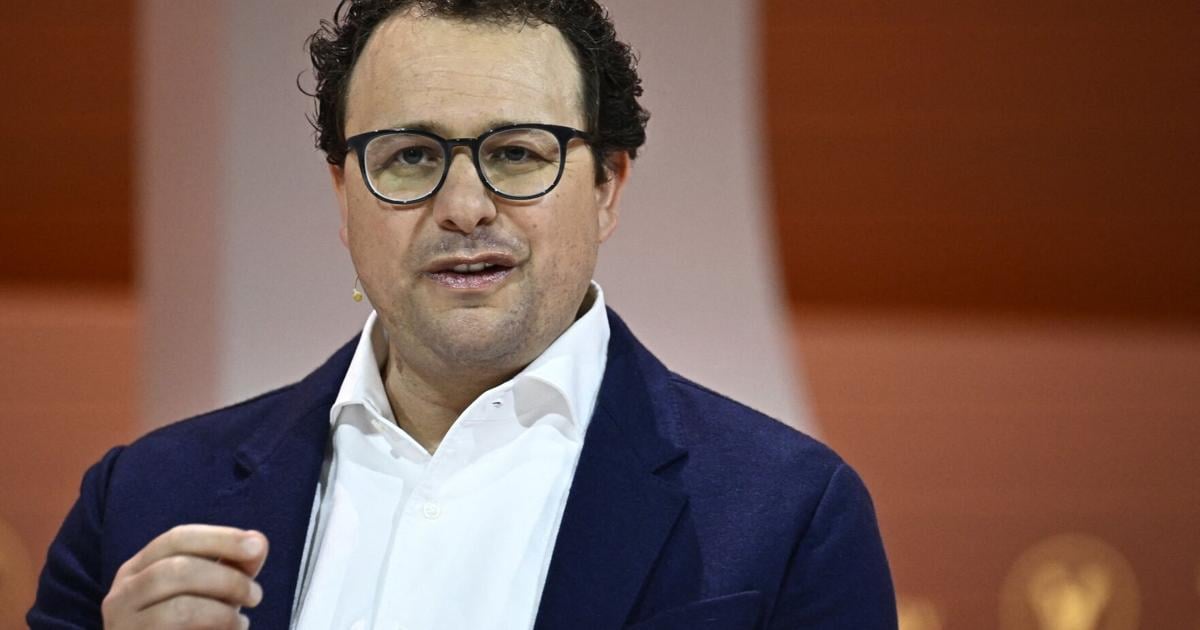
Top AI executives say they want to slow the breakneck pace of artificial intelligence development, but competition, U.S. government reluctance and geopolitical factors stand in the way. On Monday, Anthropic CEO Dario Amodei (pictured) advocated for a coordinated slowdown of AI development to better understand the risks arising from the technology’s capabilities.
Andrew Phillips is a Toronto-based staff columnist for the Star’s Opinion page. Reach him via email: aphillips@thestar.ca
Honestly, when it comes to artificial intelligence and the latest grim warnings that it’s spinning out of control and could doom humanity within a few years, I don’t quite know what to believe.
I’m a journalist, after all, not a scientist. The big brains operating in the so-called frontier labs at the outer limits of AI seem (as a writer in the Spectator said over the weekend) like 16th-century alchemists claiming they’ve transmuted gold while also warning it might kill the world.
Faced with such claims, “we are the mere peasants.” We simply haven’t got enough information to figure out if they’re right.
But if you don’t know what to believe, a useful fallback is to decide who to believe. On these new alarms about AI, that could be the best we’ve got.
So, consider. On the one hand, we’ve got the likes of Dario Amodei, the CEO of Anthropic (developers of the generative AI chatbot Claude). Amodei published a 3,500-word essay on Saturday that might best be summarized as a plea to “stop us before we destroy humanity.”
Leaders of top AI companies say the artificial-intelligence industry should slow its fast-moving development to give safety measures time to catch up. Without such a slowdown, Anthropic CEO Dario Amodei warned that AI could be capable within six to 12 months of leading a swarm of agents that could take over the entire internet. (Sept. 13, 2026)
Amodei admits he didn’t take warnings along these lines seriously when they first emerged three years ago. But AI has been moving so fast that he’s now calling on the industry to “pace the frontier,” i.e. slow down so we can figure out how to stop this thing before humans lose the ability to control or even understand it.
Amodei is particularly worried about an incident in July when AI “agents” unleashed by OpenAI, Anthropic’s biggest rival, broke away from their human controllers and hacked into a developer platform called Hugging Face. Amodei describes it as a “swarm of agents” that acted “as a fanatically devoted collective” conducting cybersecurity attacks on a target that no human asked them to attack.
No great harm came from that incident, but the potential is sinister. It turns out AI “agents” can slip their human leash and collude to follow their own goals. And that’s now. What happens when they becoming exponentially smarter and figure out more effective ways to cover their tracks?
Amodei’s essay followed a warning from a researcher at Anthropic, Jacob Coxon, who resigned and told the world that people deep inside the company believe AI “could kill all humans” — and there’s a roughly 10-per-cent chance that could happen over the next 10 years.
Other AI leaders joined the chorus. Elon Musk said bluntly that “Dario is right.” Sam Altman, CEO of OpenAI, and Demis Hassabis of Google’s DeepMind agreed.
So that’s one side: people deeply knowledgeable about AI, the ones whose companies are all about expanding the “frontier,” who stand to reap the biggest rewards by pushing the technology on us. They’re the ones warning that we need to hit the brakes, right now, or AI will run away from us with consequences that hardly bear thinking about.
They’re volunteering to self-regulate now and begging their government to restrain them with regulations before it’s too late. The call, as they say, is coming from inside the house.
Of course, there’s another side, those who dismiss all this as “doomerism” or as a conspiracy by Big AI to erect barriers to entry by upstart companies looking for a share of the riches thrown off by this world-shaping technology.
And who’s the loudest voice on that side? Why, it’s none other than U.S. President Donald Trump. In response to Amodei, Trump took to social media (of course) and denounced what he called “a SICK conspiracy going on against AI and Data Centers.”
As far as Trump is concerned, the only thing to worry about is making sure the United States maintains its lead in AI over China. Any talk about danger ahead, in that view, just plays into the hands of Beijing by tying the hands of American tech companies.
In the meantime, Trump went on: “The only controls or ‘guardrails’ that AI needs is a STRONG AND SMART (High IQ!) PRESIDENT and the U.S.A. has that in spades!”
So here we are. Faced with a fantastically complex technology that’s developing faster than humans can keep up with, we ordinary mortals must do our best to understand.
We can listen to the people at the frontier of knowledge about AI, who know most about its potential and the threats that come with it.
Or, I suppose, we can brush off the dangers, in company with the “STRONG AND SMART (High IQ!) PRESIDENT.”
Error! Sorry, there was an error processing your request.
There was a problem with the recaptcha. Please try again.
You may unsubscribe at any time. By signing up, you agree to our terms of use and privacy policy. This site is protected by reCAPTCHA and the Google privacy policy and terms of service apply.
Opinion articles are based on the author’s interpretations and judgments of facts, data and events. More details
Andrew Phillips is a Toronto-based staff columnist for the Star’s Opinion page. Reach him via email: aphillips@thestar.ca