Another 'disturbing' botched execution. Why does this keep happening? - USA Today
Tennessee's failed execution of Christa Pike marks the latest in the country's long history of botched lethal injections.
Since 1982, there have been at least 64 botched executions, the vast majority of which involved lethal injection, according to an analysis by the nonprofit Death Penalty Information Center. Seven of those execution attempts failed entirely because officials in Tennessee, Idaho, Alabama and Ohio could not properly insert intravenous lines.
It's too soon to know for sure what went wrong when Tennessee tried to execute Christa Pike, but lethal injections have a long history of logistical and ethical issues that often resurface when an execution fails. Finding qualified medical professionals can be a struggle, and so can be obtaining the drugs needed to carry out the execution.
Pharmaceutical manufacturers have increasingly sought to prevent their drugs from being used in executions, forcing states to seek alternative suppliers, including compounding pharmacies.Tennessee's previous supplier was a Texas compounding pharmacy that had been fined for failing to disclose a misdemeanor charge against an owner, according to a 2022 Tennessean investigation.
"Well-trained medical personnel generally do not want to be involved in executions, because they've taken an oath to do no harm," Ngozi Ndulue, deputy director of the Death Penalty Information Center, previously told the USA TODAY Network. "So we shouldn't be surprised when people without proper training are not able to successfully complete these IV insertions without going to fairly extreme measures."
In remarks the morning of Oct. 1, Tennessee Gov. Bill Lee said the failed execution was "deeply disturbing."
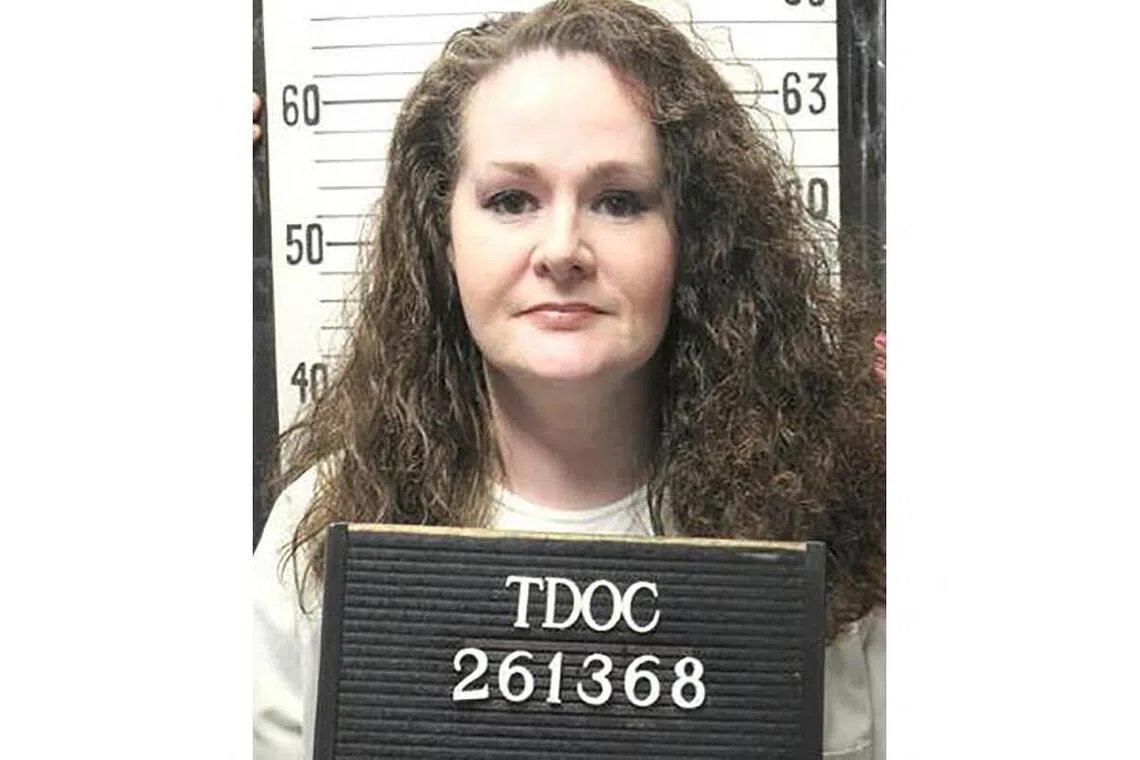
Pike was sentenced to death for the brutal 1995 murder of her romantic rival, 19-year-old Colleen Slemmer. After Pike received two syringes filled with lethal injection chemicals, she was still alive and experiencing "unnecessary agony," her attorneys said in an emergency motion filed in the Tennessee Supreme Court to immediately stop the process.
"We take no pleasure in being right, but the concerns raised by Ms. Pike proved to be true: difficult vein access, blown veins, degraded pentobarbital, no emergency medical care available when things inevitably go wrong, all under a protocol that remains veiled in secrecy," Pike's attorneys said in a statement to USA TODAY.
Lethal injection is the most common execution method in the United States, and the most commonly botched, experts who study the death penalty say.
While several inmates have recently survived after executioners failed to access their veins, if Pike survived after receiving two doses of pentobarbital, it would be virtually unprecedented, according to Fordham University law professor Deborah Denno. Denno could recall just one other similar case: Florida teenager Willie Francis, who survived after being electrocuted in an electric chair in 1946.
"It's quite extraordinary that in 'modern times' that this would be happening," she said.
Injection problems stretch all the way back to the country's first lethal injection in 1982, when executioners in Texas struggled to find a suitable vein in Charles Brooks because of his heavy drug use, Denno wrote in a chapter of "The Elgar Companion to Capital Punishment and Society."
Factors including dehydration, stress, room temperature and certain medical conditions can also make veins more difficult to access. Another problem may be that the person inserting the IV line during an execution lacks experience, Denno, the founding director of the university's Neuroscience and Law Center, previously told USA TODAY.
"They may not be the person who you and I might go to to have blood drawn who's done this a thousand times, right?" she said. "I mean it may be somebody who is doing much lower level kind of work even though they're a medical professional."
During a failed execution in May, Dr. Mark Fowler unsuccessfully attempted to place a central line into Tennessee death row prisoner Tony Carruthers. Fowler had not placed a central line in at least 13 years, according to his deposition in litigation over Tennessee's execution procedures. Fowler testified that he had placed about a dozen central lines during his career and had no current hospital privileges.
While death row inmates aren't guaranteed a painless death, the U.S. Constitution mandates that their executions be free of "cruel and unusual punishment." In many cases, executions have proceeded despite injection issues, leading to some apparently gruesome deaths.
In 1988, minutes after lethal drugs began flowing into Texas inmate Raymond Landry's arms, a vein "blowout" caused a syringe to pop out and spray the chemicals across the execution chamber, according to the Death Penalty Information Center. The execution team was ordered to reinsert the catheter, and Landry was pronounced dead 40 minutes after he was first strapped to the gurney.
Florida inmate Angel Diaz survived for 34 minutes after receiving two doses of lethal drugs in 2006, according to the center. An autopsy report found that the IV catheters had pierced through Diaz’s veins, and the deadly chemicals had been injected into soft tissue. Autopsy photos released by the New Republic in 2014 showed Diaz suffered severe chemical burns as a result.
Oklahoma prison staff attempting to execute inmate Clayton Lockett in 2014 failed to realize that lethal drugs were not going directly into his vein until he raised his head and started to make sounds, according to an official report. As officials scrambled to determine next steps, the drugs pooled under his skin in a swollen area larger than a golf ball and began to gradually kill him, the report said.
Denno said Pike could have survived because the lethal drugs weren't properly injected, calling executions a "negligent, sloppy process."
"The fact that they administered two doses is some indication that she wasn't receiving the medication," she said.
The Tennessee Department of Correction said it followed its execution protocol after which no additional procedures were permitted. Pike remained alive and was transported to a hospital on Sept. 30. The state has not released an update on Pike's condition as of Oct. 1.
Denno said there may also have been issues with the drug Pike was given.
An independent investigation previously found Tennessee's department of corrections failed to consistently test lethal injection drugs for potency, purity and contaminants, systemic failures stretching back years. The failures raised the likelihood that prisoners had been executed using expired, compromised or untested drugs.
The findings prompted Tennessee to overhaul its execution procedures. But the 44-page protocol released to The Tennessean in January 2025 contained significantly less detail about how execution drugs would be obtained, tested and stored than the state's previous 99-page protocol.
The Tennessee Department of Corrections has not publicly disclosed whether the drug used on Sept. 30 was compounded. Compounded drugs are not approved by the Food and Drug Administration, meaning the agency does not verify their "safety, effectiveness or quality."
"We don't know whether that drug was expired...it may not have the right chemical balance," Denno said.