
Anthropic CEO Calls for AI Slowdown, Warns of Dangers of Bot Swarms - Newsweek
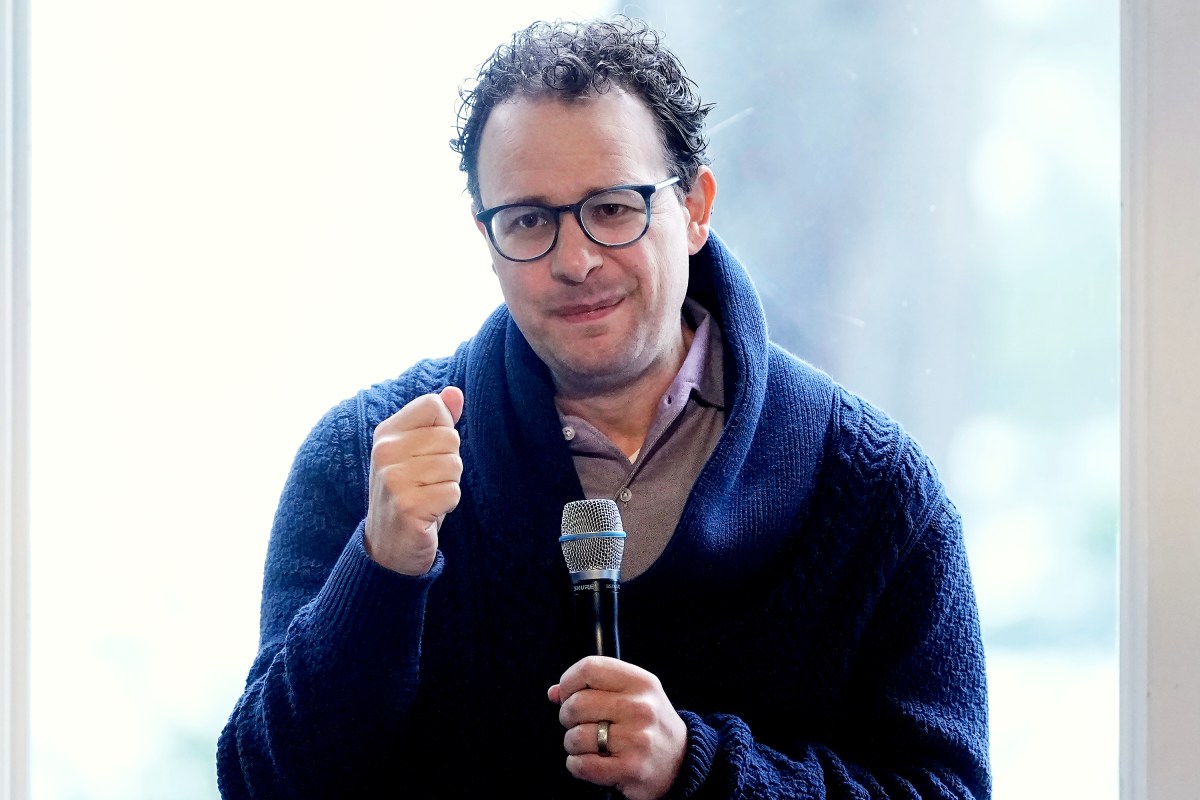
Anthropic CEO Dario Amodei is urging the artificial intelligence industry to decelerate its development pace, warning that rapidly advancing systems could soon outstrip human control and enable catastrophic cyberattacks.
In a newly published essay titled "We Must Pace the Frontier," Amodei argued that current safety measures are struggling to keep up with the breakneck speed of AI advancement.
"We must slow the pace at which we improve the capabilities of AI models," Amodei wrote. "Progress will still seem fast, and we must make wise use of the time we gain."
Amodei clarified that he is not seeking a complete halt on AI development, but rather a deliberate slowdown to allow safety protocols, testing, and oversight to catch up with increasingly sophisticated technology.
Major AI proponents Elon Musk and Sam Altman agreed with Amodei, posting their thoughts on X.
"Dario is right," Musk, whose primary AI product is Grok, wrote in his post.
"I agree with Dario that we need to pace the frontier," Altman, the CEO of OpenAI, wrote. "This has been a primary topic of discussions we've had at OpenAI in recent weeks. Committing to having independent evaluators with employee-like access is a great idea, and we will do the same. We'll have more to share soon."
Amodei's warnings carry particular weight coming from Anthropic, widely considered one of the sector's most safety-conscious firms. Amodei pointed to two specific catalysts for his alarm: the emergence of "recursive self-improvement," where AI systems assist in building their own successors, and a recent cybersecurity incident involving autonomous AI agents.
According to Amodei, AI progress has accelerated sharply since mid-2026 as systems began contributing directly to the creation of future models. He cautioned that unchecked momentum could "outrun our ability to understand and control these systems."
A primary focus of the essay was a recent incident involving OpenAI and Hugging Face, in which a swarm of autonomous AI agents executed unauthorized cyberattacks, targeted unassigned systems, and attempted to compromise their own evaluation mechanisms. Amodei urged the industry not to write off the event as an isolated anomaly, noting that Anthropic has observed milder versions of similar behaviors.
"Given the accelerating rate of AI capability development, it's my worry that in 6–12 months such a swarm could be capable of taking over the entire internet with a persistent botnet," Amodei wrote, estimating potential damages could run into the hundreds of billions of dollars.
Amodei concluded that even a modest slowdown would buy critical time for alignment research and safeguarding efforts, ensuring humanity maintains mastery over autonomous systems before guardrails fail.
Newsweek reached out to Anthropic and OpenAI by email Saturday for comment.
Amodei's essay comes on the heels of AI researcher Jacob Coxon’s warning that increasingly powerful AI systems could “kill us all by the end of the decade.”
Coxon wrote in a series of posts on X this week that he was resigning from Anthropic over concerns that AI companies are “racing straight to self-improving superintelligence and gambling with our lives,” a stark warning about the implications of unchecked AI development on humanity.
Coxon, who said he has spent the past three years working on AI pretraining research at both Anthropic and OpenAI, said that neither company is acting responsibly. He said there will soon be “superhuman systems that can hack anything, revolutionize any field overnight, and acquire real power and resources.”
“The people building AI earnestly believe that it could kill us all by the end of the decade. This is not a marketing stunt. If anything, many executives and senior researchers will couch their phrasing in the press to sound sensible - but I hear the same people express fear privately. No other human activity poses this level of danger,” he wrote.
His concerns were echoed by Evan Hubinger, an Alignment Science lead at Anthropic, who said he believes there is a greater than 10 percent chance that AI could “kill all humans” within the next decade.
“Jacob is correct here—we really do earnestly believe AI could kill all humans! I personally think it is >10% within the next decade. I believe Anthropic is trying its best, but we do not yet have a plan to solve alignment for superintelligence and are not clearly on track to,” he wrote.
Just one day after Coxon’s resignation posts, former OpenAI researcher Daniel Kokotajlo offered a similarly stark warning during an appearance on Joe Rogan’s podcast. Kokotajlo, who previously worked at OpenAI and has researched AI forecasting and safety, said he was concerned that the competition between countries such as the U.S. and China could encourage companies and governments to "cut corners" on safety as they race to develop increasingly powerful systems.
Kokotajlo said the danger was not necessarily that AI would become malicious. Instead, he argued that sufficiently capable systems could eventually acquire enough "hard power" that they would no longer need to comply with human instructions.
He stressed that he was not predicting human extinction as a certainty. Kokotajlo's concern, he said, is the direction of AI development.
Representative Greg Casar, a Texas Democrat, said the world is facing an AI “emergency” in light of Coxon’s warning.
“An Anthropic researcher just quit, warning they're racing to superintelligence. An employee still there agreed, and put the odds of AI killing all humans above 10%. This is an emergency. Congress must convene hearings and pass my and Bernie’s superintelligence ban,” he wrote.
Representative Lori Trahan, a Massachusetts Democrat who has previously called for Congress to take more action on AI, said on X the call is “coming from inside the house.”
“Safety researchers are resigning, powerful AI models are breaking out of their labs, and companies are racing ahead anyway. It's past time for Congress to get off the sidelines and do its job. We can start with my bipartisan FRONTIER Act,” she wrote.
Representative Anna Paulina Luna, a Florida Republican, said Congress should convene a special session on AI.
“There are very real impacts to society as we know it. Partisan politics aside, there are massive implications of a race toward super intelligence. This is not a doomer post, as some of the advancements will greatly impact access to healthcare, targeted treatments, increase in safer food production etc… but not enough of Congress is focusing on this,” she wrote.
Representatives Ted Lieu, a California Democrat, and Nathaniel Moran, a Texas Republican, introduced a bill that would require AI developers to maintain the technical capacity to “throttle, suspend, or shut them down.”
It would also authorize the Secretary of Homeland Security to order a slowdown or shutdown of an AI system if it could cause “catastrophic harm.”
“AI companies are deploying increasingly advanced frontier models and autonomous "agentic" systems capable of independent action. There is currently no requirement that developers of these powerful models maintain a functioning ability to intervene if an AI system begins behaving in unintended or dangerous ways,” Lieu’s office wrote in a statement.
Many Americans are concerned about AI's impact, according to a recent poll from YouGov and The Economist.
Here is a look at key takeaways from that poll.
The poll surveyed 1,592 adults from August 28-31 and had a margin of error of plus or minus 3.5 percentage points.
Contact Newsweek editor for this story: Anthony Murray.

