AOC’s Popularity Dips Underwater in Home State as She Discusses 2028 - Newsweek
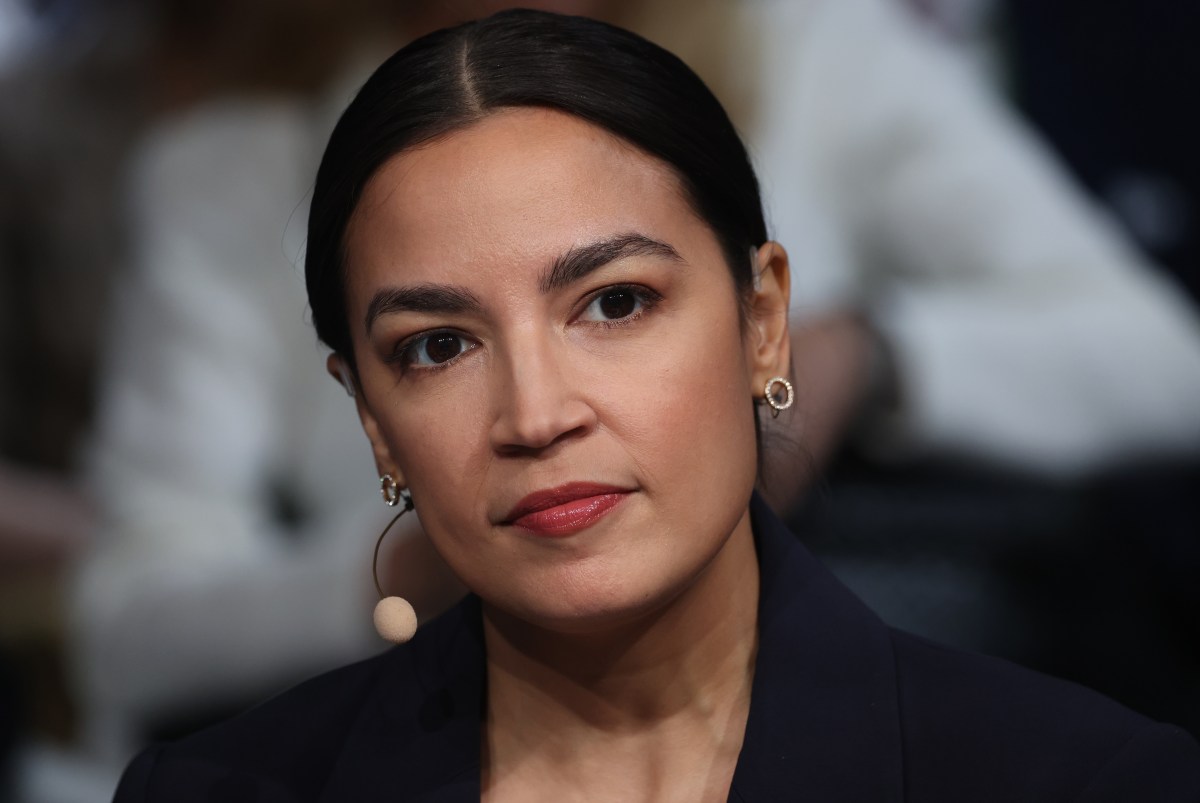
Representative Alexandria Ocasio-Cortez has acknowledged the uphill battle she faces if she wants to become president, and a new poll shows her favorability has flipped from last year.
Ocasio-Cortez is a frontrunner for the 2028 democratic nomination for president, according to prediction markets and polls. She's a fundraising powerhouse, and with about a third of the Democratic base identifying as a Democratic socialist, analysts are advising people to not count her out when it comes to 2028.
But polls indicate that she could struggle against Vice President JD Vance in a 2028 head-to-head matchup, and a new poll from her home state could be a warning sign.
A Siena College poll released Wednesday found Ocasio-Cortez with a –1 net favorability rating, down from +5 in November 2025.
Newsweek reached out to Representative Alexandria Ocasio-Cortez for comment via email but did not receive a response in time for publication.
Ocasio-Cortez is up for reelection this year, but her plans for beyond this election are still up in the air. In a recent New York Times interview, she didn't rule out the possibility that she'll run for Senator Chuck Schumer's seat in 2028 when he's up for reelection or that she'll throw her hat in the ring for president.
She said that decision won't come until after the midterms, but she's not naive that it could be difficult for her to win.
“This country has never elected a female president. Why are we pretending that this is not a factor?” Ocasio-Cortez told the New York Times. “That doesn’t make it impossible, but to act as though it’s not a factor in anything ever is really a form of, like, denialism.”
Polymarket, a prediction market, has Ocasio-Cortez at 18 percent chances of winning the Democratic nomination for the 2028 presidential election. She's followed by Senator Jon Ossoff at 16 percent. She's been the frontrunner on the prediction market since mid-August.
However, her chances of winning the presidential election differ from Vance's. Polymarket gives her a 13 percent chance of winning the 2028 presidential election, compared to Vance's 21 percent.
Polling tells a similar story at this point in the election cycle.
She was the only candidate in Emerson College's August survey that lost in a hypothetical matchup to both Vance and Secretary of State Marco Rubio. She loses to Vance 44 percent to his 46 percent.
In a Quantus Insights survey from the end of August, Ocasio-Cortez trailed Vance 41.8 percent to 45.1 percent.
The Siena College poll highlights this difference between her chances of winning the Democratic nomination and the presidential election. While Ocasio-Cortez's net favorability rating has grown over the last year among Democrats, from 40 percent to 53 percent, her favorability among independents has dropped. In 2025, her net favorability among independents was –1; it has since grown to –15.
Her appeal to union households has also slipped underwater, going from +1 net approval in November to –7 net approval in September.
Even her appeal in New York City, the most liberal part of the state, has dropped, going from a net approval of 28 in November to 22 in September.
Young people are one of the few demographics that view Ocasio-Cortez more favorably now than they did last year. In 2025, Ocasio-Cortez had a 22 percent net favorability rating among voters 18-34 years old, and now she has a 33 percent net favorability rating among the demographic.
Ocasio-Cortez told The New York Times that she's worried her identity as a Latina woman could hinder her chances of becoming president, and that her gender is a factor she's weighing as she decides whether to run.
“I’m not naïve to the fact that we are living under a very regressive administration, and I happen to be a woman, and I, you know, happen to be Latina. And I think that there’s a lot of conversation about electability, and I don’t kind of shy away from those realities,” Ocasio-Cortez said.
Newsweek’s reporters and editors used Martyn, our AI assistant, to produce this story. Learn more about Martyn here. Contact Newsweek editors on this story: Jason Lemon and Gray R. Thomas