Arrest powers under GST regime likely to be removed in bid to address concerns on overreach by tax authorities - The Indian Express
More than nine years after its rollout in July 2017, the Goods and Services Tax (GST) regime is set to see a major overhaul — removal of arrest powers.
In a bid to boost investor sentiment and allay concerns about overreach by tax authorities, the upcoming GST Council meeting, on October 7, will take up the proposal to decriminalise offences under the indirect tax regime, two persons aware of the development told The Indian Express.
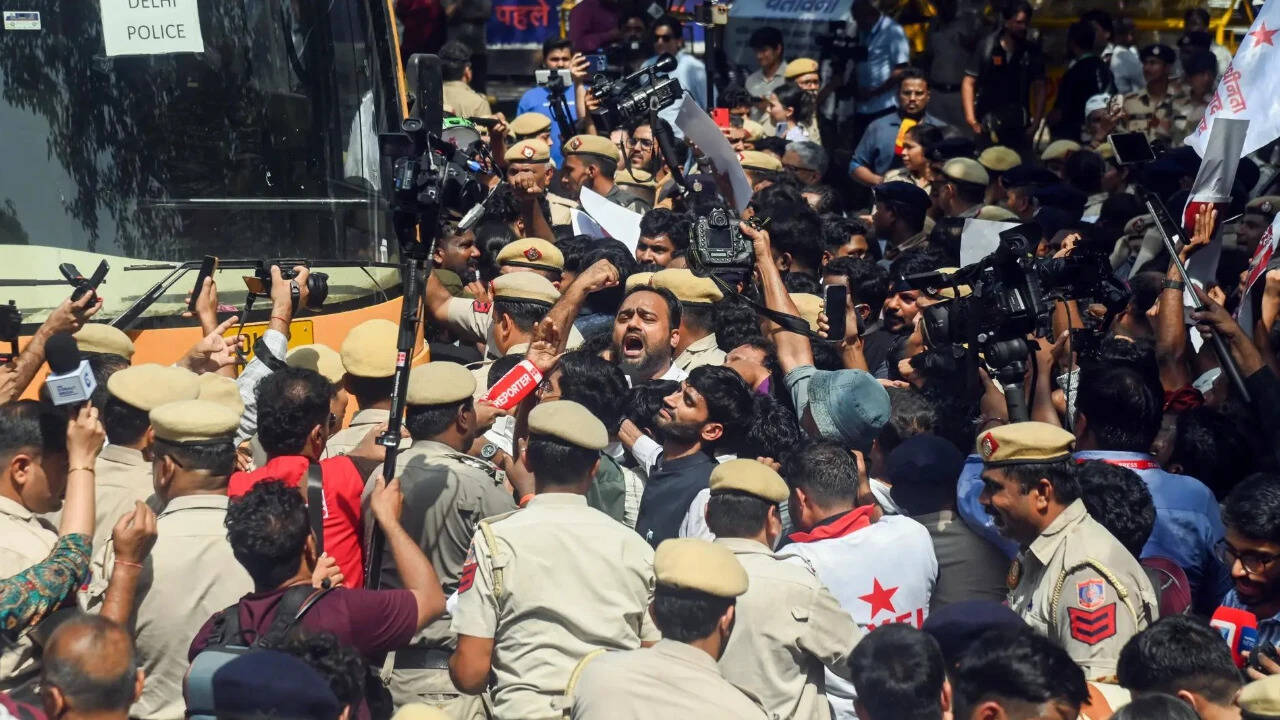
The Centre and the states are learnt to have held several meetings over the last eight-nine months, including involvement at the top levels of the Union government, to reach a broad consensus on removal of the arrest provisions under GST, which were being seen as a major impediment for traders and businesses. The move is viewed as urgent as several arrests of high-ranking functionaries were made in recent times under the GST provisions that were termed by industry leaders as an overreach.
For intentional frauds and deceit under GST, the authorities will proceed with prosecution and arrests will be through the country’s criminal code, Bharatiya Nyaya Sanhita, a source said.
“The consultations had been going on since the last eight-nine months. The feedback from businesses about the arrests has been taken into account to move ahead with this discussion. The GST Council will take up the matter and the final decision will be taken after that, following which there will be legislative changes to allow removal of arrest provisions under GST laws,” said a source.
After the rollout of GST in July 2017, authorities have grappled with multiple instances of frauds, involving broadly similar modus operandi. Typically, such cases involve fake identities or mule accounts to undertake fraudulent GST transactions in a bid to avail input tax credit, or fake bills without actual supply of goods. Many suppliers also undervalue their final goods and show purchase of raw materials at lower rates. Or, they supply taxable goods and services without due payment of GST to the central and state governments.
In 72,393 cases of GST offences from 2021-22 to 2024-25, 887 arrests were made by central GST formations. The arrests by state authorities will be in addition to this number.
Under the Central GST Act, non-compliance can result in penalty under Section 122, interest under Section 50, and recovery of tax. However, violations involving deliberate intent to evade tax attract arrest and prosecution under the criminal provisions of the CGST Act.
Section 69 of the CGST Act provides for the power to arrest after approval by the Commissioner. Sub-section (1) provides that where the Commissioner has “reasons to believe” that a person has committed any offence related to fake invoices, fraudulent availment of input tax credit, he may, by order, authorise any officer of central tax to arrest such person. The “reasons to believe” have to be backed by credible material and evidence, and mere suspicion is not sufficient, with all the reasons required to be recorded in writing.
According to sources, after the GST Council discusses the issue at its upcoming 57th meeting slated on Wednesday, the Centre is expected to bring in an amendment in the Winter Session of Parliament to enable the removal of arrest powers.
Industry experts said arrests had become a harassment tool, especially in the services sector, including banking and insurance, and would often be deployed as a bargaining tool for businesses to pay penalty in order to avoid prolonged legal battles. An official said the removal of arrest powers would be a taxpayer-friendly measure and remove any perceptions of fear and harassment.
The concern about arrest powers under GST laws is not new. It was flagged by several states in the early meetings of the GST Council, even before the 2017 rollout of the indirect tax regime.
In the fifth GST Council meeting held in December 2016, the Maharashtra Additional Chief Secretary had observed that the power of arrest and confiscation was not in tune with the concept of ease of doing business, according to the minutes of the meeting. A minister from West Bengal had said that under VAT law, there was no power of arrest and that First Information Report (FIR) could be lodged only with the police, and it may not be prudent to give such powers to the tax authority.
The Commissioner, GST Council, had said that under GST, the provision of arrest was highly restricted and the power could be exercised only where combined evasion of duty was Rs 2 crore or more and where offence was very severe — where supplies were made without any invoice; invoice was made without any supply; tax collected but not paid to the government; tax collected in contravention of provisions of the GST Act but not paid to the government; and taking input tax credit without receiving goods and services.
An official document from the Central Board of Indirect Taxes and Customs (CBIC) stated that in the administration of taxation, the provisions for arrests are created to tackle the situations created by some unscrupulous tax evaders.
“To some, these may appear very harsh, but these are necessary for efficient tax administration and also act as a deterrent and instill a sense of discipline. The provisions for arrests under GST law have sufficient inbuilt safeguards to ensure that these are used only under authorisation from the Commissioner. Besides this, the GST law also stipulates that arrests can be made only in those cases where the person is involved in offences specified for the purposes of arrest and the tax amount involved in such offence is more than the specified limit,” it said.
The government has been moving towards decriminalisation of offences on the direct tax side as well. The Central Board of Direct Taxes (CBDT) had, in September, removed arrest and detention provisions from the tax recovery rules with retrospective effect from April 1, 2026, barring tax officials from undertaking arrest in case of tax default. In a notification dated September 17, the CBDT had brought in Income-Tax (Fourth Amendment) Rules, 2026, which also removes “arrest and detention” from the tax recovery rules in case of death of the defaulter.
Aanchal Magazine is a Deputy Associate Editor with The Indian Express, serving as a leading voice on the macroeconomy and fiscal policy. With 15 years of newsroom experience, she is recognized for her ability to decode complex economic data and government policy for a wider audience. Expertise & Focus Areas: Magazine’s reporting is rooted in "fiscal arithmetic" and economic science. Her work provides critical insights into the financial health of the nation, focusing on: Macroeconomic Policy: Detailed tracking of GDP growth, inflation trends, and central bank policy actions. Fiscal Metrics: Analysis of taxation, revenue collection, and government spending. Labour & Society: Reporting on labour trends and the intersection of economic policy with employment. Her expertise lies in interpreting high-frequency economic indicators to explain the broader trajectory of the Indian economy. Personal Interests: Beyond the world of finance and statistics, Aanchal maintains a deep personal interest in the history of her homeland, Kashmir. In her spare time, she reads extensively about the region's culture and traditions and works to map the complex journeys of displacement associated with it. Find all stories by Aanchal Magazine here ... Read More