Before and after: Satellite images show severe damage to Saudi oil pipeline after drone attack
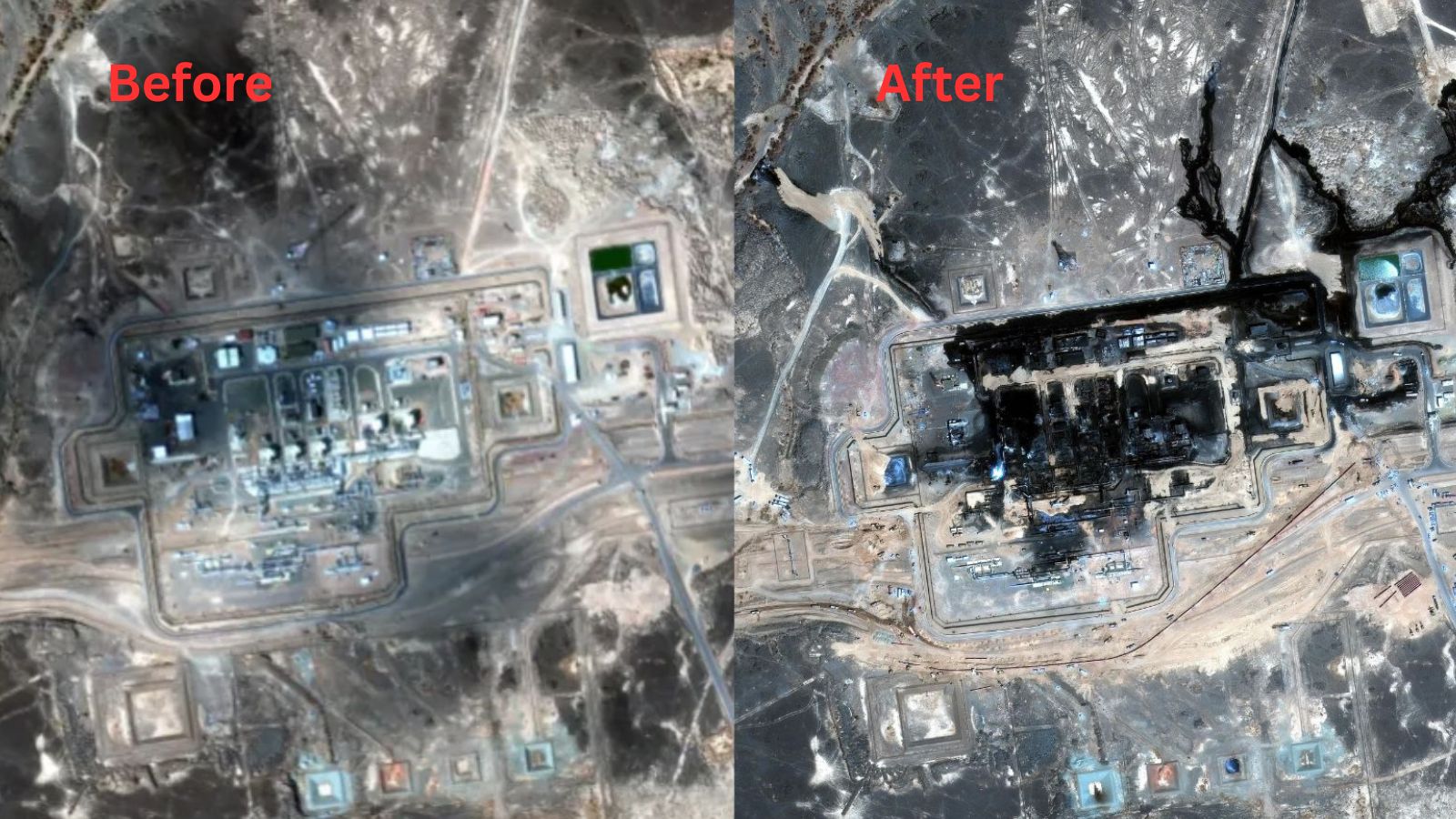
Newly released satellite photographs have revealed the extent of damage caused by a drone strike on Saudi Arabia’s East-West pipeline, a vital artery that carries crude across the Arabian Peninsula to the Red Sea. Oil traders now warn that Saudi Arabia risks running out of exportable stocks within days unless the line is brought back into service, a shortfall that could remove close to 4% of global oil supply from the market.
The pipeline, which runs 1,200km (745 miles) from the Gulf coast to the port of Yanbu on the Red Sea, has for months allowed Saudi Arabia to sidestep the worst effects of the wartime closure of the Strait of Hormuz. Riyadh has not yet given a full account of the damage or said when the route might reopen, and estimates gathered by Reuters from industry sources range from a partial restart within days to repairs stretching out to six weeks.
Saudi officials said the pipeline came under attack on the morning of Thursday September 10 in the Riyadh and Medina regions, according to the Saudi Press Agency, cited by fact-checking outlet Misbar. The Ministry of Energy said the strikes caused injuries among workers, who received medical treatment, and that emergency crews moved in straight away to secure the site and assess the damage. Saudi Arabia’s Foreign Ministry said the drones had been launched from Iraq.
BBC reported that Riyadh shut the pipeline down as a precaution once the scale of the damage became clear, with images of scorched earth and rising smoke soon circulating.
Analysis by Misbar’s editorial team, working with imagery from the Copernicus Browser platform, tracked the aftermath through data from the Sentinel-2 and Sentinel-3 satellites. A large, elongated dark plume consistent with smoke appeared in imagery captured on 10 September, absent from a clear image taken the day before. By 11 and 12 September, the plume had dispersed, but wider-angle pictures from 12 September showed a blackened, charred area around the pumping station that was not present in equivalent imagery from 7 September.
Meanwhile satellite operator Vantor released images comparing the site before and after the attack, showing a pumping station that the Guardian described as visibly charred and damaged. The BBC published similar before-and-after imagery supplied by Planet Labs PBC.
Iraq’s government said it had removed a military commander from his post and opened an investigation after confirming the drones had been launched from Maysan governorate, a province bordering Iran, the BBC reported. Baghdad said in a statement that it condemned the attack and would not tolerate any activity that endangered its ties with neighbouring states.
However, armed factions linked to the Islamic Resistance in Iraq denied any involvement, saying in a statement reported by Misbar that they were surprised the Iraqi government had moved so quickly to accept the allegations without what they called credible evidence.
Saudi Arabia has so far held back from retaliating, its Foreign Ministry said, after a phone call with Iraq’s prime minister, though it added that it reserved the right to take whatever measures were needed to protect its territory and facilities. The Gulf Co-operation Council issued its own statement condemning the strike as a dangerous escalation.
With the pipeline offline, the Reuters sources said Yanbu had enough stock to maintain exports for only five to seven more days. Saudi Arabia also holds reserves at Egypt’s Ain Sukhna terminal on the Red Sea and Sidi Kerir on the Mediterranean, though a fourth source told Reuters those, too, were not full and would eventually run dry without the pipeline back in operation.
Brent crude rose more than 3% to around $108 a barrel on Sunday, its highest level since May, as the market weighed the loss of Saudi supply on top of existing disruption from the Strait of Hormuz. The BBC quoted Richard Bronze of Energy Aspects, who said the market’s usual buffers had largely been exhausted, meaning prices were likely to keep climbing if the crises in the region persisted. He added that prices could return to the $120 peak seen earlier in the Iran war, or go higher still, unless conditions across the Middle East improve.
Hopes of easing tension were dealt a setback when Oman’s foreign minister, Sayyid Badr Albusaidi, announced that a regional meeting planned for Monday had been postponed “in the interests of consensus,” according to the Guardian. Iranian officials had been expected to attend and present a proposed agreement with Oman on governing shipping through the Strait of Hormuz, which Iran now requires vessels to seek permission to use.
The disruption to the pipeline has coincided with rapid gains by Yemen’s Iran-aligned Houthi movement, which the BBC and the Guardian both reported has seized much of the country’s Red Sea coastline, including the strategic city of Mokha and the island of Perim in the Bab al-Mandab Strait. The Houthis said shipping through the strait remained open to all vessels except those belonging to Saudi Arabia.
Government-aligned Yemeni forces said they had struck back around Mokha, destroying vehicles and weapons and killing a number of Houthi fighters, according to military spokesman Majid al-Nuzaili. The United Nations said at least 76,000 people had been displaced in Yemen since July, with the pace of displacement quadrupling over the past week, warning of families fleeing at night with nothing but the clothes they were wearing.
The combined pressure on Gulf and Red Sea shipping routes has pushed diesel prices in the United States past $6 a gallon, a record high reported by the Guardian, with knock-on effects expected for manufacturing and transport costs more broadly. Energy Aspects’ Bronze noted that rerouting Saudi oil via the Suez Canal and around Africa was already adding around 30 days to shipping times even before the latest escalation, pushing up both transport costs and inflation fears worldwide.
The crisis in the Middle East is now in its seventh month, following the US and Israeli strikes on Iran launched on 28 February.
The Express Global Desk at indianexpress.com which delivers authoritative, verified, and context-driven coverage of key international developments shaping global politics, policy, and migration trends. The desk focuses on stories with direct relevance for Indian and global audiences, combining breaking news with in-depth explainers and analysis. A major focus area of the desk is US immigration and visa policy, including developments related to student visas, work permits, permanent residency pathways, executive actions, and court rulings. The Global Desk also closely tracks Canada’s immigration, visa, and study policies, covering changes to study permits, post-study work options, permanent residence programmes, and regulatory updates affecting migrants and international students. All reporting from the Global Desk adheres to The Indian Express’ editorial standards, relying on official data, government notifications, court documents, and on-record sources. The desk prioritises clarity, accuracy, and accountability, ensuring readers can navigate complex global systems with confidence. Core Team The Express Global Desk is led by a team of experienced journalists and editors with deep expertise in international affairs and migration policy: Aniruddha Dhar – Senior Assistant Editor with extensive experience in global affairs, international politics, and editorial leadership. Nischai Vats – Deputy Copy Editor specialising in US politics, US visa and immigration policy, and policy-driven international coverage. Mashkoora Khan – Sub-editor focusing on global developments, with a strong emphasis on Canada visa, immigration, and study-related policy coverage. ... Read More