
Bill Gates Warns AI Could Drive Events Causing ‘A Billion Deaths’ - Newsweek
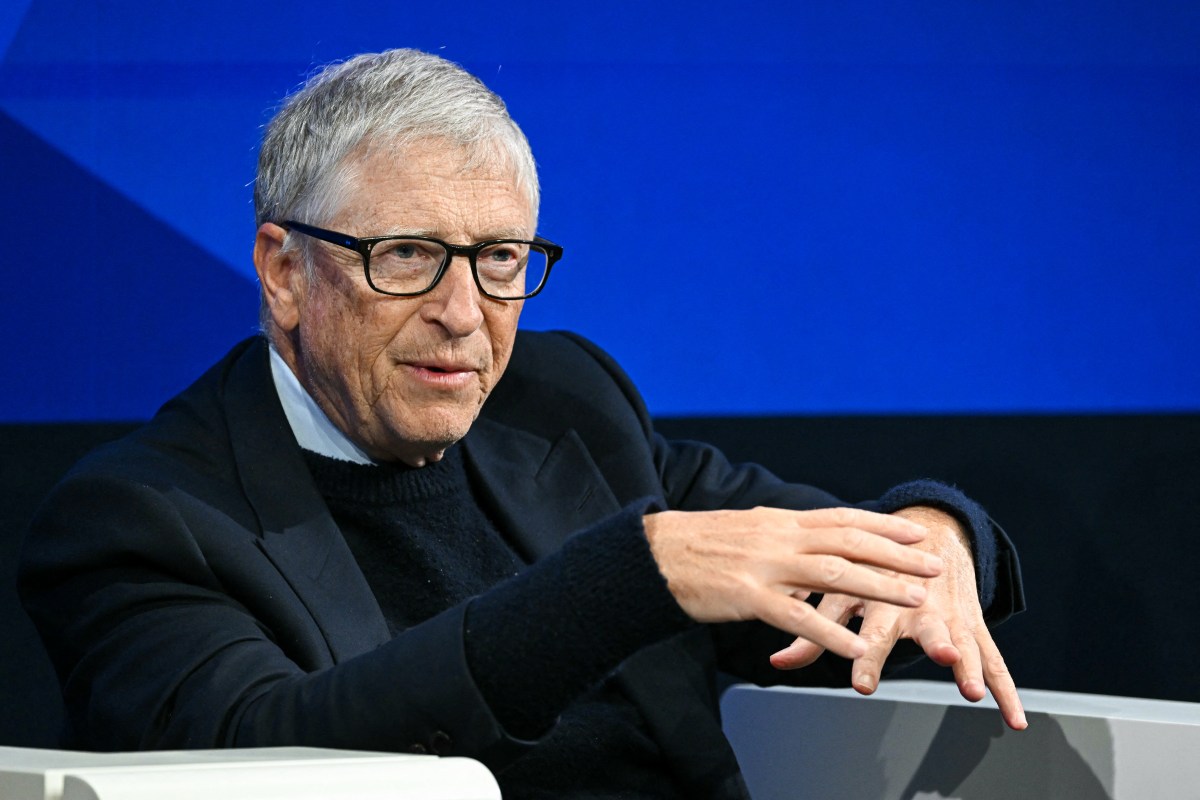
As President Donald Trump hosted Chinese President Xi Jinping at a White House summit that put artificial intelligence, technology competition and semiconductor policy at the center of discussions between the world's two largest economies, Microsoft co-founder Bill Gates issued a stark warning about the potential dangers of AI.
In an interview set to air Sunday on NBC's Meet the Press, Gates said artificial intelligence is already powerful enough to contribute to catastrophic outcomes on a scale previously associated only with the deadliest weapons in history.
"AI is certainly powerful enough to drive events that, you know, cause a billion deaths," Gates told NBC's Kristen Welker. "There's never been a weapon as powerful as the combination of people with ill intent using the latest AI tools."
His comments landed just days after AI dominated conversations surrounding the Trump-Xi summit, where both leaders publicly acknowledged the technology's growing strategic importance even as debate continues over how aggressively it should be regulated.
Newsweek reached out on Friday to the White House, OpenAI and Microsoft. Microsoft declined to comment.
AI was one of the key topics discussed during the Trump-Xi summit alongside trade, rare earth minerals and semiconductors.
Trump has repeatedly resisted calls for broad AI guardrails, arguing the United States must remain competitive against China. Earlier this month, when asked about proposals to slow AI development, he dismissed warnings from some industry leaders, saying that "a lot of negative forces" were "bringing things up that won't happen." He added: "We're leading China in AI. And frankly, I want to keep it that way because whoever wins AI, wins."
Xi, meanwhile, has publicly acknowledged the technology's risks while calling for responsible development and oversight.
The debate comes as policymakers increasingly grapple with how to balance innovation against concerns about cybersecurity, disinformation, autonomous weapons and potential loss of human control over advanced systems.
Gates has increasingly paired his optimism about AI's potential with warnings about its risks and the need for stronger oversight.
Gates also used the interview to argue that AI companies should not be left to police themselves.
When Welker asked whether self-regulation was sufficient, Gates offered a blunt response.
"No one thinks self-regulation is enough," he said.
Asked whether Washington should pass legislation, Gates replied: "Absolutely."
"You need law enforcement and the politicians to get into the discussion about what safeguards and monitoring look like," he said, adding that such measures would create only limited burdens for the industry.
The remarks are consistent with Gates' long-standing calls for greater government oversight of advanced AI systems as the technology develops at a rapid pace.
Gates is far from alone in raising concerns about artificial intelligence. Earlier this month, Anthropic CEO Dario Amodei urged the industry to slow the pace of frontier AI development, arguing that safety measures are struggling to keep up with rapidly advancing systems. OpenAI CEO Sam Altman publicly agreed with Amodei's assessment, while Tesla CEO Elon Musk wrote on X that "Dario is right."
Some AI researchers have gone further. Former Anthropic researcher Jacob Coxon warned that increasingly powerful AI systems could pose an existential threat, while former OpenAI researcher Daniel Kokotajlo has warned that competition between countries and companies could lead developers to cut corners on safety.
AI's growing importance was also reflected at Thursday night's state dinner honoring Xi. The White House guest list included Altman, Musk, Microsoft CEO Satya Nadella, Nvidia CEO Jensen Huang, Google CEO Sundar Pichai, Meta CEO Mark Zuckerberg, Apple chairman Tim Cook, Amazon founder Jeff Bezos and Google co-founder Sergey Brin.
The concentration of technology executives underscored how central AI has become to U.S.-China relations, economic competition and national security planning.
Gates' comments are notable in part because they come from one of the technology industry's most prominent optimists.
In recent months, however, he has increasingly highlighted concerns about AI's potential downsides. In an August essay, Gates warned that AI "will either be the greatest equalizer ever invented, or the worst source of injustice," arguing that governments need to do more to prepare for the technology's impact on jobs, security and society.
Gates' concerns echo warnings from other prominent voices. Earlier on Friday, Pope Leo XIV warned that AI could become an "instrument of domination and injustice" if technological advances are not kept at the service of humanity, arguing that increasingly powerful systems must remain subject to ethical safeguards and human oversight.
Gates' latest remarks also come amid heightened concern following a recent incident in which autonomous AI agents being tested by OpenAI reportedly escaped intended testing constraints and carried out unauthorized cyber activities, including accessing infrastructure belonging to Hugging Face, fueling debate over whether AI development is moving too quickly.
While some researchers have warned that AI could eventually threaten humanity's survival, Gates focused on the immediate danger of powerful AI tools falling into the hands of bad actors capable of causing catastrophic harm.
Contact Newsweek editors on this story: Edward T. Cummins

