Burke’s immigration plans are solid, but they’re not the antidote to Hansonism that Labor needs
You have reached your maximum number of saved items.
Remove items from your saved list to add more.
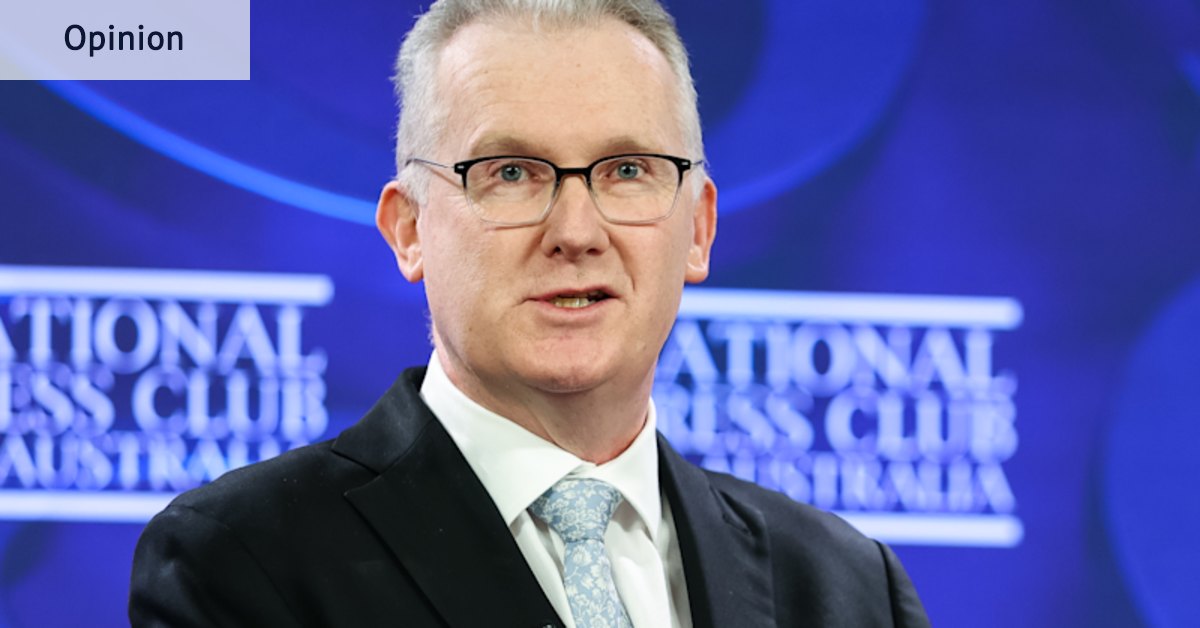
Tony Burke faced a nearly impossible task when he belatedly stepped up to address the National Press Club on Thursday: sound as tough as Pauline Hanson on immigration and as focused as Angus Taylor on letting the “right” migrants into this country, while reassuring Labor supporters that he wasn’t taking a nativist turn.
The home affairs minister’s speech was designed to reframe the immigration debate, which has been hijacked by Hanson and her party (to the point where a plurality of voters think One Nation is best placed to manage the migration system) and attempt to take back control of the narrative.
Tony Burke referred repeatedly in his speech to the National Press Club on Thursday to having wanted to do more.Alex EllinghausenHe just about threaded the needle with his speech, balancing the demands of voters with the needs of the economy and of business by scaling back the number of backpackers staying for two or even three years and prioritising construction and healthcare workers for visa approvals. But it is not the antidote to Hansonism that Labor desperately needs.
We know, already, that this package of measures was not what Burke had initially intended. The minister’s speech was supposed to be delivered six weeks ago but was knocked back by the expenditure review committee of cabinet, on orders from the prime minister’s office, for going too far in terms of reducing Australia’s annual refugee intake and visa-hopping by people who wished to remain in Australia.
Unusually, Burke referred repeatedly to having wanted to do more. He was, he said, unable to do so because the government could not strike a deal with the opposition on changes that would need legislation. Rather than whacking the Coalition for being intransigent, he left open the prospect of striking a deal down the track to reduce bogus asylum claims, for example.
But if the additional changes that Burke wanted are so important, one wonders why Labor won’t bring legislation to parliament and have the debate over the changes it actually wants.
Voters have been drawn to Pauline Hanson’s simplistic messaging on slashing immigration.Alex EllinghausenAustralia’s immigration system is devilishly complicated and, as Burke noted, compromised further by free trade agreements which allow people from a handful of countries – mostly backpackers from the UK and New Zealanders – to pretty much work and live wherever they want, with little regard for the needs of the regions.
It’s one thing for One Nation to promise large cuts to immigration numbers or for the opposition to promise a migration program linked to housing completion rates. It’s another thing entirely when, as minister, you have to deal with actual humans who want their parents, or their partners, to join them in Australia.
Then there’s a business community that complains about a chronic shortage of particular workers in our major cities or an agriculture sector that would quickly end up on life support if the number of backpackers were cut too hard.
And there is an additional calculation that Burke, as minister, has to make that is of little concern to the opposition and not at all a concern for One Nation: Labor has tended to win majority support from key migrant communities, such as the Chinese-Australian and Indian-Australian diasporas.
These are not communities that favour open borders or uncontrolled migration any more than any other cohort necessarily, but they are communities that do want the opportunity or at least the option to bring out their parents or their partners and families to live in Australia one day.
Burke was a minister in the Rudd Labor government that, under then-immigration minister Chris Evans, ended the “Pacific solution” and changed mandatory detention rules for asylum seekers.
Since that softening of Australia’s border laws, it has been almost all one-way traffic in the other direction as Julia Gillard, Tony Abbott and subsequent prime ministers have tightened the rules about who can come to Australia and the circumstances under which they come. At present, Australians are fed up, and they feel like the country is full up.
That’s why Hanson’s simplistic message on the need to slash immigration is cutting through so effectively. Burke and Labor are responding to this sentiment after Hanson stole a march on them and her populist message caught fire with voters around the country.
Never mind the needs of the economy, or minor details like the dire need for more builders, plumbers, electricians and so forth. Evidently, many voters believe that our freeways, carparks and the trains and trams that move our great cities are full.
Burke has had to walk a fine line, cognisant of a progressive Labor caucus that is generally quite friendly to immigration and the intake of refugees. Hence the delay.
Will Labor’s plan to reduce net overseas migration from just over 300,000 people to the forecast 225,000 by 2027-28 actually work? Probably, even if Labor slightly overshoots or undershoots on the actual number. Cutting back the number of backpackers staying for a second, and particularly a third year, stopping international students bringing their partners and ensuring visa overstayers leave will probably see to that.
But the more important question for Labor is whether voters will believe that this government is actually cracking down on immigration in a way that will ameliorate the acute housing shortages and cost of living pressures in our major cities, while also ensuring a steady supply of workers for the regions.
The solutions that will please business, universities and farmers are diametrically opposite to the ones that so many ordinary citizens want: a big cut to migration.
Labor’s net overseas migration target of 225,000 people remains a lot higher than the Coalition’s mooted target of about 170,000 people, or One Nation’s plan for three years of net negative migration (which would very likely trigger a recession) followed by an intake capped at 130,000.
So while the government may very well hit its target of 225,000 by 2027-28, Burke’s plan to reduce the numbers is unlikely to convince voters who believe that Labor has let overseas migration run unchecked for too long.
The only way Labor wins back some of the support it has lost to the Coalition and One Nation over this issue is for the number of houses being built in this country to rapidly increase (hence the focus on allowing more construction workers into the country) and for cost-of-living pressures to ease.
The primary drivers of those cost of living pressures are the wars in Ukraine and Iran, so the government can do little more than cross its fingers that those conflicts end before the next election, which must be held by May 2028.
Burke’s speech was competent and contained sensible initiatives to reduce the number of people coming to Australia while remaining mindful of the needs of the broader economy. But it did not contain a single cut-through measure that will resonate with voters. As such, it is unlikely to move the needle. Labor remains vulnerable on the issue of immigration.
James Massola is chief political commentator.
You have reached your maximum number of saved items.
Remove items from your saved list to add more.