Buy and hold: How wealthy Nigerians in diaspora leverage luxury homes - The Guardian Nigeria News
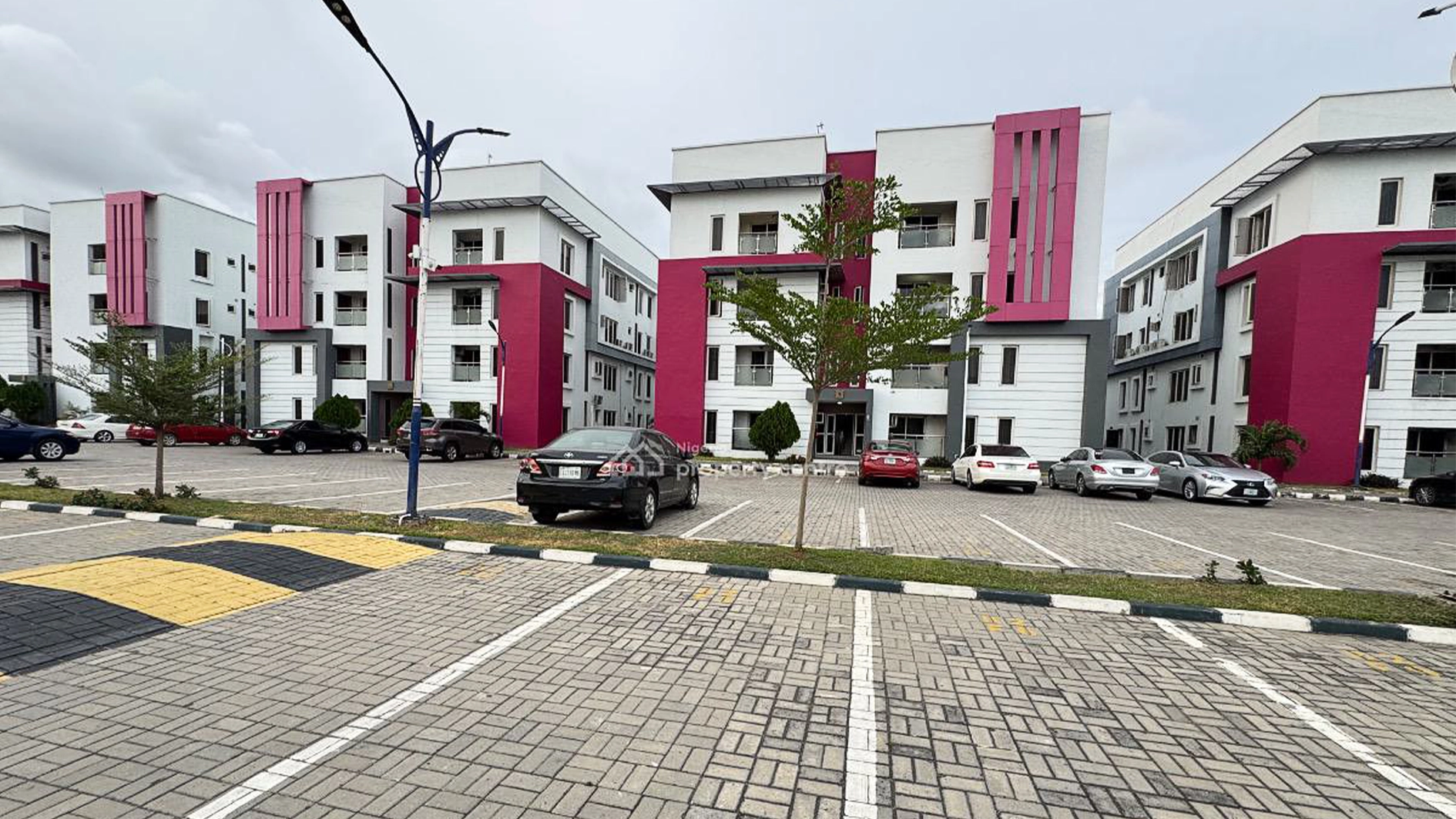
Apartments in Lekki Phase 1, Lagos.
Apartments in Lekki Phase 1, Lagos.
While millions of Nigerians struggle to find affordable accommodation, some of the country’s most expensive homes are being acquired as investment assets, with some remaining unoccupied or underutilised. Experts say diaspora Nigerians are significant investors in Lagos’ luxury property market. However, most such properties are occupied, rented or used occasionally, making extended vacancy better described as under-utilisation than outright abandonment, CHINEDUM UWAEGBULAM reports.
For many Nigerians living abroad, buying a home in major cities such as Lagos has long been associated with returning home, securing a retirement residence or providing accommodation for family members.
But a different pattern is emerging in the country’s luxury property market. Some wealthy Nigerians in the diaspora are buying expensive homes in prime locations, leaving them largely unoccupied and holding them as investment assets while waiting for their value to rise.
The practice, variously described by industry operators as investment holding, property hoarding or speculative investment, is difficult to quantify because Nigeria has no comprehensive database tracking the occupancy status of luxury properties or the residence of their owners.
Evidence from Lagos’ high-end property market, however, suggests that diaspora investment is an important component of demand for luxury housing, particularly in Ikoyi, Banana Island, Victoria Island, Lekki and Eko Atlantic.
The Guardian reported that demand from diaspora investors is helping to drive Nigeria’s luxury estate market, with developers targeting high-net-worth Nigerians living abroad with premium apartments and gated residential developments.
Northcourt findings last year showed that developers in leading markets, including Lagos, Abuja and Port Harcourt, reportedly attributed 70-80 per cent of sales to diaspora clients. Knight Frank’s H2 2025 report on Abuja also highlighted high vacancies associated with expensive properties.
Estate Intel, however, has described diaspora buyers as a major source of residential demand, with greater activity in $40,000-$400,000 middle-income and deluxe properties than in million-dollar homes.
Estate Intel data cited by The Guardian showed that about 753 apartments priced at $1 million or more were under construction in Lagos, with much of the supply concentrated in the city’s most exclusive neighbourhoods. The figures point to substantial capital flowing into properties beyond most Lagos residents’ purchasing capacity.
A Nigerian living in London, New York, Toronto, Houston or Dubai may see buying property in Lagos as a way of maintaining a financial connection with home. The investment may be intended for retirement, children, family members or eventual relocation. Others see property as a tangible way of protecting wealth against inflation and naira depreciation.
For some buyers, immediate rental income may not be the primary objective. A luxury apartment purchased for hundreds of millions of naira may simply be held until its value increases sufficiently to justify a sale.
Nigerians earning dollars, pounds or other foreign currencies also have an opportunity to deploy their earnings into a physical asset in Nigeria. The naira’s depreciation has further altered the relationship between foreign-currency income and local property prices.
From a developer’s perspective, Nigerians abroad represent an attractive market because they often have access to foreign-currency earnings and may be less dependent on local mortgage financing. The products marketed to them range from luxury apartments, waterfront residences, serviced developments, gated estates, to smart homes and properties with extensive facility-management services.
That creates what can be described as the “buy and leave” phenomenon: the acquisition of a property without immediate occupation or, in some cases, without putting it into the conventional rental market.
According to last year’s State of Lagos Housing Market report by the Roland Igbinoba Real Foundation for Housing and Urban Development, the phenomenon is a notable characteristic of Lagos’ luxury housing market.
The report stated that it contributes to a growing number of unoccupied luxury buildings in major Nigerian cities, even as a significant housing deficit persists among the general population. It attributed the trend partly to naira devaluation, which gives Nigerians in the diaspora greater purchasing power when acquiring properties in Nigeria, even when they do not intend to occupy them.
The report also noted that some investors were hesitant to return and occupy the properties because of security and liveability concerns, while real estate serves as a means of asset storage and transgenerational wealth transfer in Nigeria’s volatile economic environment.
It said the resulting paradox of unoccupied luxury units alongside a severe housing deficit points to a market driven partly by investment and asset storage rather than immediate owner-occupancy needs.
The phenomenon becomes more significant when viewed against Lagos’ housing shortage. The State of Lagos Housing Market report put the city’s housing deficit at approximately 3.4 million units, while more than 70 per cent of residents are renters.
For developers, however, diaspora demand represents a significant commercial opportunity. The Guardian has reported that luxury development in Lagos remains concentrated in areas such as Ikoyi, Victoria Island and Lekki, while developers are increasingly exploring other locations where affluent buyers are emerging.
Developers argue that there is genuine demand for high-quality housing from Nigerians abroad who want modern properties with reliable power, security, parking, recreational facilities and professional management.
For diaspora investors, the decision is ultimately financial. A property that appreciates significantly may deliver a strong return even if it remains empty. But the calculation should also include maintenance costs, service charges, security, taxes, insurance, depreciation and income that could have been earned through responsible letting.
The Guardian’s reporting on Lagos’ housing market has repeatedly highlighted the mismatch between where property investment is flowing and where housing need is greatest.
For wealthy Nigerians abroad, buying a luxury home in Lagos may represent a long-term investment, a future family home or simply a way of maintaining a connection with the country. But when a property remains locked up for years, neither occupied nor rented, it becomes more than a home; it becomes an idle asset.
Industry experts, however, caution that not every vacant luxury property should be classified as speculative. A newly completed apartment may be awaiting a buyer. A diaspora owner may occupy the property during visits to Nigeria. Another may leave it vacant because of security, maintenance or concerns about tenants.
Estate surveyors say one way of making diaspora property investment more productive is to encourage absentee owners to place their properties under professional management.
The immediate past Managing Director/Chief Executive Officer of WEMABOD Estate Limited, Yemi Ejidiran, told The Guardian that available evidence supports significant diaspora participation in Nigeria’s premium residential market.
However, he said it does not establish a reliable Lagos- or Abuja-wide percentage of diaspora purchases, owner-occupation or prolonged vacancy attributable to diaspora owners.
He explained that diaspora participation is commercially significant and may account for a substantial proportion of sales in some developers’ portfolios, but its market-wide share and the proportion of properties physically occupied by their owners remain unverified.
“A property whose owner lives abroad is not necessarily vacant. Conversely, a property described as ‘owner-occupied’ may function principally as an occasionally used second home,” he said.
According to Ejidiran, “Diaspora Nigerians constitute a significant source of demand in selected premium residential developments in Lagos and Abuja. Published industry reporting suggests particularly high participation in some developer portfolios, but available public data do not establish their citywide purchase share or owner-occupation rate.
“Some properties are retained for occasional use or wealth preservation; however, prolonged vacancy is also associated with pricing, tenant selection, building quality and affordability constraints. Diaspora purchasing power supports premium-market prices, alongside land scarcity, construction costs, infrastructure and domestic high-net-worth demand.”
The President of the International Real Estate Federation (FIABCI), Nigeria Chapter, Ayodeji Odeleye, also acknowledged that Nigerians in the diaspora are a significant force in Lagos’ luxury residential market and account for a substantial share of his company’s premium-market buyers.
He said the demand is driven by a desire to own an asset in Nigeria, preserve wealth and eventually return home. “However, ownership does not necessarily mean occupation. Many properties are bought as investments or future-retirement assets and often stay empty or are let out for much of the year.
“This is why professional property management matters. Diaspora owners need trusted managers to handle maintenance, security, tenancy and rent collection while they are away,” he said.
Odeleye, who is also the Vice Chairman of the Nigerian Institution of Estate Surveyors and Valuers (NIESV), Lagos Branch, said most diaspora-owned luxury homes are let out, either to long-term tenants or through short-let arrangements, making extended vacancy the exception rather than the norm.
“Where extended vacancy occurs, I would call it under-utilisation rather than outright vacancy. The owners of such apartments tend to visit a few times a year, or keep a flat in the property for family use or a future return. Some are reluctant to let because of concerns about security and property management in their absence, or because they prefer to hold the asset without tenants,” he said.
Odeleye said diaspora demand is one of the factors supporting property prices in Lagos’ prime areas, but is not the only driver.
“Listings are in naira, and very few buyers pay in foreign currency. Still, someone earning in dollars or pounds can afford much more at today’s exchange rate, and that shows most in Ikoyi, Banana Island, Victoria Island, Lekki and Eko Atlantic,” he said.
He emphasised that land scarcity, construction costs, infrastructure, security, as well as demand from local high-net-worth individuals, corporates and expatriates, also contribute to prices.
“As naira prices climb, the top end of the market becomes harder to reach for buyers who earn only in naira. The diaspora is part of that story, but the wider gap between the naira and foreign currencies is what has changed the market most,” he added.
The Chairman of the Association of Capital Market Valuers, Chudi Ubosi, said some Nigerians in the diaspora who return home regularly prefer to stay in their own properties rather than incur hotel expenses.
The estate surveyor and valuer, however, said diaspora investment in luxury locations such as Ikoyi, Banana Island, Victoria Island, Lekki and Eko Atlantic may not be as extensive as sometimes portrayed.
According to him, the high cost of properties in these locations can make some diaspora buyers reluctant to invest, particularly when they compare Nigerian property prices with those in their countries of residence.
He said, “The prices of properties here are actually easier for diaspora people to buy, no matter what, because of the favourable exchange rates. But despite that, the main market for properties in these locations is the local community. They form the most common buyers because they are used to these locations and appreciate that they are apex locations and that the properties are unlikely to get anything better.”