
Can Tennessee try to execute Christa Pike again after a failed lethal injection? - Newsweek
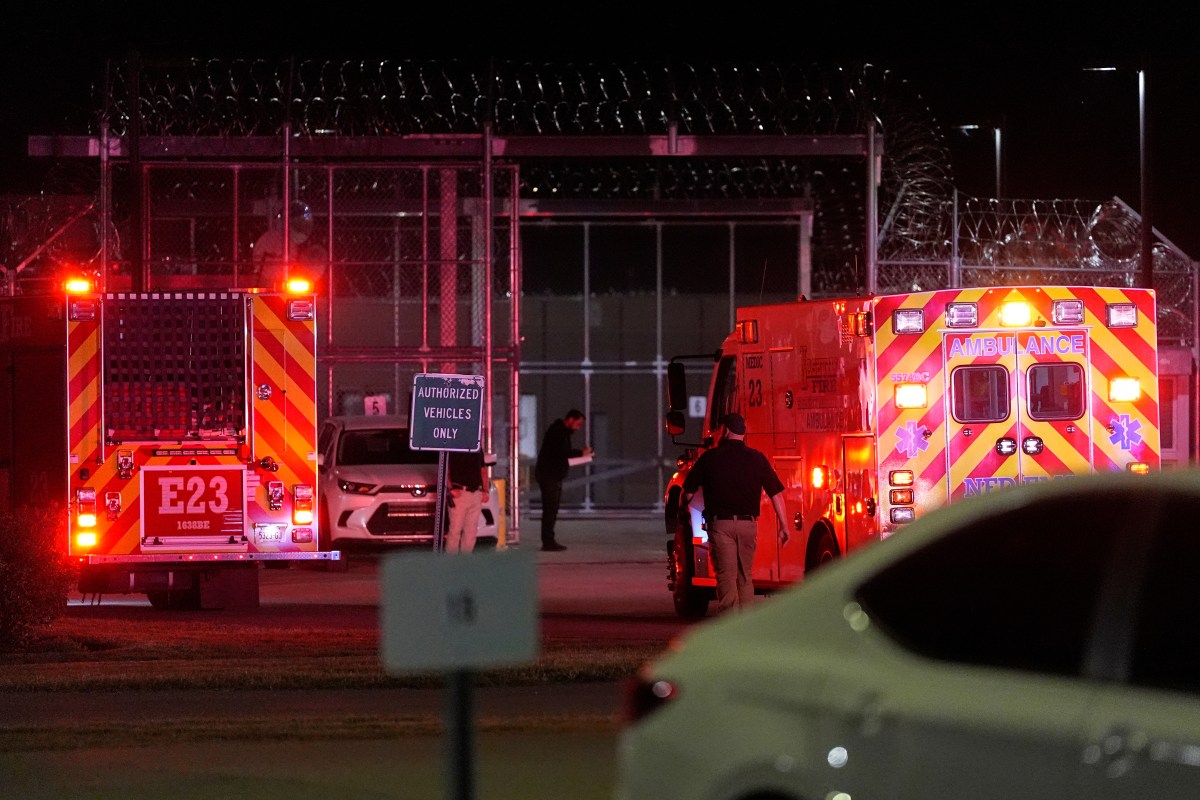
Tennessee death row inmate Christa Pike survived an execution attempt Wednesday night after being administered two doses of pentobarbital and transported to a hospital, raising an unusual legal question: Can a state try to execute someone a second time after a failed execution?
The answer appears to be yes, though Pike's case could present complications depending on her medical condition and what investigators ultimately determine went wrong during the execution attempt.
The central legal question is whether a second execution attempt would violate the Eighth Amendment's prohibition on cruel and unusual punishment.
Eric Berger, the Earl Dunlap Distinguished Professor of Law at the University of Nebraska who has written extensively on lethal injection litigation, told Newsweek that the strongest precedent favors Tennessee's ability to seek another execution date.
"Probably," Berger said when asked whether Tennessee can legally attempt to execute Pike again. "The Supreme Court in Louisiana ex rel. Francis v. Resweber found that the Eighth Amendment does not categorically bar a state from attempting a second execution after the first execution attempt fails."
The failed execution has already prompted Governor Bill Lee to order a third-party review and pause Tennessee's remaining scheduled executions for 2026. It also follows months of scrutiny over the state's execution procedures after inmate Tony Carruthers' execution was halted in May when officials were unable to establish IV access.
Pike was convicted of the January 1995 torture and murder of 19-year-old Colleen Slemmer, a fellow Job Corps student in Knoxville.
Prosecutors said Pike became jealous of Slemmer because she believed Slemmer was pursuing her boyfriend, Tadaryl Shipp. Pike, Shipp and another student, Shadolla Peterson, lured Slemmer to a secluded area near the University of Tennessee campus, where she was beaten, tortured and killed.
According to trial testimony, Pike kept a piece of Slemmer's skull and later showed it to classmates. A Knox County jury convicted Pike of first-degree murder and conspiracy and sentenced her to death in 1996.
Pike was 18 at the time of the crime and 20 when she received the death sentence. She spent roughly three decades on Tennessee's death row and would have become the state's first female execution in more than 200 years had the execution proceeded as planned.
Pike remains at an off-site medical facility after surviving the execution attempt.
According to statements by her attorneys, Pike was alive and receiving life-saving medical care after witnesses reported hearing her snoring and breathing following the administration of two rounds of pentobarbital. The Tennessee Department of Correction has declined to provide details about her condition.
In a Friday court filing, Pike's attorneys said she remains critically ill, unconscious, intubated and receiving breathing assistance through a ventilator while being treated for the effects of the pentobarbital administered during the execution attempt. They also said she suffered significant injuries to both arms.
Her condition could also carry legal implications.
Berger said one of the most important unanswered questions is whether Pike suffered any lasting neurological injury during the failed execution.
"If she suffered brain damage, she may not be competent to be executed," he said.
He noted that the Supreme Court's 1986 decision in Ford v. Wainwright held that the Eighth Amendment prohibits the execution of inmates who are severely mentally incompetent or insane.
“I would expect that her lawyer would have greater likelihood of success arguing that the State cannot attempt to execute her again because she is mentally incompetent," Berger said, though he stressed that any such claim would depend on facts that remain unknown.
Medical experts interviewed by Newsweek previously said Pike could survive intact, suffer injuries including possible brain damage, or die from complications related to the execution attempt, and have pointed to possible IV-line failures, degraded pentobarbital and unusual physiological responses as potential explanations.
On Friday, Pike's attorneys filed an emergency motion in Davidson County Chancery Court seeking an order requiring the Tennessee Department of Correction to preserve all evidence related to the failed execution attempt. The filing argues that preserving evidence is necessary to determine what happened and protect Pike's legal rights.
The attorneys said Pike and her legal team had warned for months that her medical conditions and history of difficult blood draws could complicate IV access and interfere with the delivery of pentobarbital.
According to the filing, execution team members used at least seven needles while attempting to establish IV access. The filing also alleges that Pike was administered two lethal doses of pentobarbital and remained alive afterward, prompting the current effort to preserve records and physical evidence related to the execution attempt.
Slemmer was a 19-year-old student who moved to Knoxville for job training. Family members have described her as kind, trusting and eager to build a better future.
Slemmer's mother, May Martinez, has consistently supported Pike's death sentence and has said justice has been delayed for decades.
The murder remains one of Tennessee's most notorious criminal cases. Pike's accomplices received significantly different punishments. Shipp, who was 17 at the time of the killing and therefore ineligible for the death penalty, received life in prison. Peterson cooperated with authorities, pleaded guilty as an accessory after the fact and received probation.
The key precedent is Louisiana ex rel. Francis v. Resweber.
In the 1947 case, Louisiana attempted to execute Willie Francis in the electric chair. The execution failed because of an equipment malfunction, and Francis argued that a second execution would violate constitutional protections against cruel and unusual punishment and double jeopardy.
The Supreme Court rejected that argument and permitted Louisiana to proceed with a second execution, which was later carried out.
Berger told Newsweek that despite being a plurality decision, Resweber remains the most important case directly addressing failed executions.
"I would say that Resweber is most likely the controlling authority in cases involving a failed execution attempt," he said.
He pointed to later cases in which Supreme Court justices cited Resweber approvingly and noted that the current court has generally been unsympathetic to Eighth Amendment challenges involving execution methods.
Still, Pike's case may differ from some modern precedents.
One of the most frequently cited examples is Romell Broom, an Ohio death row inmate whose execution was halted in 2009 after officials spent roughly two hours unsuccessfully trying to establish IV access. Ohio courts later ruled that the state could attempt to execute him again.
"The big distinction between the Pike attempt and the Broom attempt is that, as I understand it, in Broom's case, the State failed to set the IV lines, so they never started injecting the drugs," Berger said.
"By contrast, in Pike's, the State did inject the drugs."
Even so, Berger cautioned that courts may ultimately see this as "a distinction without a difference" under current Eighth Amendment doctrine.
He said Pike's attorneys could also try to argue that Tennessee's conduct was so deficient that another execution attempt would create an intolerable risk of severe pain and therefore violate the Constitution's prohibition against cruel and unusual punishment.
"The Supreme Court's decisions in this area are so hostile to Eighth Amendment method-of-execution claims that I think this argument would be a long shot," Berger said.
One reason Pike's case has attracted national attention is that legal scholars have struggled to identify a clear modern equivalent.
"I am not aware of any other attempted execution where the state actually administered the lethal injection drugs and the inmate survived," Berger said. "So, the Pike situation is, at least to some extent, uncharted territory."
The case has also renewed scrutiny of lethal injection's history of botched executions and failed execution attempts.
For now, Tennessee has paused future executions while investigators determine what happened. Whether the state eventually seeks another execution date may depend not only on the outcome of that review, but also on Pike's medical condition and the legal challenges that follow.
Contact Newsweek editors on this story: Jason Lemon and Sam Wilson.
