Canada’s AI minister takes aim at Big Tech’s plan to police itself - Toronto Star
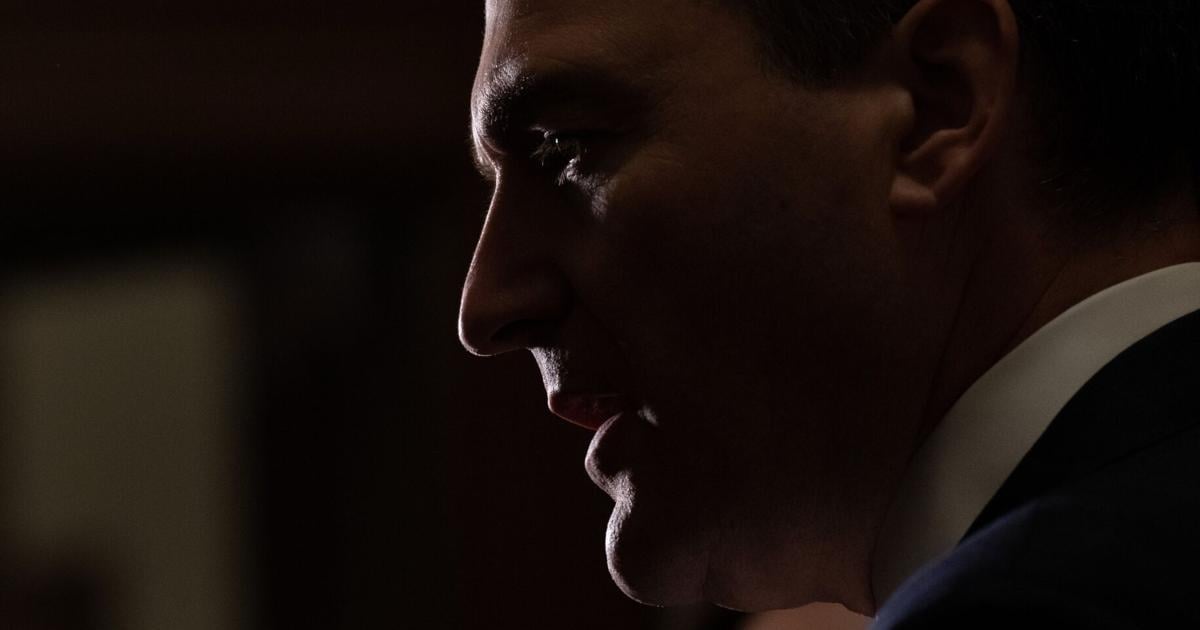
With artificial intelligence giants taking to the global stage this week urging for technology slowdowns, Evan Solomon says it’s not up to tech companies to dictate their own guardrails.
Artificial Intelligence Minister Evan Solomon speaks with the media in Ottawa on Sept. 23, 2026.
OTTAWA — Two of the world’s most influential artificial intelligence leaders took the global stage this week, pushing for a collective effort to delay the rollout of a technology they believe could spiral out of control and imperil humankind.
Not so fast, says Canada’s AI Minister Evan Solomon.
“We are absolutely clear that we are in support of safe models … and that models should not be recklessly released,” Solomon told the Star in an interview.
“But we also have to be careful that big tech companies are not setting up a system where they are governing themselves with their own guardrails. This is a governance issue for democracies. Our country is going to set the rules to protect our citizens, and the guardrails and governance systems are going to be set by democratic governments whose accountability is to citizens, not big tech companies, who are both building the systems and now suggesting ways to create their own guardrails.”
Solomon’s unwillingness to immediately back leaders like Anthropic’s Dario Amodei and OpenAI’s Sam Altman comes as nations around the world grapple with finding common ground on what those guardrails should look like.
Prime Minister Mark Carney was one of 22 world leaders to sign on to a United Nations declaration this week calling for AI companies to develop transparent safety and testing protocols for advanced models, for governments to establish unified standards, and for UN members to back an international body to oversee a monitoring regime.
Several of Canada’s G7 allies opted not to sign, including France, Japan and the United Kingdom, while the United States and China — the superpowers competing to dominate on frontier AI — also left their names off the pledge.
In recent days, both Canada and France have convened meetings with G7 members and other countries to discuss accelerating global co-operation on overseeing AI, including Carney’s pitch for a “technology stability board.”
“It’s a model based on the Financial Stability Board that regulates financial markets. That would be the best way to also oversee global AI deployment,” said Solomon, who added that Carney and French President Emmanuel Macron are working closely on the proposal, which has no release date planned.
“There are some key areas that we are looking at. Model evaluation and testing, model deployment, incident reporting, co-operation with our safety institutes,” the minister said.
Solomon said his American counterpart, U.S. President Donald Trump’s science adviser Michael Kratsios, was unable to attend either meeting, and that Ottawa has had “no outreach” with China on holding AI companies to account.
But he said he is “watching extremely closely” this week’s meetings between Trump and Chinese President Xi Jinping, where the U.S. president said “superintelligence” would be among his top priorities.
“The decisions we make in these areas today can promote peace and prosperity for decades and decades to come,” Trump said Thursday.
OpenAI’s Altman, who was expected to attend Trump’s state dinner for Xi Thursday evening, recently said the pair of leaders could win the Nobel Peace Prize if they are able to reach a deal on AI.
Altman and Amodei both addressed the UN Security Council Wednesday, where they called for unity on monitoring the potential harms posed by advanced AI systems.
“I see two main categories of risk. The first is misuse of AI models, for example, misuse by bioterrorists to create biological weapons. The second risk is loss of control, model capabilities accelerating beyond developers’ ability to control them,” Amodei said. “If managed poorly, I even believe that AI could be a risk to humanity as a whole.”
Altman said it doesn’t matter where people put the risk of catastrophe.
“None of these levels are remotely acceptable, and we should not train models (for which) we cannot make an extremely strong case they will be able to keep under human control,” he said.
The leaders spoke after Yoshua Bengio, a Canadian AI pioneer, addressed the assembled members.
“Citizens and governments should not accept the companies’ claim that they are trapped in a race. The race is not a law of nature. It is the product of choices, choices made by the companies themselves. It is also a race where everyone loses,” Bengio warned.
Another of Canada’s AI leaders, Cohere CEO Aidan Gomez, recently questioned Altman and Amodei’s motives for raising the alarm about frontier AI and urging for slowdowns.
“Here is the question nobody is asking clearly enough: should a handful of select, market-dominant AI companies from Silicon Valley get to define the rules and safety standards of a generational technology for the entire world? All while simultaneously determining how fast this technology progresses?” Gomez wrote in a company blog post earlier this month.
“Once again using fear under the pretext of protecting the public, these oligopolies are now requesting to bend competition rules and be permitted to dictate the terms for everyone else. A wolf in sheep’s clothing, a cartel by any other name.”
Solomon said he won’t be waiting for tech titans to build models and dictate the terms of their governance and use.
“That’s not how it works here,” he said. “This is the purview of sovereign governments, and that’s why we’re acting as we are.”
Error! Sorry, there was an error processing your request.
There was a problem with the recaptcha. Please try again.
You may unsubscribe at any time. By signing up, you agree to our terms of use and privacy policy. This site is protected by reCAPTCHA and the Google privacy policy and terms of service apply.
Raisa Patel is an Ottawa-based reporter covering federal politics for the Star. Follow her on Twitter: @R_SPatel.