
Canadians are clearly avoiding the U.S. This is what Americans will have to do to repair the rift - Toronto Star
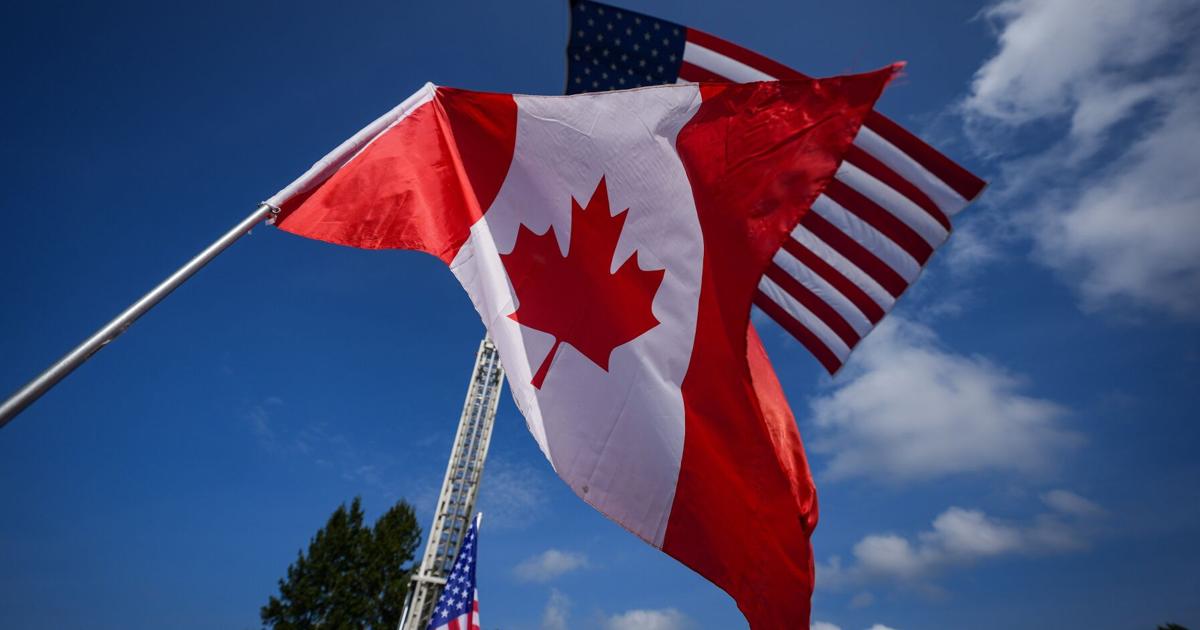
Our two countries share a history that will outlast Trump.
Canadian tourists are staying away from the U.S. How long that tension lasts will be up to Americans, writes Bruce Campion-Smith.
Bruce Campion-Smith is a former Toronto Star reporter and editor.
Before trade talks broke down, before the petty renaming of Lake Ontario, before the latest frenzied wave of anti-Canadian insults and put-downs out of Washington, a thaw of sorts had been slowly taking shape.
Canadians who had angrily sworn off their day visits, winter holidays and trips of any kind to the United States after President Donald Trump put Canada in his crosshairs last year were tentatively returning.
Statistics Canada data on international travel for August revealed that Canadian return trips from the U.S. had increased, marking the fifth consecutive month of year-over-year growth. That month Canadian-resident return trips from the United States totalled 2.6 million, up 8.8 per cent from the same month in 2025.
Of course, travel by Canadians to the U.S. is still far below where it was before Trump blew up Canada-U.S. relations with his threats of annexation, tariffs and his boorish lack of respect.
Canadians delivered their own forceful message.
Day shopping trips to U.S. border cities? Way down. Weekend visits to New York or Chicago? For many, the answer was “no thanks.” The same was true for winter breaks in Florida, California and Arizona. Instead, millions of Canadians chose to see more of their own country and spread their wings to Europe and Asia.
While return trips from the United States by automobile in August 2026 were up 9.9 per cent over August 2025, they were still 27.4 per cent lower than in August 2024. Return trips from the U.S. by air were also up in August 2026 by 3.6 per cent over August 2025 but remained 22.7 per cent below August 2024.
Still, the recent numbers suggest that some Canadians have been rethinking their self-imposed travel boycott. Perhaps it was optimism the two countries could land on a trade deal, a desire to get on with postponed trips or a misguided belief that Trump had moved on from his anti-Canada zeal.
The breakdown of Canada-U.S. trade talks last month has sparked fresh U.S. tariffs as the White House amps up the anti-Canada sentiments. U.S. Vice-President JD Vance called Canada a “state.” Transportation Secretary Sean Duffy declared that Canada has no military and a “failing” health care system. Treasury Secretary Scott Bessent likened Canada to a “little yippy dog.”
Trump laid claim to Lake Ontario, issuing a fiat that it now be called Lake America, dismissed Canadian officials as “clowns” and referred to the prime minister as “Governor Carney.”
His insults, by turns threatening and mocking, kicked up over a recent weekend with one social media post showing the U.S. flag imposed over Canada, Mexico, Greenland, Iceland, the Caribbean and Central America. In another, he threatened to bar Canadian jet maker Bombardier from the U.S. market. And just this week he declared, “I find Canada to be the worst country to deal with.”
It’s been quite a spectacle of disrespect, derision and denigration by senior U.S. office holders.
And all across America, anyone involved in that country’s tourism industry who had been encouraged by the uptick in Canadian visitors, did a collective head slap.
Keen to revive their visitor numbers, U.S. tourism officers have been trying to woo Canadians with discounts to hotels, restaurants and attractions, hoping such enticements can convince us to overlook the White House trash talking and mocking memes.
Trump’s attitude toward Canada has hit them all in the wallet.
Last month, New York Governor Kathy Hochul launched a “NY LOVES CANADA” campaign to boost visitors to her state, where Canadian visits dropped by more than 26 per cent last year.
In Vegas, some 252,000 fewer Canadians visited in 2025, a 17.4 per cent year-over-year decline, with a Las Vegas Sun editorial noting that each missing visitor takes an economic toll, from the restaurants and hotels to the shows and casino floors.
“Trump has sent one of America’s oldest and most valuable relationships into a tailspin of retaliation, declining tourism, lost revenue and rising costs,” the editorial declared.
At a Senate committee hearing this summer, Democratic Sen. Peter Welch pointedly told U.S. Trade Rep. Jamieson Greer that “troublesome” tariffs and Trump’s rhetoric were responsible for a 40 per cent drop in tourism to his home state of Vermont.
“The White House’s arbitrary tariffs and endless attacks on our northern neighbours have caused undeniable harm not only to our relationship but have been brutal on businesses, no matter where you’re from, ”Welch said in a later news release.
For the “Art of the Deal” president who bills himself as a defender of U.S. business, it’s quite a performance to constantly denigrate one of America’s biggest customers and partner.
We are left wondering — again — how Canada became a favourite target for Trump. To hear the U.S. president use Canada and Iran in the same sentence, claiming that both nations want deals with Washington, or to see his administration treat Russia and North Korea with greater respect than America’s northern neighbour, speaks volumes.
Trump may dial back the insults. There may yet be a deal. But for many Canadians, their view of America has been badly shaken. The damage is deep and will not be quickly repaired.
It’s impossible to set aside the unrelenting insults. Our suspicions about America’s designs on Canada’s geography and economy will long remain and our renewed efforts to forge alliances elsewhere around the globe is not likely to fade, certainly not while Trump and his crowd remains in power.
Breaking news, interactive polls, video, and voice notes. Star stories you’ll want to share, delivered where you’re already chatting. Follow the Star on WhatsApp.
Former Prime Minister Jean Chrétien captured the Canadian mood well when he spoke at a Gander N.L. ceremony marking the 25th anniversary of the 9/11 attacks.
“The more we are insulted or threatened and abused, the more we will stand up for ourself (sic) and stand united. And I say that not in anger, but as one friend to another,” he told an audience that included U.S. Ambassador Pete Hoekstra.
I don’t think so. This Canada-U.S. relationship is about more than the occupant of the White House. It’s built on the myriad of long-standing relationships between governments, businesses, friends and family members that exist across the border. It’s built on the friendly interactions while visiting each other’s nations, our shared outlook on so many global issues (well, at least until recently), our integrated economies and our shared history in conflict.
It is in these many relationships where the path back to a normal, respectful relationship has its roots. But let’s not underestimate the damage that has been done — damage that deepens with each fresh tariff and insult — or the work needed to rebuild this relationship.
I’ve met Americans who, in embarrassed tones, apologize for the president’s anti-Canadian rhetoric and punitive trade actions. But such one-on-one admissions are not enough. It will require more Americans to find their voice to condemn Washington’s treatment of Canada and demand better.
Too many American politicians, business leaders, everyday citizens have stayed on the sidelines, enabling Trump’s badgering and bullying of Canada with their silence. This isn’t just simply about defending Canada. It’s in their own self-interest. Trump’s trade war has contributed to inflation in America, has already dearly cost the U.S. tourism market and has driven a wedge in a bilateral relationship that not long ago was a model for the world.
So yes, there is a path back to civility and respect. But it’s not going to happen without change and a lot of work south of the border.
For now, the bullying, disrespectful comments over recent weeks have revealed what this U.S. administration thinks of Canada and Canadians.
For all those Canadians who had considered putting the U.S. back on their travel list, it’s a timely reminder why they had been staying away.
This article was updated from a previous version to note that U.S. President Donald Trump mentioned both Canada and Iran, not Iraq, in the same sentence when speaking with reporters in Ireland last week.
Error! Sorry, there was an error processing your request.
There was a problem with the recaptcha. Please try again.
You may unsubscribe at any time. By signing up, you agree to our terms of use and privacy policy. This site is protected by reCAPTCHA and the Google privacy policy and terms of service apply.
Bruce Campion-Smith is a former Toronto Star reporter and editor.
Opinion articles are based on the author’s interpretations and judgments of facts, data and events. More details


