Change mindset on Hindi: Supreme Court to Tamil Nadu in Navodaya schools case
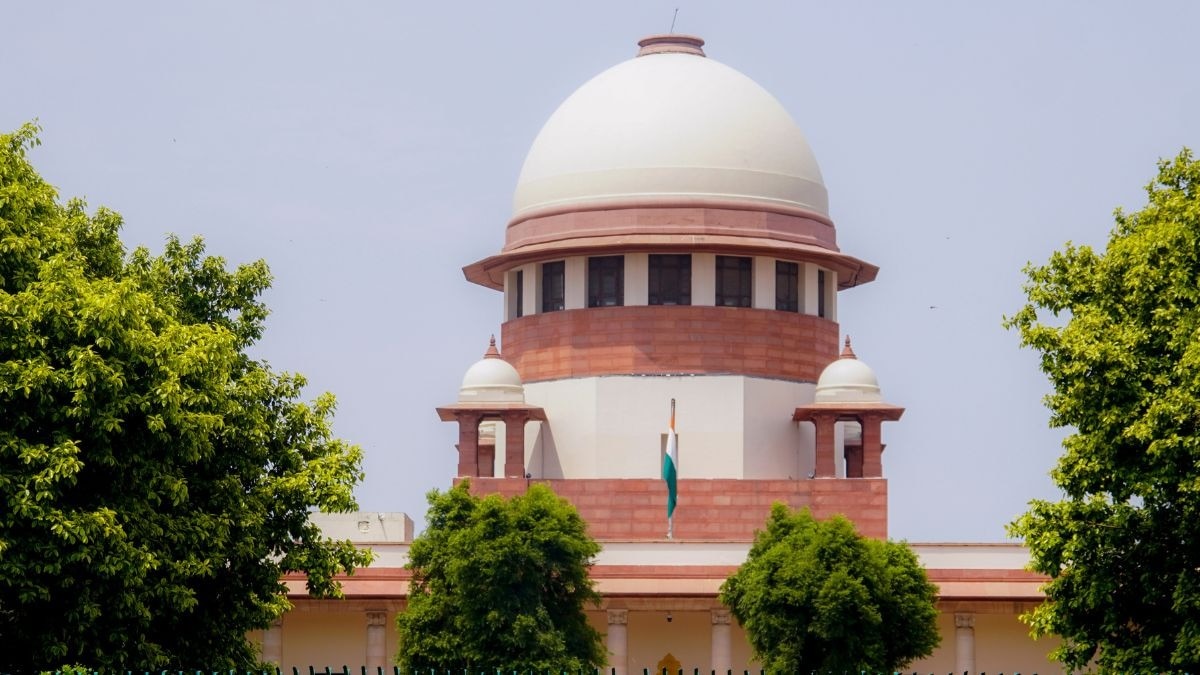
The Supreme Court on Thursday asked the Tamil Nadu government to reconsider its opposition to the establishment of Jawahar Navodaya Vidyalayas in the state, saying that Hindi cannot be completely excluded from Tamil Nadu.
A Bench of Justices BV Nagarathna and Augustine George Masih was hearing Tamil Nadu’s plea challenging directions related to the establishment of Navodaya schools in every district. The court refused to recall its earlier order directing the state to identify land for the schools, but granted it three more months to comply.advertisement❮❯ Read Full StoryNEED FOR DIALOGUEDuring the hearing, Justice Nagarathna said the state needed to change its approach towards Hindi and urged Tamil Nadu and the Centre to resolve their differences through dialogue.
“You have to change your mindset, it can’t be that Hindi will not be taught in the soil of Tamil Nadu,” the judge observed, according to the hearing proceedings.
The court also emphasised cooperative federalism and said the establishment of Navodaya schools would provide additional educational opportunities without lowering the standards of Tamil Nadu's existing education system.
“People in Chennai should not alienate Delhi and vice versa,” the court remarked.
The Bench said Tamil Nadu could continue with its existing educational institutions and policies while considering the centrally funded Navodaya scheme as an additional opportunity for students.TAMIL NADU RAISES LANGUAGE POLICY CONCERNS
Tamil Nadu has opposed the establishment of Navodaya Vidyalayas, citing their three-language policy, which includes Hindi. The state follows a two-language policy and has argued that the Navodaya model is inconsistent with its education and language policy.
Senior Advocate Jaideep Gupta, appearing for Tamil Nadu, said the issue was not simply about Hindi but also concerned the state's policy-making powers and cooperative federalism.
Gupta argued that the Navodaya scheme was optional and that the judiciary could not compel a state to adopt a Central government policy. He also raised financial concerns over the implementation of the schools.
The Centre, however, told the court that Tamil Nadu was required to provide land, while the remaining expenditure for establishing the schools would be taken care of by the Central government.TAMIL NADU GETS THREE MONTHS TO IDENTIFY LAND
The Supreme Court had in December 2025 directed Tamil Nadu to identify land required for establishing Navodaya Vidyalayas in every district. The state subsequently sought recall of the order.
On Thursday, the Bench declined to recall the direction and instead granted Tamil Nadu three additional months to comply.
The court clarified that the state was not being asked to immediately acquire land, but only to identify suitable land for the proposed schools. It also directed representatives of the Centre and Tamil Nadu to continue discussions on the policy and language-related concerns.
The case will next be heard on December 14.
Jawahar Navodaya Vidyalayas are centrally funded, co-educational residential schools run by the Navodaya Vidyalaya Samiti under the Union Ministry of Education.
Tamil Nadu's opposition to the schools is primarily linked to their three-language framework and the state's two-language policy. The state has argued that its education policy falls within its constitutional domain.
The dispute reached the Supreme Court after the Madras High Court directed the state to facilitate the establishment of Navodaya schools in every district. The High Court had held that the schools did not violate the Tamil Nadu Tamil Learning Act and that a blanket refusal to establish them could restrict students' access to educational choices.- EndsPublished By: Mridusmita DekaPublished On: Sep 17, 2026 16:39 ISTRead | CJP launches Adivasi School Thik Karo drive in Maharashtra's Gadchiroli