ChatGPT poses an existential threat to universities and the integrity of degrees - Daily Maverick
/file/dailymaverick/wp-content/uploads/2025/04/PHR50709-Andy-Carolin-scaled-3.jpg)
Andy Carolin is an associate professor in the Department of English at the University of Johannesburg. He writes in his personal capacity.
Those of us who work in universities understand the rich, engaging and transformative benefits of the well-conceptualised courses and qualifications that universities offer.
University classrooms are places for dialogic and collaborative learning, engaged citizenship, conceptual contestation and the facilitation of advanced critical thinking skills.
But for the hundreds of thousands of prospective students who desperately pursue admission to a South African university each year, the motivation is simpler: to get a qualification that will secure employment and the possibility of social mobility.
The impact of a degree or diploma certificate on employability hinges almost entirely on the extent to which employers recognise the value of that qualification. Within the labour market, then, universities play a key certification function, where a qualification certifies that a core set of skills and knowledge has been acquired. (Of course, there are also statutory bodies that oversee the qualifications in a more formal sense).
But we are now more than two years into the easy availability of generative AI such as ChatGPT. This means that a large part of the current cohort of students has had access to a tool that allows them to submit almost-always passable written submissions.
This is in a context where many universities have not returned to traditional in-person invigilated exams after the massification of online assessments during the Covid-19 lockdowns.
To put it simply: I have no doubt that there are students who used ChatGPT consistently over the past year or two to cheat their way through degrees and diplomas without formulating original ideas, applying important concepts, or even reading prescribed material.
This means that we risk an ever-increasing number of students who hold certificates that fraudulently certify their mastery of skills and content knowledge that some of them may have only barely attempted.
I should point out that many of my academic colleagues have evaluated developments in AI and have come to different conclusions. For many of them, the benefits and inevitability of AI outweigh the perceived risks. The arguments that have been made include:
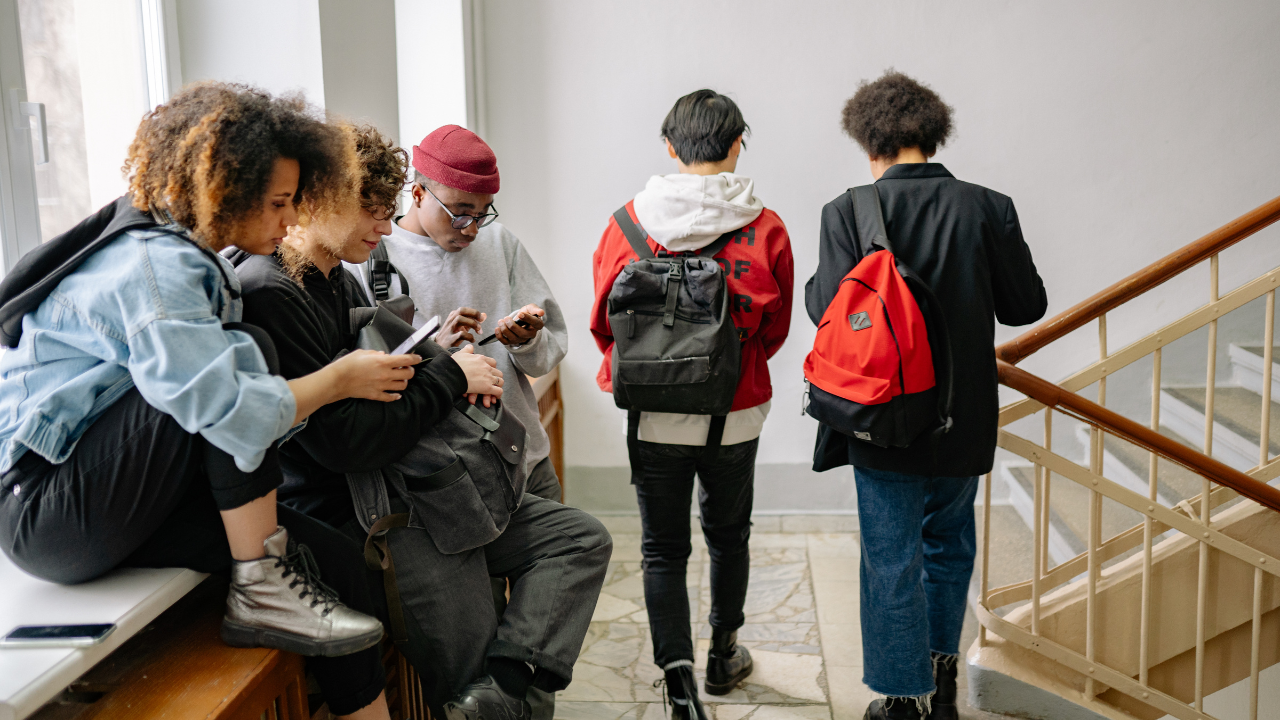
A group of my undergraduate students recently responded with confusion when they were told that they may not use ChatGPT in their upcoming assessment, with one student asking: “But where are we supposed to get our ideas?”
The other students nodded vigorously, looking bewildered. This question shocked me: universities serve a key social and economic function in which graduates are equipped with advanced critical thinking and problem-solving skills.
It is these skills that are developed across university curriculums, ranging from disciplines such as literary studies, art history and philosophy, to modules in professional programmes such as contract law, educational psychology and public administration.
But with some students relying on ChatGPT for their assessments, they do not need to learn how to formulate original ideas or respond independently and innovatively to problems, nor do they ever have to master skills such as synthesising contrasting perspectives or organising their ideas logically.
Academics across many institutions were recently left dismayed by a Daily Maverick article by Rebecca Davis which quoted university leaders who seemed to be underestimating the challenges of AI (“CheatGPT crisis – SA universities faced with a burgeoning degree of AI-written academic assignments”, 5 April 2025).
The responses from various institutions appeared disconnected from our experiences on the frontline. While developing alternative assessments is a valuable intervention that we must pursue with rigour, we also need to recognise that fostering certain skills, content knowledge and intellectual orientations might require more traditional assessment models.
Many bold academics are starting to insist on a return to in-person discussions, tests and examinations that assess the application of core knowledge and critical thinking skills.
This may go against the enthusiastic embrace of technological innovation, but, for many disciplines, I am left wondering: what other choice do we have? DM