Chitrakoot farmers turn to natural farming as govt pushes chemical-free agriculture
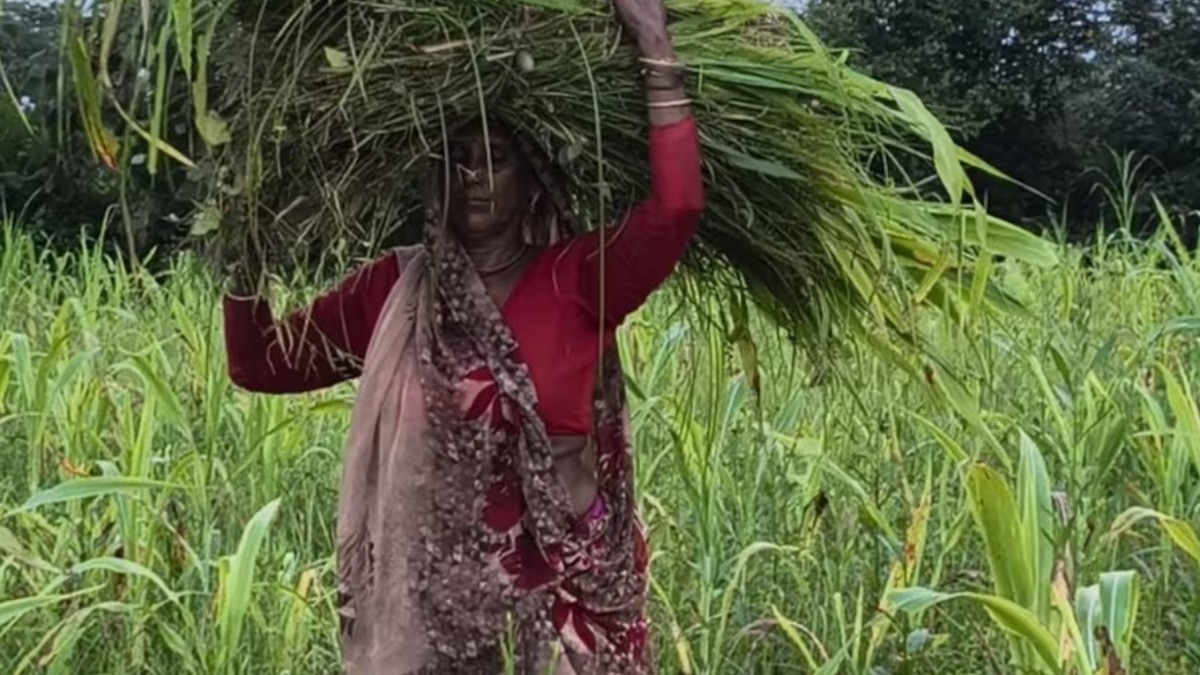
As the cost of chemical fertilisers and pesticides rises, farmers in Uttar Pradesh’s Chitrakoot are increasingly turning to natural and organic farming, with some reporting lower cultivation costs and better returns.
The shift comes as the government steps up its push for chemical-free natural farming through the National Mission on Natural Farming (NMNF), a centrally sponsored scheme approved in November 2024 with a total outlay of 2,481 crore.
The mission aims to reduce farmers’ dependence on externally purchased inputs, improve soil health, restore ecosystems and promote more sustainable and climate-resilient farming practices.
The government’s programme has been rolled out through clusters, farmer training, demonstration farms and local resource networks. As of March 5, 2026, 18,786 clusters covering 8.80 lakh hectares had been formed across the country, with 18.19 lakh farmers enrolled under the mission.
Uttar Pradesh is among the states where the programme has been implemented on a significant scale. A government reply in February 2026 said 1,886 natural farming clusters had been formed in the state, while farmers were being trained through agricultural universities, Krishi Vigyan Kendras, local natural farming institutions and farmer master trainers.
In Chitrakoot, the policy push is being reflected on the ground as farmers experiment with alternatives to chemical-intensive cultivation.
Instead of depending on chemical fertilisers, pesticides and weedicides, farmers are using cow dung manure, vermicompost, green manure, bio-pesticides and other locally prepared inputs.
For some farmers, the biggest attraction is the possibility of bringing down input costs.
Nathuram, a farmer from Baihar village, began natural farming in 2022 after attending a three-day training programme at the Chirgaon Government Agricultural School in Jhansi.
A retired teacher, Nathuram initially experimented with natural farming before expanding into both Rabi and Kharif crops. He now cultivates 18 acres and also grows fruit.
According to the report, Nathuram earns an annual profit of around Rs 4 lakh to Rs 5 lakh. He is now encouraging other farmers in the area to adopt natural farming.
Kothari Singh Patel, a farmer from Barhat village in Manikpur tehsil, began natural farming in 2023. Patel grows rice, pigeon pea and sorghum. He describes natural farming as “zero-balance farming”, saying that while the method requires hard work, it does not involve the same level of spending on external agricultural inputs.
He produces food grains for his family and sells the surplus in the market. According to Patel, he has benefited more from natural farming than from chemical-based farming.
Another progressive farmer, Yogesh Jain, has been practising natural and organic farming near Bedipulia in Karvi tehsil for several years.
Jain said years of chemical farming had degraded his land and affected its fertility. To restore it, he first took up animal husbandry and then began preparing natural fertilisers using cow dung and cow urine.
He said the process helped improve the fertility of the soil, following which he resumed cultivation of Rabi and Kharif crops.
The government's natural farming programme goes beyond simply encouraging farmers to stop using chemical inputs.
Under the NMNF, farmers are being provided training and technical support, while clusters are being developed to help them adopt natural farming practices. The scheme also envisages Bio-input Resource Centres to improve farmers’ access to inputs used in natural farming.
Farmers adopting natural farming are eligible for an output-based incentive of 4,000 per acre per year for two years, subject to a maximum of one acre per farmer. The support can be used for natural farming practices, livestock upkeep, training and preparation of natural farming inputs.
The government is also working on certification and market access for naturally grown produce. A Natural Farming Certification System was introduced to help provide a formal framework for certifying such produce, while the mission seeks to improve linkages between farmer groups and markets.
The government says the broader objective is to reduce input costs while improving soil health and making farming more sustainable.
The experience of Chitrakoot farmers highlights the potential appeal of natural farming at a time when rising input costs are putting pressure on farm incomes.
But the larger policy experiment is more complicated. The government itself acknowledges that natural farming can initially involve lower yields before soil fertility improves over time.
That makes the economics of the transition crucial. Lower spending on fertilisers and pesticides can improve margins, but farmers also need reliable yields, access to markets and the ability to secure better prices for naturally grown produce.
For Chitrakoot farmers such as Nathuram, Patel and Jain, the shift has so far brought encouraging results. The bigger test for the government's natural farming push will be whether those gains can be sustained and replicated across a much larger number of farms.- Ends