Commentary: Asia has to prepare before climate disasters, not just cope after they strike - CNA
When it comes to climate adaptation and resilience in the region, there are wide gaps between estimated needs and available capacity and finance, says former foreign correspondent Nirmal Ghosh.
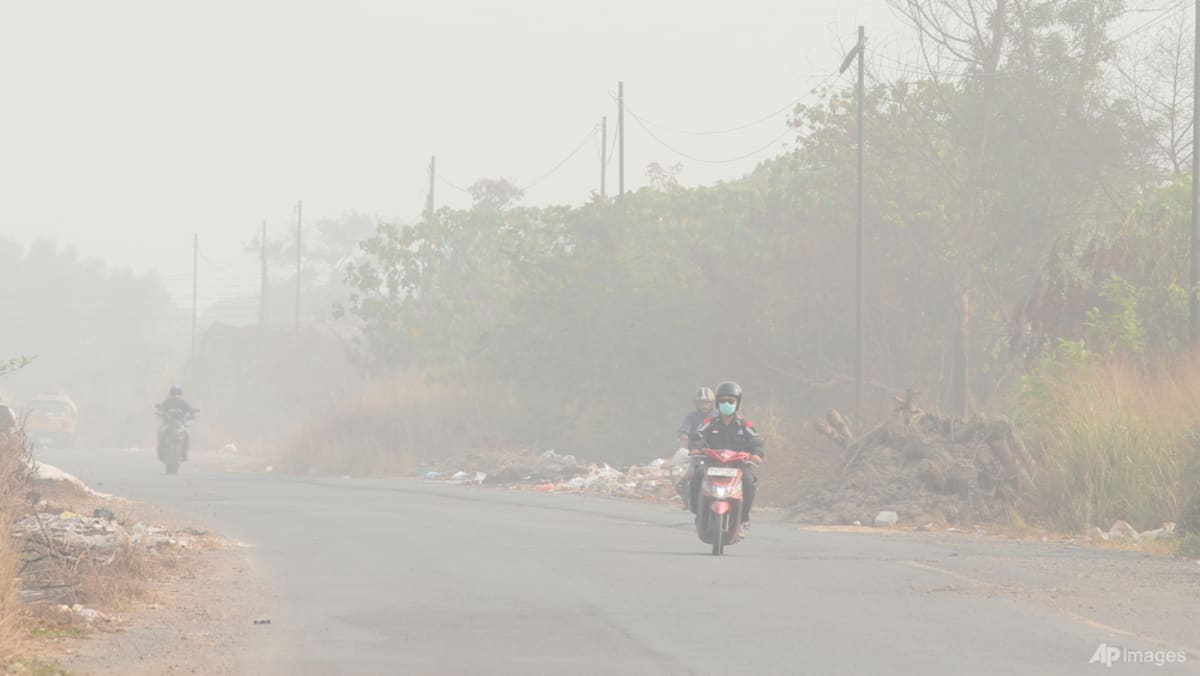
Motorists ride their two-wheelers on a road amid haze from wildfires in Palembang, South Sumatra, Indonesia, Sep 9, 2026. (AP Photo/Muhammad Hatta)
This audio is generated by an AI tool.
Nirmal Ghosh 18 Sep 2026 05:59AM Bookmark Bookmark Share WhatsApp Telegram Facebook Twitter Email LinkedIn Set CNA as your preferred source on Google Add CNA as a trusted source to help Google better understand and surface our content in search results. Read a summary of this article on FAST. Get bite-sized news via a newcards interface. Give it a try. Click here to return to FAST Tap here to return to FAST FAST SINGAPORE: The devastation from recent catastrophes across Asia has been shocking: The collapse of a glacier in Nepal unleashed a monster flood in August with a death toll that is still rising; Indonesia is battling its worst wildfires in years on the islands of Borneo and Sumatra, which shrouded the region in smoke.
But the broader climate picture is less surprising. The world is on the brink of exceeding a 1.5°C rise in average temperature above pre-industrial levels. This year’s El Nino, the phenomenon associated with dry and hot extremes, is set to be the most intense on record.
Asia is warming nearly twice as fast as the global average. Southeast Asia in particular is one of the world’s most disaster-prone regions, with intensifying events driven by warmer temperatures, threatening food security.
Yet the region remains largely underequipped to deal with the consequences of global warming.
CNA Games Guess Word Crack the word, one row at a time Buzzword Create words using the given letters Mini Sudoku Tiny puzzle, mighty brain teaser Mini Crossword Small grid, big challenge Word Search Spot as many words as you can Show More Show Less ASIA’S WORRYING GAPThere are wide gaps between estimated needs and available capacity and finance, when it comes to climate adaptation and resilience. Put simply, adaptation is about taking measures to avoid or moderate damage from climate and weather-driven events, while resilience is about coping with and recovering from them.
An assessment published in May by Singapore’s Temasek Trust concluded that by 2030, Asia will account for around 75 per cent of the global climate adaptation and resilience financing gap. “More than US$200 billion is required annually across the region, yet current flows stand at only around US$19 billion,” it said.
A paper by McKinsey, also in May, zeroed in on Southeast Asia. It concluded that to protect the region today to the adaptation standards of developed economies, it would need additional investment of about US$25 billion per year, bringing total annual investment to US$37 billion.
This gap has consequences that are being lived with now, in the thousands displaced by the Nepal disaster, the human health costs of bad air quality in lower Southeast Asia, and the looming agriculture crisis.
While poorer people bear the brunt, the wealthy are not exempt; Asian companies are projected to bear around US$336 billion in annual climate costs, the Temasek study concluded.
Additionally, Singapore-based OCBC Group Research in a Sep 9 bulletin warned that it sees India, the Philippines, Thailand and Indonesia as economies with high exposure to the effects of El Nino. Malaysia and Vietnam face “meaningful but more concentrated risks”.
"The main impact will be higher food prices, with rice, wheat, maize and vegetable oils most exposed," wrote OCBC.
But closing that gap requires not just money. Prioritising adaptation and resilience would require a fundamental shift from reacting after disasters happen to proactively investing in prevention – which means hard decisions.
In the case of Nepal, the death toll and destruction may have geological and climate triggers but it was high because of poor planning, governance failure, and lack of enforcement of zoning laws that allowed building settlements and infrastructure along floodplains, Kunda Dixit, Kathmandu-based publisher, author and lecturer on climate change told me.