Court rejects Umar Khalid, Sharjeel Imam's bail in Delhi riots case for 3rd time
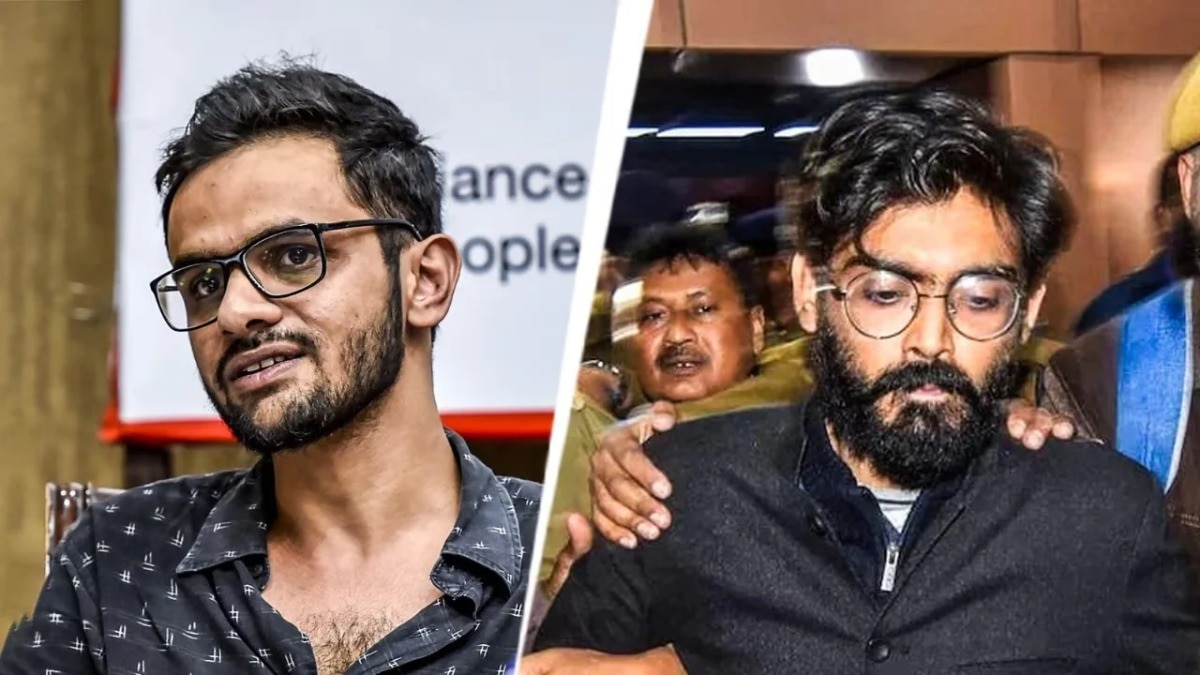
The Delhi High Court on Wednesday rejected the third bail pleas of student activists Umar Khalid and Sharjeel Imam in the case concerning the alleged larger conspiracy behind the February 2020 north-east Delhi riots registered under the Unlawful Activities (Prevention) Act (UAPA).
A bench of Justices Prathiba M Singh and Dinesh Bhatt said it could not modify the Supreme Court’s January 5 order directing the two accused to seek bail either after the examination of protected witnesses is completed or after one year from the date of the order, whichever is earlier.
The court said it was “bound by judicial discipline” and could not modify the conditions imposed on Umar Khalid and Sharjeel Imam.
Khalid and Imam have been booked under the Unlawful Activities (Prevention) Act (UAPA) in connection with allegations that they were among the masterminds of the riots, which left 53 people dead and more than 700 injured.
The violence broke out amid protests against the Citizenship (Amendment) Act (CAA), 2019, and the National Register of Citizens (NRC).
Activist Khalid Saifi and former AAP councillor Tahir Hussain, among others, have also been booked in the alleged larger conspiracy case, which was investigated by the Delhi Police’s Special Cell.
Khalid and Imam approached the high court earlier this year after the trial court rejected their bail applications for the third time on July 4.
Imam was arrested in the case on August 25, 2020, while Khalid was arrested on September 13, 2020.
The Delhi Police opposed their bail pleas, alleging that the two were the “masterminds” behind the riots.- Ends
Aneesha Mathur is a Special Correspondent for India Today where she puts her LLB degree to use covering Legal issues and cases in the Supreme Court of India, Delhi High court and other courts/tribunals.
Aneesha joined India Today in October 2018. After graduating from St Stephen's College and Faculty of law,Delhi University, she spent the formative years of her career in print Media.
Her interest in journalism stems from experience while interning with Legal services and Juvenile justice board as a law student, where she learnt the importance of ensuring that accurate information reaches the world, and that stories about individual experiences and statistics that show a "bigger picture" must supplement each other so other people can see what the large impact of a small thing can be. When not working or thinking about the law and it's state, Aneesha hides from reality in fantasy novels, rom-coms and food.