Culture survives Idi Amin's expulsion - IOL
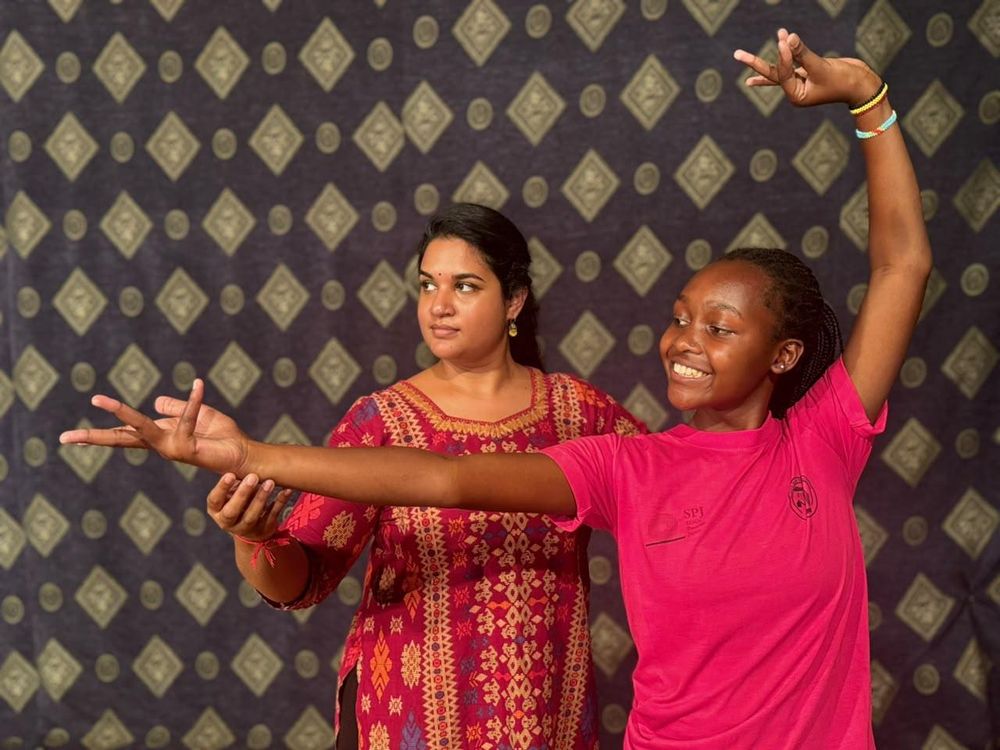
Saranya Devan with a Ugandan dancer.
THERE are moments when culture is not something you simply observe but actually feel deep inside.
I experienced one of these moments last Monday evening in Kampala, Uganda, at the closing day of a cultural festival at the Kuch Temple as part of the 100 years celebrations of Shree Sanatan Dharma Mandal.
Through my genial host Pranesh Mehta, Chairman of the Indian Association of Uganda, I was afforded the opportunity to be part of a conversation and gathering that brought together a remarkable mix of people from Uganda’s Indian community.
Seeing about 800 people gathered in one space was a reminder of just how deeply culture can bind people together.
What struck me most was not simply the number of people in the room, but the sense of community that surrounded the gathering. There was music, conversation, laughter and a beautifully prepared, sumptuous meal. People sat together, shared stories and greeted one another with a familiarity that seemed to go beyond friendship.
Sitting there, I could not help but think about the complicated history of Indians in Uganda.
The Indian presence in Uganda is deeply rooted in the country’s history, particularly through migration during the colonial period, when Indians became an important part of Uganda’s commercial and economic landscape. But this history existed within the deeply unequal racial structures of colonialism, and relationships between Indian and African communities were often complicated by these hierarchies.
In 1972, dictator Idi Amin ordered the expulsion of Asians from Uganda, forcing roughly 80 000 people of Indian descent who had lived there for generations to leave the country with only the clothes they were wearing. Homes were lost, businesses were abandoned and families were separated. For many, Uganda had been home, yet suddenly they were told they did not belong.
President Yoweri Museveni invited the community back in 1986 and returned seized properties, allowing the population to rebuild.
History can leave wounds that remain long after the political moment has passed. This is why, for me, seeing the Indian community gathered in Kampala felt significant. There was something powerful about witnessing a community that had once experienced such profound displacement celebrating its culture openly and collectively. It was not a gathering defined by victimhood; it was a gathering defined by presence.
Culture has a remarkable capacity to survive displacement. It survives through food, language, religion, music, clothing, stories and dance. A recipe passed from one generation to another can carry history. A prayer can carry memory. A song can preserve a place that no longer exists in the same way. A dance can become a vessel through which generations remember who they are.
My own experience in Uganda has given me another perspective on this question of culture and belonging. I am currently here working with Ugandan performers and teaching them Bharatha Natyam. To watch Ugandan dancers engage with an Indian classical dance form has been deeply fulfilling. There has been such appreciation, openness and curiosity in the process, and it has made me reflect on what happens when culture moves beyond the community from which it originates.
Culture travels. It crosses oceans and borders. It enters new bodies and new environments. It can be taught by one community and embraced by another. This does not necessarily mean that it loses its original identity. Instead, it can create new conversations and new possibilities for understanding.
For me, there is something particularly meaningful about this because I come from the Indian diaspora in South Africa. The histories of Indians in South Africa and Uganda are not the same, and I would never want to collapse those differences. But there are familiar threads: migration, colonialism, racism, displacement and the preservation of culture.
The Indian diaspora is often spoken about as though it represents one homogeneous community scattered across the world. It does not. An Indian in Uganda carries a different history from an Indian in South Africa, Mauritius, Kenya, Malaysia, or Trinidad and Tobago. Each community has had to negotiate its own relationship with the country in which it lives, the country from which its ancestors came, and the histories that shaped both.
Perhaps that is why I found myself thinking about my Ugandan dancers while sitting among the Indian community at the temple. On the one hand, I was witnessing a community preserving and celebrating its culture among itself. On the other hand, my own work here involves sharing a cultural form with people who do not necessarily share my cultural background. These may seem like very different experiences, but both speak to the power of culture to connect people.
I came to Uganda to teach dance. I did not expect Uganda to teach me something about belonging. But perhaps that is the gift of cultural exchange. We arrive thinking we are bringing something with us, only to discover that we are also receiving something in return.
At the Kuch Temple in Kampala, surrounded by hundreds of people, food, conversation and culture, I was reminded that home is not always simply the place from which we come. Sometimes home is the place we rebuild. Sometimes it is found in a temple, around a table, in a dance, in a language, or in the gathering of people who understand something of the journey.
Culture becomes home when we continue to live it. And perhaps the most beautiful part of that is that home does not have to remain closed. It can be remembered, rebuilt, opened and shared.
Saranya Devan is a theatre-maker, dance performer, academic, and proud Tamilian. She holds an MA in dance from UCT and an MA in Bharatha Natyam from the University of Madras.
** The views expressed do not necessarily reflect the views of IOL or post.co.za