
Data Center Bill Hits Roadblock in Senate–What Happens Next? - Newsweek
A bipartisan bill intended to protect Americans from electricity costs associated with new data centers has hit a roadblock in the Senate, one day after passing the House in a 417-3 vote.
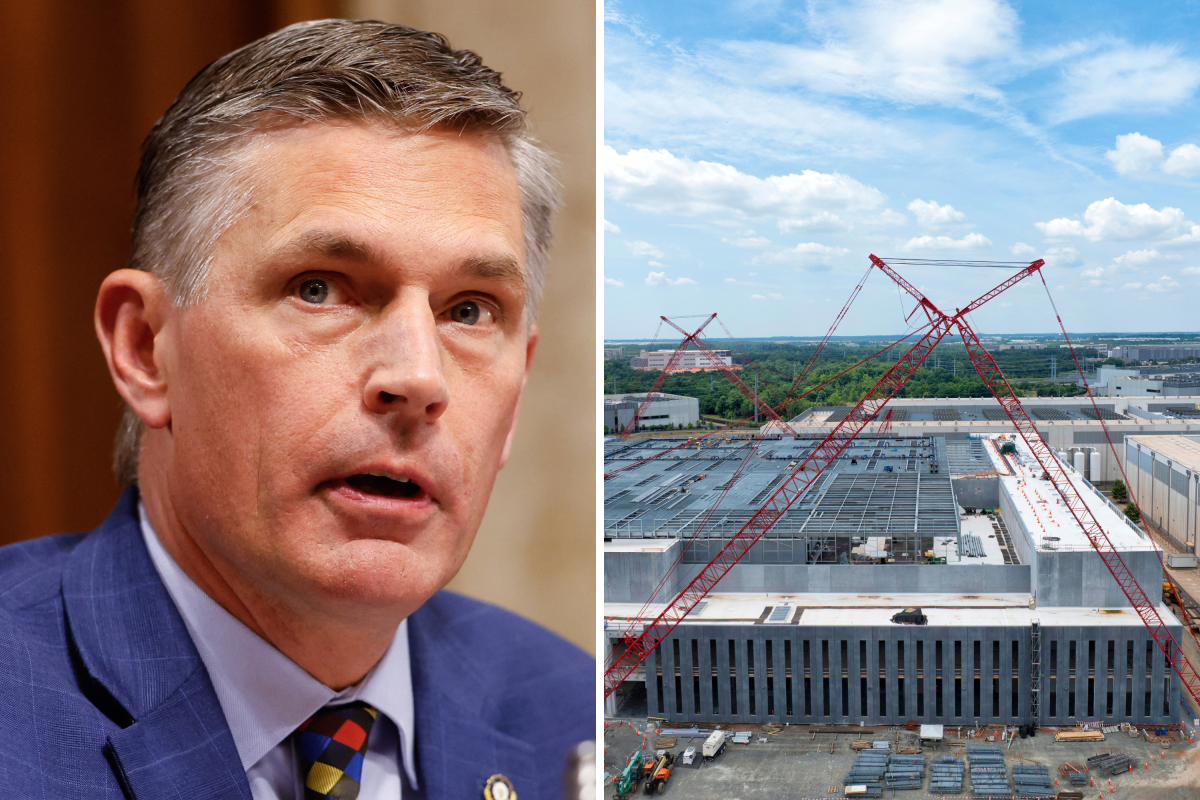
The Ratepayer Protection Act remains alive, but an attempt by Republican Senator Jon Husted to secure its immediate passage through unanimous consent was blocked Thursday by Senator Martin Heinrich, the top Democrat on the Senate Energy and Natural Resources Committee.
Because unanimous consent requests can be stopped by a single senator, Heinrich's objection meant the bill could not pass through the expedited process.
The legislation would establish a federal standard under which large data centers cover the full incremental cost of upgrades needed to generate electricity and transmit or distribute it to their facilities.
It would apply to qualifying facilities with peak electricity demand of at least 100 megawatts and require financial assurances before utilities undertake upgrades.
Those protections would mean a data center remained responsible for the infrastructure built to serve it, even if the project was later canceled or scaled back.
Supporters say this would reduce the risk of households and other customers being left to cover the cost. However, the bill would not impose one national rate on data centers.
Instead, it would amend the Public Utility Regulatory Policies Act of 1978, commonly known as PURPA, by creating a federal standard for state utility regulators and nonregulated utilities to consider.
State regulators would have one year to begin considering the new standard and two years to decide whether to adopt it.
States that had already considered or introduced similar protections could be exempt from those deadlines.
This is an important part of the Senate disagreement. The bill would require states to examine the issue publicly, but would leave them to decide how electricity costs should be divided. It would also not guarantee the same protections in every state.
Heinrich argued that the House measure did not go far enough and sought unanimous consent for his own GRID Savings Act.
Republican Senator Bernie Moreno objected, preventing the alternative bill from advancing through the same fast-track procedure.
“The term do-nothing Congress exists for a reason,” Moreno said. “We absolutely accomplished that right now.”
Heinrich said Congress needed to pass “real legislation with real teeth,” arguing that his proposal would do more to prevent households from bearing data-center electricity costs.
“The senator from Ohio and I agree on one thing, AI data centers can mean higher costs for American families, and in a lot of places they already do,” Heinrich said, according to CBS News. “But the Ratepayer Protection Act falls short of what we need to do to respond.”
He also broadened his objection beyond utility rates, saying lawmakers should address community engagement, water use and air pollution connected with data-center development.
“We also need to do more to get data centers to actually engage with communities from the beginning to the end, and we need to conserve local resources, especially water,” Heinrich said, according to CBS News. “But we’re not going to get there with the bill that the senator from Ohio has proposed.”
Husted, who sought immediate passage of the House measure, described the House measure as “the most meaningful, bipartisan step Congress could take to protect the American people from higher prices for electricity.”
“It is a shame that this opportunity has been missed today,” he said, according to CBS News.
Data centers have become an issue in Husted’s closely watched Senate race in Ohio against former Democratic Senator Sherrod Brown.
Brown has criticized Husted’s record of supporting data-center development, while an August memo from the National Republican Senatorial Committee described the issue as “the anchor hanging around Husted’s neck.”
The wider debate is also landing amid concerns about household costs ahead of the midterm elections.
An Economist/YouGov poll conducted among 1592 U.S. adult citizens, from August 28 to 31, with a plus or minus 3.5 percent margin of error, found that 60 percent of U.S. adult citizens thought a new data center in their community would increase their electricity bill.
The bill would not guarantee lower monthly electricity bills or provide an estimate of consumer savings. Instead, it aims to stop the cost of infrastructure built for data centers being passed on to households and small businesses.
Any effect on bills would depend on decisions by state regulators and agreements between utilities and data-center operators. The requirements could also make some projects more expensive to build.
The Ratepayer Protection Act can still move through the Senate's normal legislative process, while senators can also negotiate another unanimous-consent agreement.
The Senate could amend the measure, but any different version would have to return to the House before going to President Donald Trump.
Newsweek’s reporters and editors used Martyn, our AI assistant, to produce this story. Learn more about Martyn here.
Contact Newsweek editors on this story: Matthew Robinson and Cristina Diciu.


