David Suzuki: Mark Carney’s investment summit is bound to fail unless it faces this fundamental issue - Toronto Star
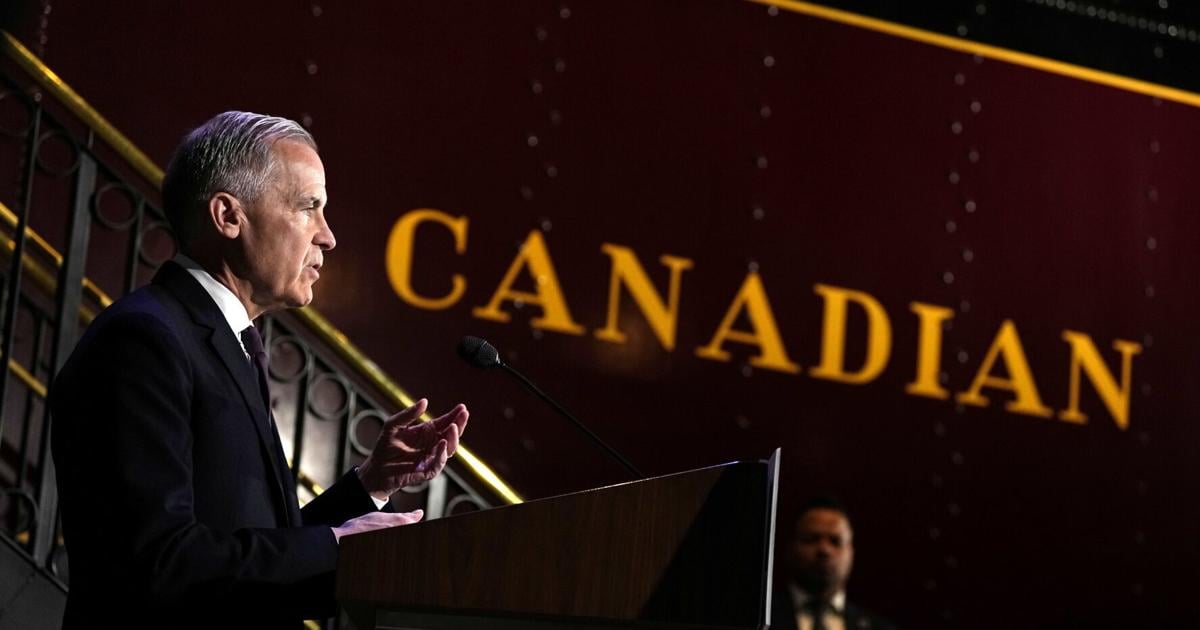
Prime Minister Mark Carney, seen in April, 2026, making an announcement about the Canada Strong Fund.
David Suzuki is a scientist, broadcaster, author and co-founder of the David Suzuki Foundation.
Prime Minister Mark Carney has invited 300 global CEOs, entrepreneurs and institutional financiers to a Canada Investment Summit. They collectively manage $120 trillion in global assets and the goal of the conference is to catalyze private and sovereign capital into Canadian industries. I understand the urgent need to stand up against Trump, a bullying madman, by reducing our dependence on US markets and I applaud Carney’s efforts. He’s a smart, tough guy.
After interviews I have had with Carney, before and after he became a politician, I believe he is very intelligent, understands the gravity of the climate crisis and is committed to reduce the threat. But we have run out of time to delay the radical and deep cuts in emissions that are needed to avoid climate chaos. As UN Secretary-General Antonio Guterres says about the emissions causing climate change: “We are digging our own graves” and “we are in a deep climate hole and to get out, we must first stop digging.”
The economy and the environment are not separate matters — they are inextricably linked. Nature is the foundation of all life, while the economy is made by and for humans. As Carney points out in his book, “Value(s): Building a Better World for All,” nature is an externality to the economy. But Carney is first and foremost a banker, deeply embedded in the economic system. He now has a politician, Alberta Premier Danielle Smith, and Alberta separatism to deal with. Cancelling a carbon tax without replacing it with a mechanism to reduce fossil fuel use, eliminating environmental considerations to fast-track development, indeed supporting steady economic growth, all reflect the failure to see that the global economy is the driving force of ecological destruction.
I’m not a gambler, but I bet Carney’s conference next week will not even mention climate change as a threat to the economy. Thirty United Nations COP meetings — each involving thousands of delegates meeting to stop the threat of climate change — have failed to even cap, let alone radically reduce greenhouse gas emissions. Even when all “stakeholders” in any issue are present at roundtables, they are doomed to fail unless they begin with fundamental agreement on why they are there.
In the late 1990s, when discussion about Alberta’s oilsands was heating up, a CEO of one of the largest oil companies there called me. “Could I come and talk to you?” he asked. I was surprised and replied, “It would be an honour.”
The next day, he came to the David Suzuki Foundation office. I thanked and welcomed him. “Before you come into my office, I’d like you to do me a favour,” I said. “Please leave your identity as a fossil fuel company CEO outside. I want to meet you as one human being with another. I don’t see any point in discussing fossil fuels and global warming before we start from agreement.”
I could see he was uncomfortable, but he was a good person and reluctantly agreed.
As we sat down, I said, “I know this isn’t what you came for, but I would like to state what I believe is the platform on which we can carry out a discussion. What do you think is the greatest need of every person on the planet?”
“I don’t know,” he said. “A job? Money? A house?”
I replied, “Most of us live in cities where our highest priority is our job, for the money to buy what we need and want. But if we don’t have air for three or four minutes, we die! We take a breath and absorb whatever is in the air to get oxygen to fuel our metabolic fire.
“We can survive longer without water, but we’ll die after four to six days without it. Water inflates our cells, enables metabolism, transports signals throughout our body, cools us and flushes out toxins. Fresh air and pure water are not created by human factories or technology; they’re recycled, cleansed, replenished, gifts from nature.”
I continued, “The food we eat to create our bodies was once alive. We take the carcasses of plants and animals into our mouths, tear them apart and construct our body from the debris. All of our food ultimately comes from the soil. Without anything to eat, we will perish in four to six weeks.
“Finally, the energy that we need to move, work and play is sunlight captured in energetic molecules through photosynthesis in plants. When we need that energy, those molecules are burned — oxidized — to release the energy back for our bodies. In fact, all the energy we get by burning fossil fuels, wood, peat and dung is liberated sunlight.”
“Those are the most basic needs of all human beings: air, water, soil and food and sunlight. They’re a gift of the web of living things we call biodiversity. Whatever we do to those things, we do to ourselves. Everything is interconnected. Surely their protection must be everyone’s responsibility. We can’t change our biological needs, but factors like laws, economies and politics are human constructs and can be changed.”
I concluded, “If you’ll agree with what I’ve said and shake hands on that, I’ll do everything I can to help you and your company.” Did he shake hands with me? No. If he were to tell his shareholders, “I had a conversation with David Suzuki and I have to agree that whatever our company does, it must not degrade air, water, soil and the web of life,” he wouldn’t be held up as a responsible, far-sighted leader. He’d be fired. His job is to make money for his shareholders, the more and faster the better.
That’s the problem. Our most elementary and essential needs are dictated by our biological makeup, but our legal, economic and political systems are created to shape, guide and constrain human behaviour without regard to nature and so are inevitably destructive.
If we can’t start with this fundamental agreement, we are bound to quibble over vested interests and fail. Carney’s meeting won’t address climate change that threatens all of humanity.
Error! Sorry, there was an error processing your request.
There was a problem with the recaptcha. Please try again.
You may unsubscribe at any time. By signing up, you agree to our terms of use and privacy policy. This site is protected by reCAPTCHA and the Google privacy policy and terms of service apply.
David Suzuki is a scientist, broadcaster, author and co-founder of the David Suzuki Foundation.
Opinion articles are based on the author’s interpretations and judgments of facts, data and events. More details