Delta’s Schools of Sorrow: Trapped in decaying, unsafe public school classrooms - Vanguard News
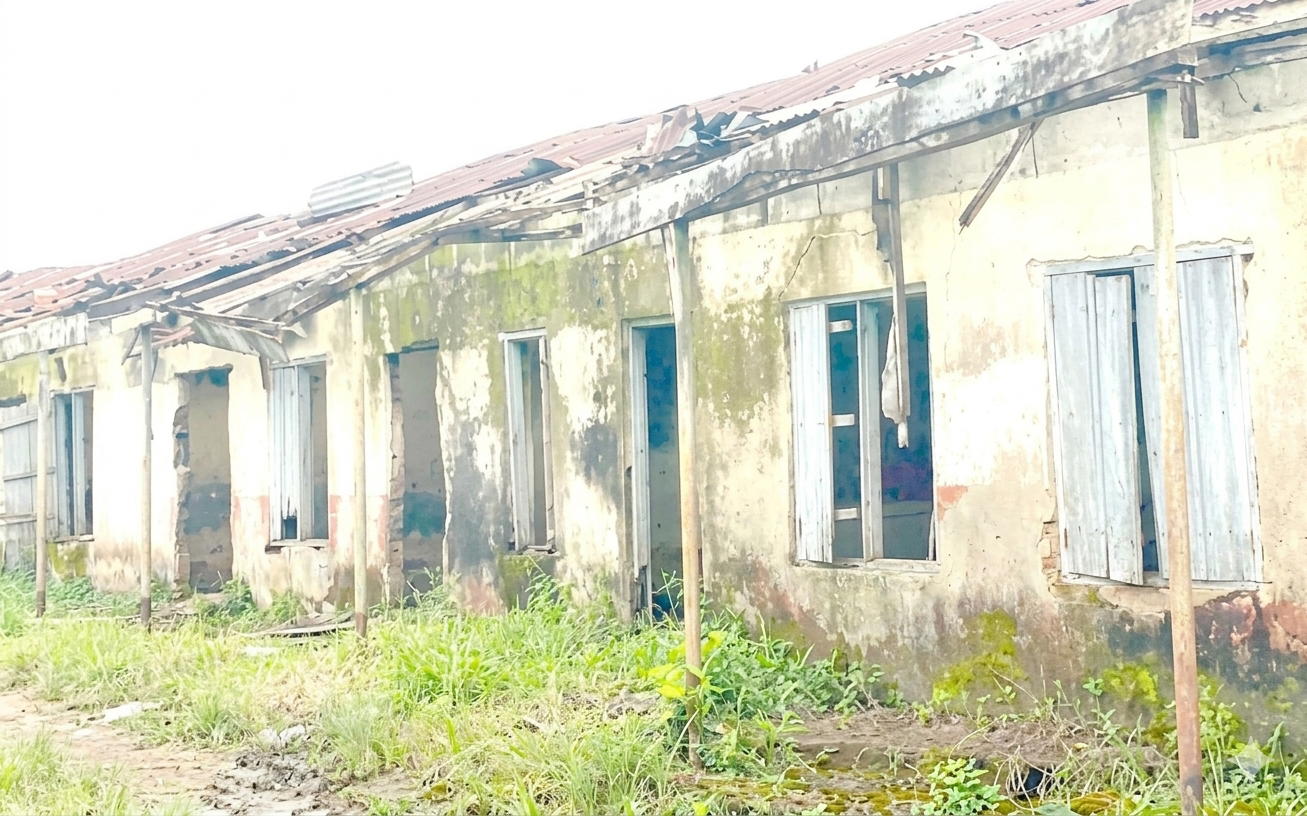
The classroom has no roof. The walls are cracked, windows disappeared. In another block, there are no doors. In yet another, the toilet has collapsed.
Yet, every morning, children still come. They come carrying exercise books, pencils and the dreams their parents have entrusted to public education.
Some sit on bare floors. Others squeeze into few surviving desks.
Teachers stand before them and improvise, teaching lessons on education, discipline and a better future in environments that appear to mock the very idea of a conducive school.
Across several communities in Delta State, this is the uncomfortable reality behind the government’s fresh promise to rehabilitate and reconstruct public schools.
August 31, 2026, the Delta State Government announced Governor Sheriff Oborevwori’s resolve to, within two weeks, embark on massive rehabilitation or reconstruction of primary and secondary schools across the state’s 25 local government areas.
Commissioner for Works, Rural Roads and Public Information, Charles Aniagwu, said the Ministries of Basic and Secondary Education had been directed to assess schools and determine those requiring intervention.
Aniagwu said the governor has “directed that the two ministries immediately come up with the scope of these different schools that need to be rehabilitated so that the government will immediately proceed to put them in order for the purpose of our children having much more conducive learning and indeed teaching environment.”
But, for children already trapped in these structures, the question is not whether they need a conducive learning environment. It is how long they must wait for one.
At Otor-Edo Primary School in Ughelli South LGA, community President-General, Kenedy Egone, described a school that has moved from mud-house beginnings to a roofless and unsafe structure.
“Our children sit under leaking skies to receive lessons. As the rains peak, there may soon be no place for them to learn at all,” Egone told Vanguard.
According to him, Delta SUBEB engineers, years before, had visited for assessment, while the community was subsequently informed that “the job has been awarded. A year later, no contractor has shown up.”
Egone plea is simple: “Otor-Edo Community should not be made to wait for another generation to enjoy what other communities take for granted. All we seek is to be seen, be heard, and to be remembered.”
That plea echoes in schools far beyond Otor-Edo.
At Ugbuwangue Secondary School in Warri South LGA, classrooms are in disrepair, with some abandoned and the remaining usable spaces overcrowded.
A veranda has become a staffroom, while a security/gatehouse doubles as the Principal’s office. The school’s water system has collapsed, rendering toilet facilities unsafe.
At Martin College, Isele-Uku, Aniocha North LGA , an all-girls school, the library and WAEC hall are in appalling condition, while a laboratory and several classroom blocks have fallen into disrepair.
At Ogodor Community Primary School, also in Aniocha North, cracked walls on dilapidated classroom blocks raise fears of looming collapse.
At Adonte Secondary School, Aniocha South, classrooms are inhabitable, bereft of desks. Abah Unor Secondary School is no less piteous – abandoned, dilapidated classroom blocks and no school furniture.
Then there is Ojeta Secondary School, Abraka. Good governance advocate, Kelvin Williams, asked a question that hangs over the entire situation: “Ojeta Secondary School, Abraka — Where Is The Dividend Of Democracy?”
Williams said: “There are teachers here. There are students here. There are young people who come here every day hoping to receive the education that will shape their future.”
Then he added: “Students are struggling without adequate chairs to sit on. There are classrooms without proper writing boards. The buildings are visibly old and deteriorating, while parts of the roofing have been damaged.
“Teachers are working under difficult conditions, with inadequate facilities to properly teach and carry out their responsibilities,” he said.
Williams’ demand is unequivocal: “We are not begging for charity. We are demanding what belongs to the people.”
At Urhuoka Primary School, Abraka, a classroom has collapsed, its roof lying on the ground. At Urhuoka Secondary School, the toilet has collapsed and the staff block inhabitable, with the roof falling off.
For some teachers, speaking publicly about the conditions is itself considered dangerous.
One teacher told Vanguard: “Even crying out or allowing concerned persons to come capture the images to do the outcry for the piteous learning conditions for us has become a risk to our jobs.
“You can be sacked for talking, so most times it’s suffering and smiling for us as we must work against all odds.
“And that doesn’t encourage us to give our all in teaching the children. Morale is low when you don’t have a desk to teach children sitting on bare floors to learn, no safe toilet for convenience. It’s a terrible learning environment.”
The consequences are not merely about discomfort.
On 3 October 2024, a dilapidated six-classroom block at Eghereka Primary School, Ewu, Ughelli South, collapsed under heavy rain.
Primary 2 pupil, Ojiyovwin Salvation, died while three others were injured. As if beautifying the tragedy and passing the blame on the innocent children, the state government admitted the roofless structure had not been in use for more than a decade.
The incident remains a grim reminder that dilapidation in schools can become a matter of life and death.
“We know where befitting private schools are. Our parents can’t afford those, but government and parents say education is key.”
“So we just want a place to learn to become good leaders of tomorrow. That’s why we beg the government to give us good, conducive schools to learn.”
The infrastructure decay is also profound at Imode Prumary School, Otu-Jeremi Secondary School, both in Ughelli South and several other place.
The random tour of schools also revealed part of the rapid rot of the structures is shabby construction with inferior materials.
There is also inhindered vandalism and theft of props, particularly desk and furnitute due to absence of engaged security guards, leaving the schools porous after school hours.
Aniagwu said Delta has more than 1,300 primary schools and over 430 secondary schools, explaining that the assessment would determine where intervention is needed.
“It is from these numbers that we have they are going to look at which ones are necessary for us to be able to touch… to make both learning and teaching conducive,” he said.
For the children waiting inside the cracked walls, however, the assessment is not the destination. They have waited through leaking roofs, missing desks, unsafe toilets and crumbling classrooms.
What they are waiting for now is simple: a school that does not make learning itself a struggle for survival or a death wish.
Comments expressed here do not reflect the opinions of Vanguard newspapers or any employee thereof.