Democrats’ Chances of Taking Control of Congress Reach Record High - Newsweek
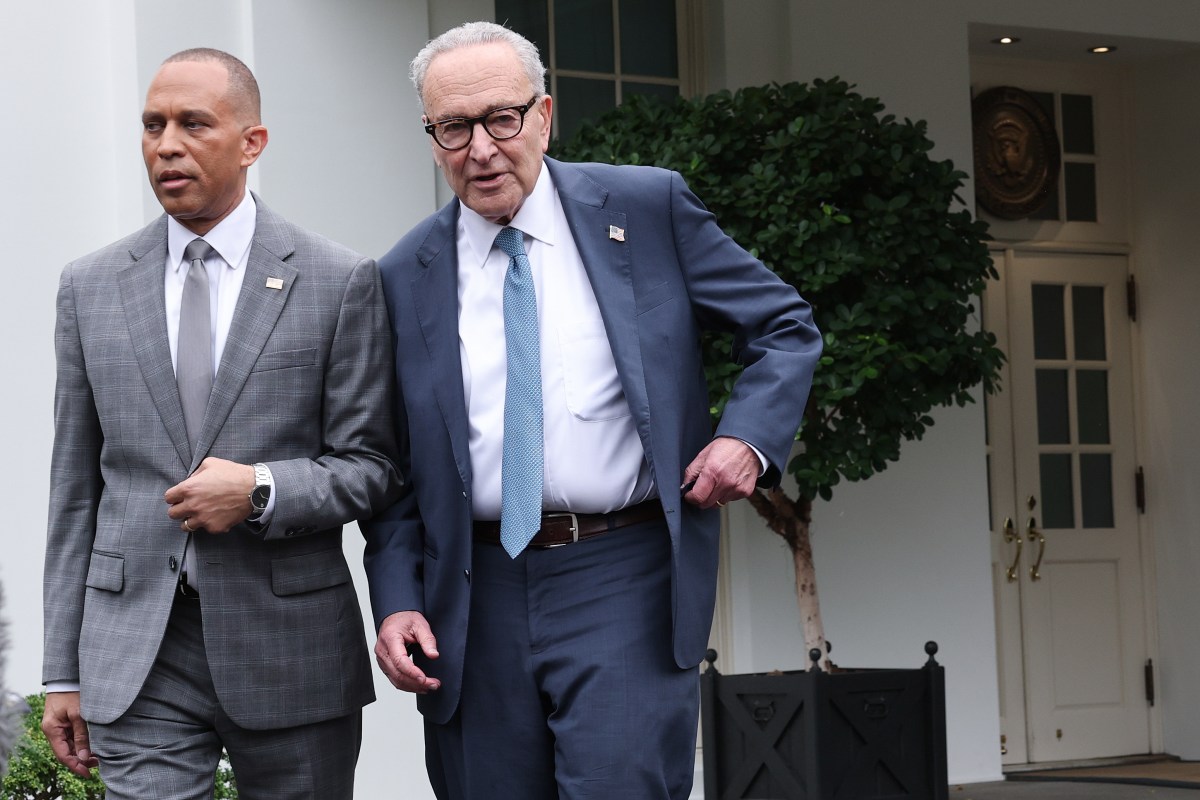
Democrats' chances of taking control of both chambers of Congress in November's midterms have reached a record high on the prediction market Kalshi, as polling points to a favorable national environment for the party less than seven weeks before Election Day.
As of writing, the probability of a Democratic House and Senate is at 58 percent, exceeding the previous high of 52 percent in April.
This is not an insignificant shift. On November 3, voters will determine the balance of power in Washington during the final two years of President Donald Trump's second term. A Democratic sweep would give the party control of congressional committees, legislative scheduling and oversight of the administration. Control of the Senate would also give Democrats power over the confirmation process for presidential nominees.
Prediction-market prices are not opinion polls. They reflect the prices at which participants buy and sell contracts tied to an outcome, rather than a representative survey of voters. The 58 percent figure indicates that traders regarded a Democratic sweep as the most likely outcome at that point, not that Democrats had secured an equivalent share of public support.
Polling nevertheless provides some support for the direction of the market.
An aggregation updated on September 17 placed Democrats on 49.3 percent and Republicans on 41.9 percent in the national generic congressional ballot, a Democratic lead of 7.4 percentage points. The same tracker put Trump's approval rating at 38 percent. Those figures describe the overall political climate rather than predict the result in individual House districts or Senate races.
Democrats need a net gain of five seats to win the House, according to the September 17 aggregation. All 435 House seats are being contested, meaning even a relatively small movement in competitive districts could change control of the chamber.
The Senate presents a more difficult route. Republicans hold a 53-47 advantage, counting the two independents who caucus with Democrats on the Democratic side. Democrats therefore need a net gain of four seats to take control. There are 35 Senate contests in 2026, including special elections in Florida and Ohio.
Several Republican-held seats have become competitive, giving Democrats possible pickup opportunities. The nonpartisan Cook Political Report has shifted several races in favor of Democrats in recent months. Alaska and Texas were moved from "Lean Republican" to tossup in July and August, respectively. But Cook also shifted New Hampshire, where Democrats are defending an open seat, from "Lean Democratic" to tossup on Tuesday.
Recent polling in Iowa and Texas shows both the opportunities and uncertainty facing Democrats in the battle for the Senate. A Co/efficient survey conducted September 14 to 16 found Republican U.S. Representative Ashley Hinson leading Democratic state Representative Josh Turek by 46 percent to 42 percent among 831 likely Iowa voters, with 9 percent undecided and a margin of error of 3.39 percentage points.
In Texas, an Emerson College Polling survey conducted September 12 to 14 put Democratic state Representative James Talarico narrowly ahead of Republican state Attorney General Ken Paxton, 47 percent to 46 percent, within its 3-point credibility interval. A ReconMR poll conducted September 8 to 11 showed a wider Talarico advantage of 49 percent to 43 percent, although its margin of error was 4.3 percentage points for the 614 respondents who answered the core questions.
Those results are snapshots rather than guarantees, and differences in pollsters, samples and field dates make direct comparisons difficult. More importantly, there is no national Senate vote that determines control. Democrats must assemble enough victories across separate statewide contests while protecting the seats they already hold.
A Democratic Congress would substantially restrict the president's ability to advance legislation without opposition-party support. Democrats would control committee leadership in both chambers and could initiate investigations, hold hearings and seek administration records.
Trump would retain the presidency and the veto, meaning Democrats could not automatically enact their own program. The likelier result would be sharper negotiations, confrontation or gridlock over spending, taxation and other priorities.
A split Congress would produce a different balance. A Democratic House could conduct oversight and block House legislation, while a Republican Senate retained control over confirmations. Continued Republican control of both chambers would preserve a unified government through the end of 2028.
The central caveat is that neither prediction markets nor national polling allocate congressional seats. House control will be decided district by district, while the Senate could turn on only a handful of close state races.
For more analysis on the numbers shaping U.S. politics and the 2026 midterms, sign up for Newsweek's Midterms Monitor newsletter from Daniel Orton and Alex J. Rouhandeh.
Newsweek's reporters and editors used Martyn, our AI assistant, to produce this story. Learn more about Martyn here.