Director Balaji Tharaneetharan on Vijay Sethupathi’s ‘Baththa’ and recreating '80s North Madras

You don’t have any Active Subscription.
Account subscription benefits alongside Premium Stories, Editorials, Opinions and more. Unlock these with Subscription
“A filmmaker who gave a debut film like Naduvula Konjam Pakkatha Kaanom should have ideally done many films and be in a different league now.” This comment was posted under a promo for writer-director Balaji Tharaneetharan’s upcoming film, Baththa, starring Vijay Sethupathi, and the sentiment is not hard to understand. Balaji has had an interesting career trajectory; after delivering a blockbuster debut with NKPK in 2012, he began working on his second film, Seethakaathi, but paused the project temporarily and started Oru Pakka Kathai in 2014. But as fate would have it, Seethakaathi was released in 2018; subsequently, Oru Pakka Kathai was released directly on streaming in 2020, after lying in the cans for over four years due to financial issues.
And now, after eight long years, Balaji is bringing a film to the big screen this week. The filmmaker says there was no specific reason for this delay. “I worked on the dialogues for Tughlaq Durbar, and then I took some time off. During the COVID-19 lockdown, I had to spend time with my children, and I didn’t have time to write scripts.” After working on Modern Love: Chennai (Balaji penned two shorts in the anthology series), he started writing the script of Baththa. “However, it needed a new layer, and so I stopped Baththa and finished another script. But the ideas for Baththa started flowing again, and it also seemed like a script that could be greenlit easily. Further, in today’s time, it takes some time for a project to take off,” says Balaji.
More than ten years ago, when his sophomore project couldn’t take off, Balaji had expressed how it created a mental block that affected his writing too. But there’s no time for mental blocks now, says the director. “I have gone beyond that stage. I remember a line Santhanam tells Vimal in Kalakalappu: ‘Nambuna dhan soru.’ So with age and the number of commitments I have, I have to write and make movies; I can’t sit around and say I have a mental block.”
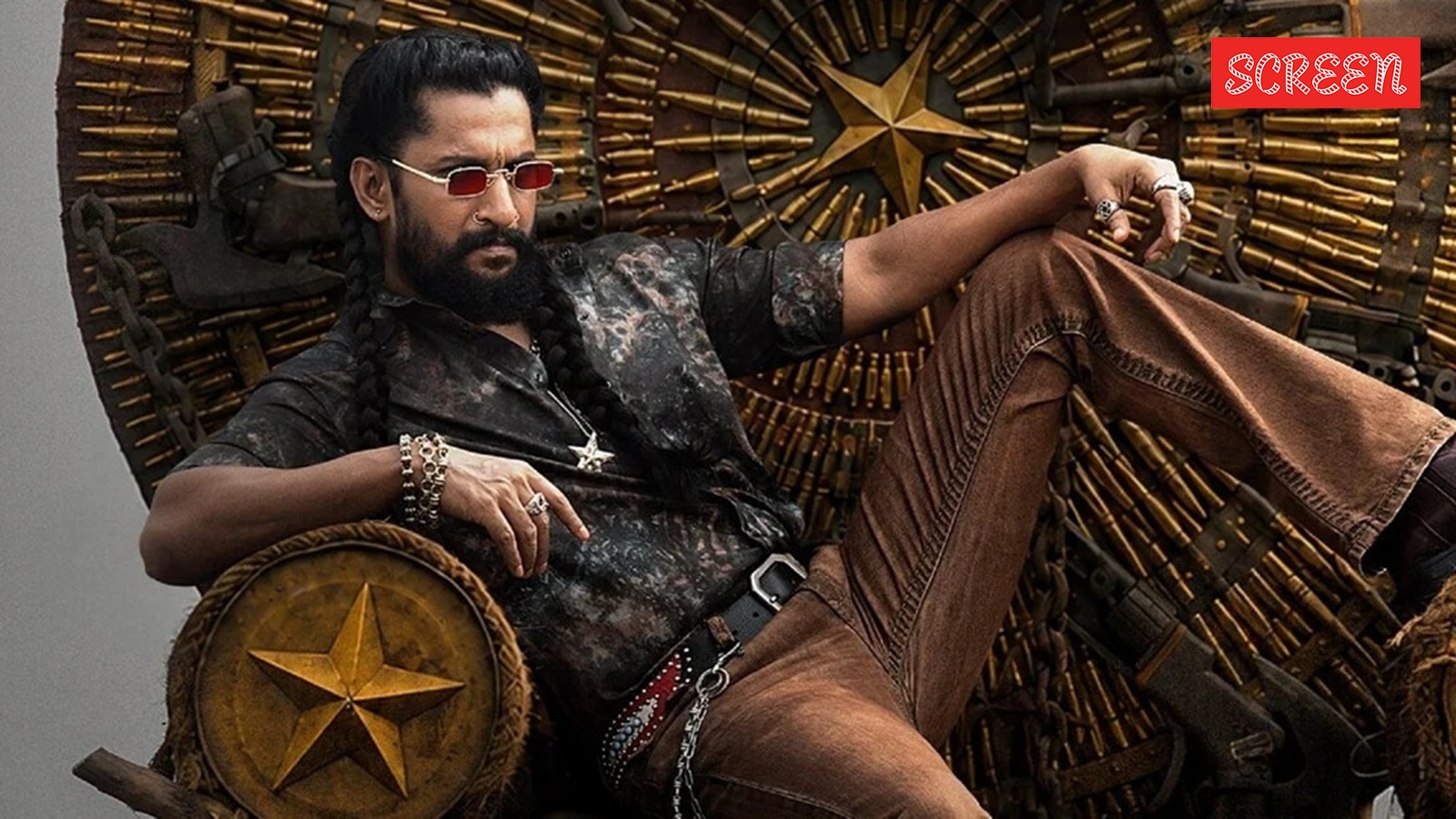
Balaji’s Baththa, set to release on October 1, is a story set in North Madras in the 1980s about a local gangster. However, it isn’t your usual gangster actioner. “It’s a drama about the human being within this don. Another character prevents us from seeing Baththa as the person he is and makes us see him as the gangster that he appears to be,” explains Balaji, adding that he took inspiration from the people and incidents he witnessed in his early years. “I grew up in Triplicane until the age of seven, and that neighbourhood defined the world in my mind. And that was the inspiration for Baththa.”
Recreating the ‘80s was an enjoyable process for Balaji. “I was born in the ‘80s, and so that period is very personal to me. That was also my golden period. And everyone, especially art director T Muthuraj, supported my vision a lot.” Interestingly, Balaji wanted to move away from how North Madras is usually depicted. “I wanted to recreate some outer areas of North Madras, like Old Kaladipet. Usually, they would show areas near the shore, but I didn’t want to do that.”
And whenever a period subject is being dealt with, writers and filmmakers these days seem tempted to weave in popular real-life personalities from that period; even the latest Telugu film, The Paradise, features Sr NTR in a cameo. “No, I wasn’t tempted to bring any of those real-life characters. I was focused only on developing characters based on the people I met at that time,” says Balaji.
Baththa is also Balaji’s third collaboration with Vijay Sethupathi after NKPK and Seethakaathi, and the director seems quite happy with how the star has evolved over the years. “He has always been a director-friendly and sensible actor. He would never try to imitate another actor. He would observe common people and take inspiration, but he would make it his own and do what’s required for the character.” During Baththa, Balaji realised that Vijay had a deeper understanding of the craft. “He is constantly trying to grow, be it the way he sees cinema or the way he approaches the craft.”
Only a sensible actor would see the heroism in the script of Baththa, adds Balaji. “But you may not get that immediately on a first look. Even during a script reading, the way he grasped the scenes and offered his feedback was wonderful. As an actor, he knows how to use the space and how to make it a comfortable experience for his co-actors,” adds Balaji, while also mentioning how the actor tends to add some minute details to his performance to help elevate the scenes.
On the technical front, Balaji seems to have gone with the people the film’s production banner referred to him. “I also thought it would be good to step out of my circle and work. That was also an interesting experience.” For instance, after working with his friends, cinematographers Saraskanth TK and C Prem Kumar, in his three films, Balaji worked with Selva Kumar SK in Baththa. “He shot films like Gypsy, Mehendi Circus and Viruman, but I particularly liked his work in Maanagaram. He’s a very talented technician.”
Baththa has music scored by recent sensation Sai Abhyankkar, who, Balaji says, has a good understanding of music. “Also, I think his indie work does not fully reflect his palette. For instance, he spoke highly of Balu Mahendra’s Veedu and about many old songs that he likes, which you wouldn’t usually associate with him. And if you explain a mood to him, he would easily imbibe it and compose tracks,” adds the filmmaker.
Though he finished another script along with Baththa, Balaji would have to start afresh for his next. “I gave that second script to a friend, and I have asked him to direct it. I now need to write a new script for my next.” But Balaji knows the audiences want to see more of his films sooner. “I understand I have been taking a long time to make films. Even I want to do my next film as soon as I can.”
Comments have to be in English, and in full sentences. They cannot be abusive or personal. Please abide by our community guidelines for posting your comments.
We have migrated to a new commenting platform. If you are already a registered user of The Hindu and logged in, you may continue to engage with our articles. If you do not have an account please register and login to post comments. Users can access their older comments by logging into their accounts on Vuukle.