Donald Trump’s Approval Rating Hits New Low 7 Weeks Before Midterms - Newsweek
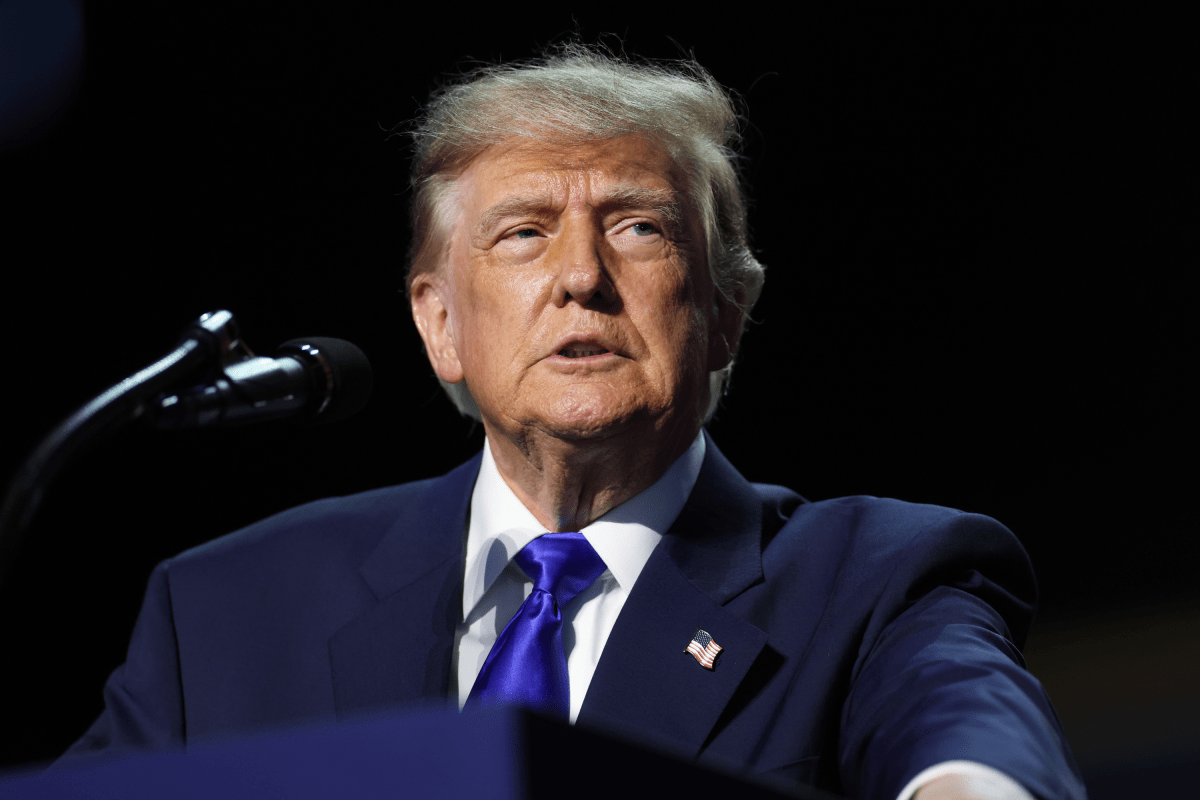
President Donald Trump’s approval rating has fallen to 37 percent, its lowest point in Marquette’s second-term polling, seven weeks before Americans choose a new Congress.
Presidential unpopularity could become a drag on Republican candidates as voters focus on inflation, gasoline prices and the war with Iran.
Control of Congress is at stake, with Democrats leading Marquette’s generic ballot among both registered and likely voters.
Trump began his second term with 48 percent approval in Marquette polling, but that number has declined as public confidence in his handling of major economic and foreign-policy issues has weakened.
A single survey cannot predict November, although its direction is reinforced by national polling averages.
Marquette Law School’s national survey found 37 percent of adults approved of Trump’s job performance and 63 percent disapproved, producing a net rating (those who approve minus those who disapprove) of minus 26 points.
Approval was down from 40 percent in July and one point below the previous series low recorded in May and June.
The survey was conducted online through the SSRS Opinion Panel from September 2 to 9. It interviewed 1,023 adults nationwide and had a margin of error of plus or minus 3.3 percentage points.
Intensity may be as important as the headline split.
Strong approval has fallen from 29 percent near the beginning of Trump’s second term to 15 percent, while strong disapproval now stands at 47 percent.
Economic anxiety sits at the heart of the political problem.
Marquette found approval of Trump’s handling of inflation at 19 percent, gasoline prices at 20 percent and the economy at 28 percent.
Another 64 percent said his policies were increasing inflation, while 18 percent believed they were reducing it.
Those judgments are grounded in voters’ daily experience.
Some 80 percent said gasoline had become more expensive over the previous six months, while 81 percent reported paying more for groceries.
Looking ahead, 68 percent expected inflation to rise during the next year.
Foreign policy provides little relief.
Approval of Trump’s handling of the Iran war stood at 26 percent, down from 32 percent in April.
Just 13 percent believed the United States had achieved its goals in the conflict, and 21 percent considered the war worth its cost.
Republicans nevertheless retain clear advantages on national defense, crime, immigration and border security: 41 percent of adults said the party would handle national defense better, compared with 26 percent who chose Democrats; Republicans also led by 38 percent to 23 percent on crime and by 42 percent to 31 percent on immigration and border security.
That distinction matters because a low presidential rating does not automatically transfer every issue, district or undecided voter to Democrats.
Still, the congressional numbers show how national dissatisfaction could reach down the ballot.
Among 581 likely voters, Democrats led Republicans by 54 percent to 41 percent; that subsample carried a margin of error of plus or minus 4.3 points.
Among 864 registered voters, the result was 50 percent to 42 percent, with a margin of error of plus or minus 3.6 points.
Turnout indicators sharpened that contrast.
Seventy-seven percent of registered Democrats said they were certain to vote, against 69 percent of Republicans.
Democrats also held a 47 percent to 32 percent advantage in the share describing themselves as very enthusiastic.
Broader measures put Trump in a similarly difficult position, though their estimates vary because they combine surveys from different populations and methods.
CNN’s Poll of Polls put him at 36 percent approval and 63 percent disapproval across national polls conducted from August 20 through September 14.
RealClearPolling’s average for August 26 through September 15 stood at 39.7 percent approval and 58.2 percent disapproval, a net rating of minus 18.5 points.
According to Nate Silver’s Silver Bulletin presidential approval tracker, Trump had a net approval rating of minus 19.5 as of September 16, a slight improvement from its record low of minus 20.6 but still firmly underwater.
Taken together, the averages suggest the Marquette reading is not simply an isolated sign of difficulty.
They do not, however, establish how opinion will translate across 435 House districts and individual Senate contests.
White House spokesman Davis Ingle has repeatedly argued that Trump’s 2024 election victory is a more meaningful measure of public support, saying that the administration’s economic agenda is still taking effect.
“The ultimate poll was November 5th 2024, when nearly 80 million Americans overwhelmingly elected President Trump to deliver on his popular and commonsense agenda,” Ingle told Newsweek in emailed comments he has used multiple times.
“No other President in history has accomplished more for the American people than President Trump, who is working tirelessly to create jobs, cool inflation, increase housing affordability, and more. The President has already made historic progress not only in America but around the world, and this is just the beginning as his agenda continues taking effect.”
Newsweek’s reporters and editors used Martyn, our AI assistant, to produce this story. Learn more about Martyn here.