E-hailing driver escapes Chatsworth hijacking after allegedly being strangled by passengers - IOL
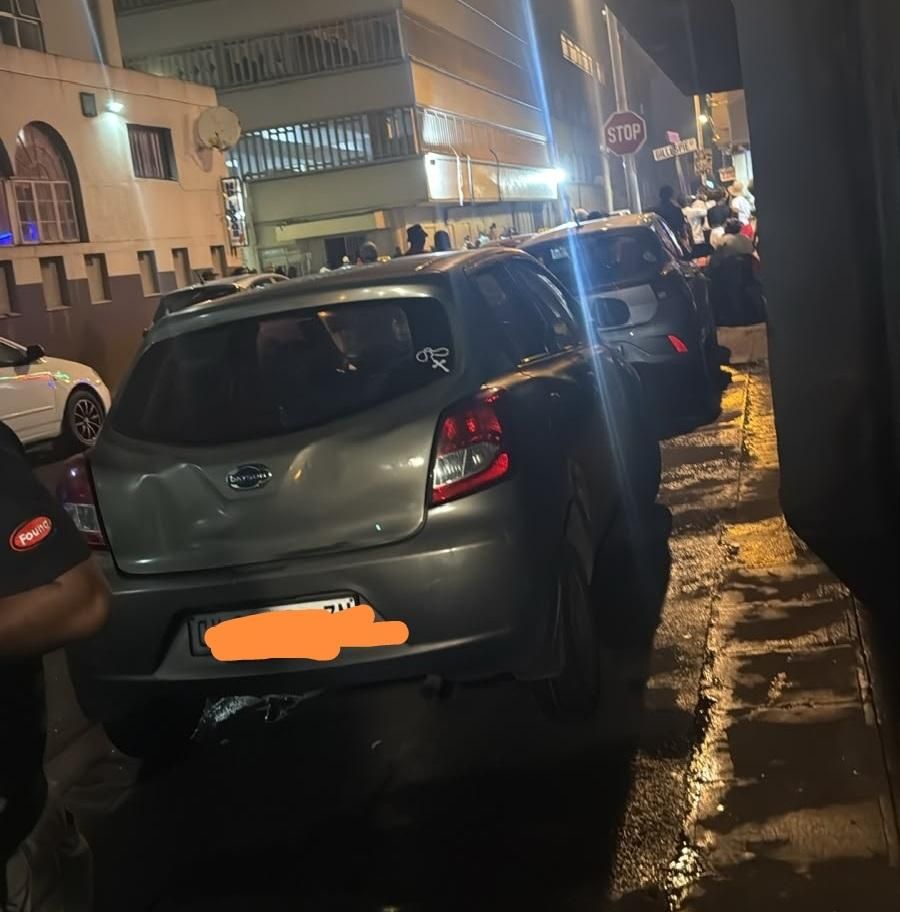
The vehicle was recovered in Durban Central.
An e-hailing driver, who picked up two men from Arena Park in Chatsworth, reportedly jumped from his moving vehicle when hijacked and throttled by the passengers along Higginson Highway last night.
The incident has sparked concerns about drivers operating with offline trips, which removes some of the safety, verification, tracking and reporting mechanisms associated with an authorised platform trip.
A report from SBS Security stated that at around 11:30 pm, the driver had picked up the two passengers, who flagged him down in Arena Park and requested a private trip to Westcliff.
As the driver travelled along Higginson Highway, the passengers told him their plans had changed and they wanted to go to Suncoast Casino instead.
“They agreed to a cost of R200, but as they approached Mobeni Heights, the driver noticed that the vehicle needed to be refuelled.
“The driver requested that the passengers pay for the trip at that point, and the suspects refused, claiming they had been robbed previously by an e-hailing driver and would not pay for fuel.
“The driver offered to drop them back, leading to a minor argument before heading back toward Chatsworth,” the report stated.
It further stated that as they were travelling back to Chatsworth, the passenger seated behind the driver grabbed the steering wheel, resulting in a struggle.
“The driver stopped the car on Higginson Highway. The suspects forced the driver out, taking over the vehicle. The driver was moved to the front passenger seat where he was throttled by the suspects.
“As the vehicle approached Bayview, the driver managed to open the door and jumped from the vehicle.
“He then flagged down a passing motorist who transported him safely to his home.
“The victim made contact with his employee, and the vehicle was tracked and recovered in Palmer Street in Durban Central,” the report read.
Sthembiso Khanyezi, chairperson of the KZN E-Hailing Council, said they were deeply concerned about any criminal activity targeting e-hailing drivers.
“Drivers spend long hours on the road, often operating at night and entering unfamiliar areas, which can expose them to particular security risks.
“The reported circumstances are particularly concerning because the driver alleges that passengers who had requested a trip became involved in the alleged hijacking.
“We therefore urge drivers not to conduct offline trips. Apart from creating safety concerns, an offline trip can make it considerably more difficult for the platform, association, council, SAPS and tracking providers to establish the passenger's identity, trip details, route and other information that may assist an investigation.
“Offline trips remove some of the safety, verification, tracking and reporting mechanisms associated with an authorised platform trip.”
Khanyezi said the amended national transport framework formally recognises e-hailing as a transport service and provides for safety and security measures, including vehicle identification and panic-button requirements.
He said the council would continue advocating for effective panic-button and emergency-response systems, real-time vehicle tracking, and rapid reporting mechanisms for incidents involving e-hailing drivers.
“Safety technology must not only exist on paper. Drivers must know how to use it and emergency responses must be sufficiently fast to make those systems meaningful.
“We do not have a statistical database that can accurately state the number of e-hailing drivers hijacked or were victims of crime, and this is an important gap that needs to be addressed.
“We will be looking at establishing a proper industry database to distinguish between e-hailing, driver hijacking, robbery of an e-hailing driver, assault of an e-hailing driver, vehicle theft, passenger-related crime, offline-trip incidents, and online platform trips.
“We are engaging with its local affiliate associations to improve the reporting of incidents and establish a more reliable industry safety database,” Khanyezi added.