Eight women found dead — and women are still told to be more vigilant - IOL
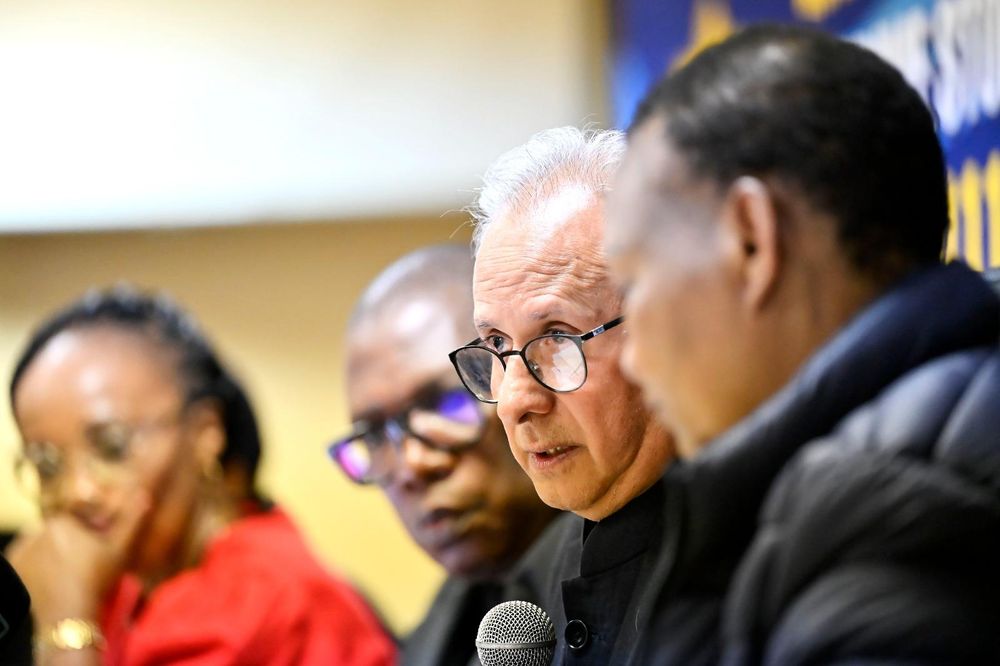
Acting Police Minister Firoz Cachalia has announced a shut down of Ekurhuleni in the coming weeks amid rising murders of women. The discovery of eight women’s bodies in Gauteng has renewed questions about South Africa’s response to gender-based violence, police transparency and the responsibility of men to prevent violence against women.
The bodies of eight women have been discovered in Johannesburg's East Rand, in what's being referred to as the Kempton Park Killings, and while all of them have not yet been identified, one thing is certain: the perpetrators are men.
Another thing that is certain is that the government and the police are not doing enough to prevent the murder of women.
On August 1, President Cyril Ramaphosa established the National Council on Gender-Based Violence and Femicide – the establishment of a task team that had not only come many years too late, but also followed years of empty promises to tackle this scourge.
In 2019, following the 2018 Presidential Summit on GBV, Ramaphosa pledged emergency legal and structural reforms. He also, during that year's State of the Nation Address, designated GBV as a national crisis. During the 2019/20 SAPS crime statistics reporting year, 2,695 women were murdered.
Between 2020 and 2024, Ramaphosa gave us updates on the National Strategic Plan, the tightening of bail conditions for sex offenders, the scaling up of sexual offences courts, and other measures he said government was putting in place to tackle the pandemic of violence.
In 2020/21, 2,655 women were murdered.
In 2021/22, 3,198 women were murdered.
In 2022/23, 3,914 women were murdered.
In 2023/24, 3,485 women were murdered.
There are no gender breakdowns (data disaggregation) in the 2024/25 SAPS reporting period, which is incredibly problematic. If we don't know how many women were murdered during that period, we won't know if mitigation efforts to combat GBVF are working or not. The police claimed at the time there was no way to reconcile the quarterly figures with the national report, but the estimate puts the 2024/25 number at over 3,500 women murdered.
There is no disaggregated data available for the current reporting period either, and there has been significant concern raised about the lack thereof. There are also concerns that the total number of women murdered is far higher, with estimates reaching 5,578 women killed in the previous 12-month reporting period.
And now there are eight more bodies. Eight more women. Eight more mothers. Eight more sisters. Eight more daughters. Sixteen days after Women's Month.
The police are advising women to be more vigilant, to avoid dangerous areas, to let people know where they are, their movements, allow themselves to be tracked by loved ones.
I'm sorry, but putting the responsibility for crime avoidance on women—who already live constantly looking over their shoulders for fear of being assaulted, raped, and murdered—is utter hogwash.
I have been saying for years that the number one threat to the lives of women is men. Men need to take responsibility to stop crimes against women. Men need to stop committing crimes against women. Men need to stop other men from committing crimes against women. And until all men realise that it's not enough to simply show solidarity in the fight against GBVF, all men will continue to be complicit in the murder of these women.
South African men murder between 11 and 15 women a day.
SAPS needs to stop hiding its head in the sand by not disaggregating the data and allow us to see exactly how many women and children are being murdered.
The response to what is beginning to look a lot like a serial killer on the loose speaks to the patriarchal view of women's safety.
Women must be protected – by men, by the police, and by the government. Not by the increased vigilance of women.
The police need to be open with us on this latest spate of what looks increasingly to be related murders. Open like they have not been on their reporting of the murder of women. Are they looking for one killer? A group of killers? A syndicate? Are they discovering more bodies because a suspect they have in custody is feeding them information?
Do we need to declare a state of emergency and set up a curfew?
What we don't need, Mr President, is another council, or task team.
A reward has now been offered for information that could lead to the arrest of the men responsible for this latest murder spree, and a specialised team of investigators has been established to probe these crimes collectively, with the support of crime intelligence and other specialists.
Until the perpetrators are caught, South Africa will sleep with one eye open; an all too familiar prospect for a country plagued by gender-based violence, and seemingly no appetite to end it.
* Lance Witten is the Editor of IOL.