Ekurhuleni women’s killings and mass shootings expose South Africa’s wider violence crisis - IOL
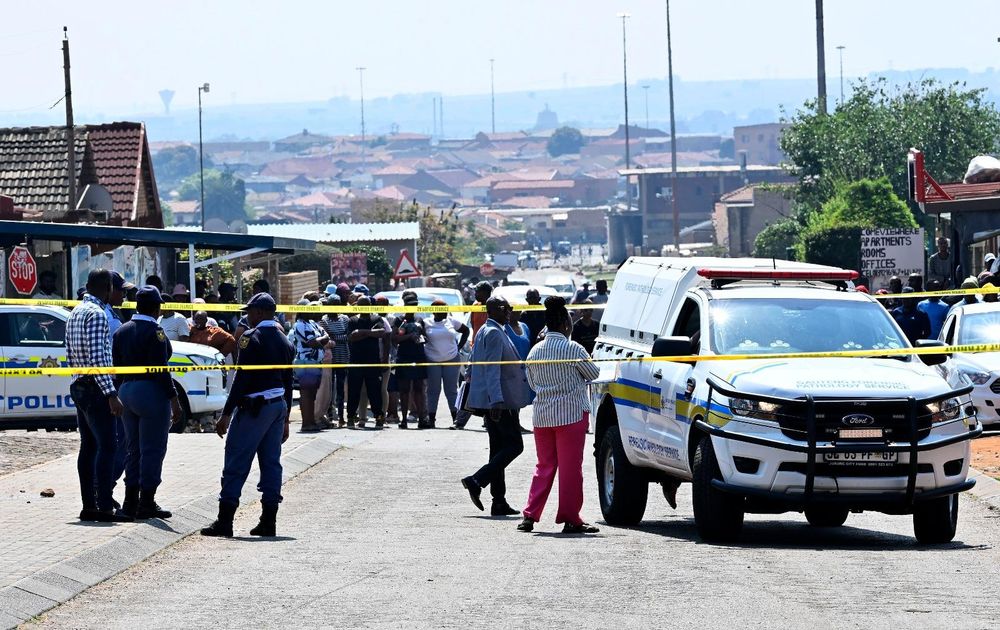
South Africa’s violence crisis has intensified, with the deaths of women in Ekurhuleni and separate mass shootings in Gauteng and the Western Cape prompting renewed calls for urgent action on GBVF, policing and community safety.
The last three weeks have left South Africans reeling. Every day, residents are walking up to more and more violent news. From "another woman's body found" in Ekurhuleni to mass shootings, it has been one bloody news report after the next.
Beyond the gruesome find, collecting bullet casings from crime scenes, the news headlines and public outcry - the question of society's moral decay continues to scream louder.
For context, 12 dead bodies, all women, have been found in the Ekurhuleni area of Gauteng. IOL reported that the 12th woman was believed to have been on her way to work when she was shot dead. Boitumelo Gift Mashita was 23 years old. Her estranged husband, believed to have been the trigger-man in this case, was later found dead in his car in Midrand. No foul play is suspected.
According to police, the investigations for the rest of the murders are ongoing.
Then, this past weekend, at least 28 people were gunned down in two mass shootings in Johannesburg and Lwandle in Cape Town.
Speaking at the IOL's KwaZulu-Natal offices this week, First Deputy President Duduzane Zuma said South Africa’s problems go beyond politics and point to a deeper societal crisis.
“If you go to shanty towns and shack dwellings, you see kids running around with unchanged nappies, having them around for days, no parents, and you wonder what’s going on. You have conversations, and you actually realise that South Africa, we actually have a much bigger problem,” he said.
He said communities across the country were dealing with problems that had been allowed to persist across generations.
“It’s not a political problem. It’s a societal problem. You go from Alex, Thembisa, Umlazi and you’ll see that there’s a multi-generational societal issue that we have pushed to the side and trying to deal with it every other way, and we’re not going to.
"Now, while I’m mentioning Kempton Park is because of what is happening there. You realise we’re all community members even if we may have moved out from rural areas, or townships. There is a wider issue here that needs to be addressed,” he said.
His comments come as communities across South Africa confront the consequences of violent crime, with questions being raised about policing, illegal firearms, organised crime, community safety and the social conditions in which violence takes root.
'African Christian Democratic Party (ACDP) leader Rev Kenneth Meshoe said the recent shootings were another devastating reminder of South Africa’s violent crime crisis.
“These tragic incidents, which have claimed the lives of many South Africans in a matter of days, represent yet another devastating reminder of the violent crime epidemic facing our nation."
He said the killing of innocent people, including the reported death of a pregnant woman in KwaMakhutha, highlighted what he described as the ruthless nature of criminal elements operating within communities.
Meshoe said communities were being left vulnerable to heavily armed criminals.
“Many communities are held hostage by heavily armed criminals who act with confidence that they can evade arrest and prosecution. This situation is unacceptable and demands an immediate and coordinated national response.”
The International Women’s Forum South Africa, GBVF Response Fund, and the Graça Machel Trust shared that the women's murders were not usual. In a joint statement, the organisations are calling for swift action.
"There are precious lives behind these numbers. Each of these women was a daughter, a mother, a sister, a friend. They were not unlucky. They were chosen, because they were women. A country that cannot protect its women, and cannot even name them when they are killed, has not yet decided that their lives count. We are asking South Africa to decide," said founder of the Graça Machel Trust, Graça Machel.
Faith Khanyile of the GBVF Response Fund added that South Africa classified gender-based violence and femicide as a national disaster in November 2025. "A declaration that does not radically change what is unfolding in Ekurhuleni this week is a piece of paper. We are not asking for sympathy. We are asking for detectives, for forensic capacity, and for these women to be named," she said.
Basetsana Kumalo, Nicqui Galaktiou and Lillian Karuri, International Women’s Forum South Africa, said society cannot accept that this is simply how women live in South Africa.
"Whatever the ultimate findings about whether these cases are connected, the circumstances in which these women have been brutally murdered demand an urgent response to the continuing crisis of violence against women in this country.
"The justice system must now do what it exists to do: investigate without delay, identify and apprehend those responsible, and ensure that they are prosecuted to the full extent of the law. Anything less is a failure of the Constitution itself," they said.