Elliot Page and the stars of ‘Slo Pitch’ talk proudly showcasing the GTA in their queer softball comedy - Toronto Star
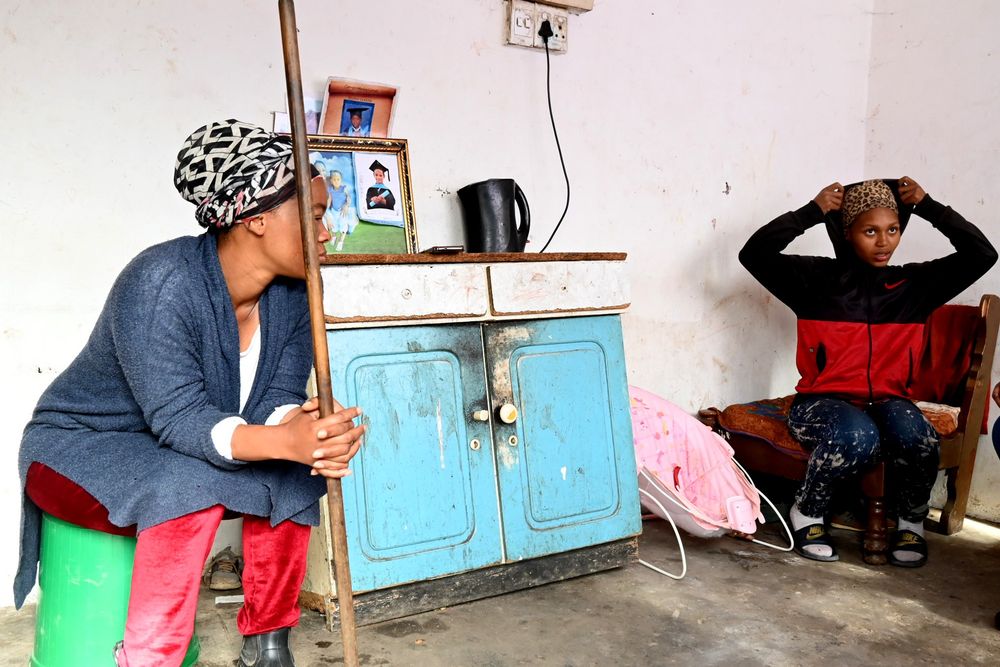
The 10-episode Crave series focusses on the members of a beer-league team called the Brovaries.
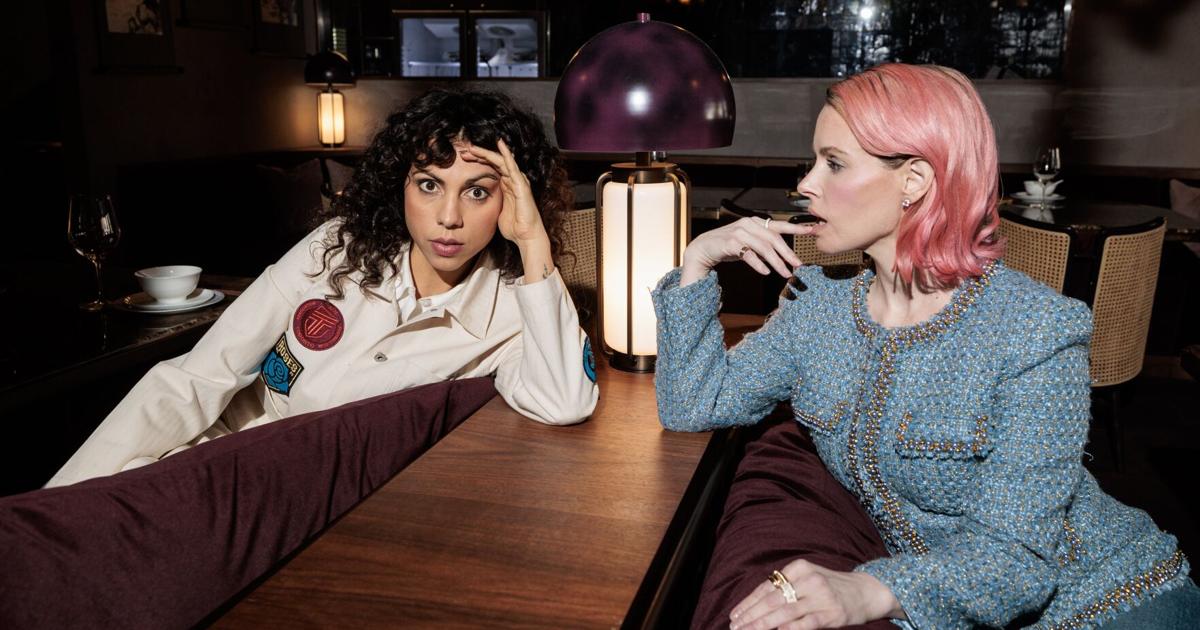
“Slo Pitch” stars Jess Salgueiro and Emily Hampshire photographed at Mott 32 in Toronto. “The crew that we’re with in ‘Slo Pitch,’” Salgueiro said, “it just looks like the people we hang out with in Toronto.”
Sure, dark and ominous prestige drama is wonderful and all, but when it comes to the pleasures of the small screen, it’s hard to beat a great hangout show. The genre is dominated by the usual configurations: a group of straight guys and gals (great for will-they-won’t-they tension!), a group of straight dudes (bros being bros!), or a group of straight gals (girl power!).
Once every, oh, 37 seasons, a group of gay dudes are allowed to get through (R.I.P. “Looking”), but there is one hangout show that has been the most elusive, even in 2026: the gay girl group. We were blessed with “The L Word” all the way back in 2004, sparking hope that it heralded an exciting new era of lesbian shows. Well, it didn’t. We have gotten a smattering of lesbi-entertainment over the last two decades (including “Generation Q,” a fun and much more inclusive reboot of “The L Word”), but sapphic hangout shows remained a rarity.
Leave it to Toronto to finally step up to the plate — literally. The 2021 web series “Slo Pitch” has landed in the majors, scoring a 10-episode streaming season and an executive producer in Elliot Page. The two-episode premiere is streaming on Crave, with two new episodes dropping every Friday.
The comedy follows the misadventures of the Brovaries, a LGBTQ+ beer-league softball team led by the endearingly awkward Joanne (Jess Salgueiro), who must contend with a skills-challenged roster and playing against Leanne (Emily Hampshire), the musical-theatre-obsessed ex that just dumped her.
“It’s a hangout show in a way that I haven’t seen in a while,” Hampshire told the Star before a photo shoot with Salgueiro at Mott 32 in Toronto. “I used to watch these shows that are evergreen and you just want to hang out with these people because they’re fun misfits; there’s no big twist that’s going to happen.”
And it’s one helluva winning hangout show. These are fun folks whom you’d actually want to just chill with, played mostly by actually-queer performers, whether it’s the laconic ex-pro stud Mel (Amanda Cordner), the meek trans teen Lee (Lane Webber), or the buck-wild German Boris (series co-creator Karen Knox).
The antics are low-stakes, old-school sitcom problems (can they raise enough money for their league fees with a sexy car wash?), but the show still manages to feel lived-in, to feel real. (The extremely legit gay costuming and styling really helps with this, including the preponderance of jorts.) It is, in the modern parlance, not that serious, and all the better for it.
Jess Salgueiro, centre, and Khadijah Roberts-Abdullah, far right, are among the stars of Crave’s “Slo Pitch.”
This is what drew executive producer Page to the project, he told the Star via Zoom from New York. The scripts actually made him laugh. “I was loving this ensemble full of very unique, distinct characters with their own comedic tone, and I loved, of course, how queer it was,” he said.
“It had this representation, with a bunch of characters who weren’t having to explain themselves or defend themselves: they were just existing as their complicated, messy (selves), irritating each other, but at the end of the day, having so much love for one another.”
So why has it taken so long for these types of queer hangout shows to get airtime? Salgueiro chalks it up to men feeling as though they can’t sexualize queer women in the same way as straight women, or that queer women won’t sexualize these men in the same way.
“I always noticed this thing in casting where a lot of times they amalgamate the queer female character with ‘she’s tough,’ and she can often be the diverse one,” Salgueiro said. “They’re combining all the marginalized groups together. They’re like, ‘Well, she stands up to the men, so she’s less sexually interesting to us because she’s putting us in our place.’ She’s not the ingenue. Sometimes I’m like, ‘Jesus, can we expand on this one particular archetype of what a queer woman is?’”
Hampshire remembers not feeling she had to hide her pansexuality earlier in her career, but only because “I felt I was always needing to be in the male gaze and therefore making out with another girl was hot to them,” she said. “The idea of being a queer character who’s not making out for them is a very different concept.”
“I think it’s been proven now that the hit shows that come out of our country are always so specifically ours and that is a lesson,” said Emily Hampshire.
While there was some forward momentum in queer TV with “Schitt’s Creek” — in which Hampshire co-starred as Stevie, the front desk clerk — she says, the landscape had become more barren due to the political climate ... until “Heated Rivalry” improved it some. “So hopefully (queer representation) can just be normal,” she said.
When asked where all the good queer hangout shows are, Page joked, “How much time do you have?” It is, he said, a symptom of the greater problem of who’s in control of what TV gets made, but he’s been fighting to improve the ratios with his own productions.
“Growing up in Halifax, Nova Scotia with very little representation,” he said, “any little things that crossed my path that I managed to get my hands on meant the world to me, and had a big impact on my life.”
The show feels reassuringly like home, like Toronto. “We weren’t pretending it was New York. We weren’t pretending it was something else,” Hampshire said. “I think it’s been proven now that the hit shows that come out of our country are always so specifically ours and that is a lesson.” The lesson being, the more specific something is, the more universal it becomes.
And not only is it set in the GTA (complete with a reference to gay couples’ weekends in Niagara-on-the-Lake, fighting at the ice winery), but the cast actually reads like a group of real queer Torontonians, a refreshing mix of BIPOC folks, trans and non-binary people, and many different vibes of queer women (there’s even a straight girl in the mix).
“The crew that we’re with in ‘Slo Pitch,’ it just looks like the people we hang out with in Toronto,” Salgueiro said. She’s been struck by the many comments she’s seen online from Americans who have seen the web series or show trailers and say, “Oh, man, that’s what we want our shows to look like.”
Maybe it’s the joy Salgueiro experienced making this show, seeping through onscreen. “We’re just making something pleasurable and fun, and everyone seems to be having a great time being respected,” Salgueiro said. “This is kind of revolutionary — like this is how it should be. That’s how it felt to me.”
Briony Smith writes about culture, entertainment and lifestyle for the Star.