Éric Blais: Spain outlaws votes on separation. Meanwhile Quebec and Alberta will determine Canada’s fate - Toronto Star
The only borders that truly matter, in the end, are not the ones drawn on a map, but the ones a country agrees to put to a vote. Spain forbids asking the question. Canada prefers to answer it.
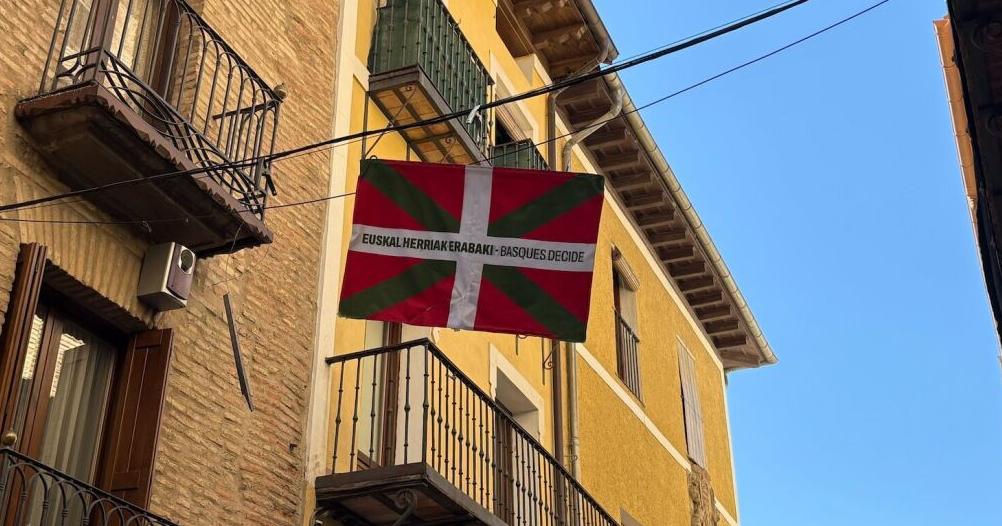
The Basque flag hangs in Puente la Reina, Spain, with the words: “Euskal Herriak erabaki.” Let the Basque Country decide.
Éric Blais is president of Headspace Marketing in Toronto and the author of "Normal Nation: How Normalcy Could Play in a Third Québec Referendum."
On a break during a long day walking on the Camino de Santiago in Spain, I checked my phone — not for tomorrow’s weather forecast, but for news from Quebec’s election to be held today. I am a pilgrim who followed the polls and promises while admiring and learning about churches along the way from the 11th century.
There is something a bit absurd about reading all of this from here. Yet, I began this journey in the Basque Country, a place where, like Quebec and Alberta, an independence movement wants to pull out of the country.
In 2008, when the lehendakari Juan José Ibarretxe wanted to hold a simple popular consultation — not even a referendum on independence, but a consultation on the idea of opening negotiations — the Spanish Constitutional Court did not weigh the pros and cons. It ruled the question itself illegal, stating that an autonomous community does not have the right to call on its citizens regarding sovereignty.
The constitution states that everyone can be autonomous but no one can be sovereign. Catalonia asked anyway in October 2017. Its organizers went to prison.
Quebecers, on the other hand, have voted twice on a question about sovereignty. And they might do so a third time if the PQ forms the government following Monday’s provincial election.
Parti Québécois leader Paul St-Pierre Plamondon repeated his commitment to hold a referendum during a first mandate. That he prudently postpones it — not while Donald Trump occupies the White House, which brings us to 2029 at the earliest — does not change the essential point: the question remains open and no one in Ottawa is thinking of declaring it illegal.
While Mark Carney has been clear about where he stands on Alberta independence, his position on nine other referendum questions is far less so.