Exclusive: Putin’s Economy Chief Warns of ‘Disintegration’ of World Trade - Newsweek
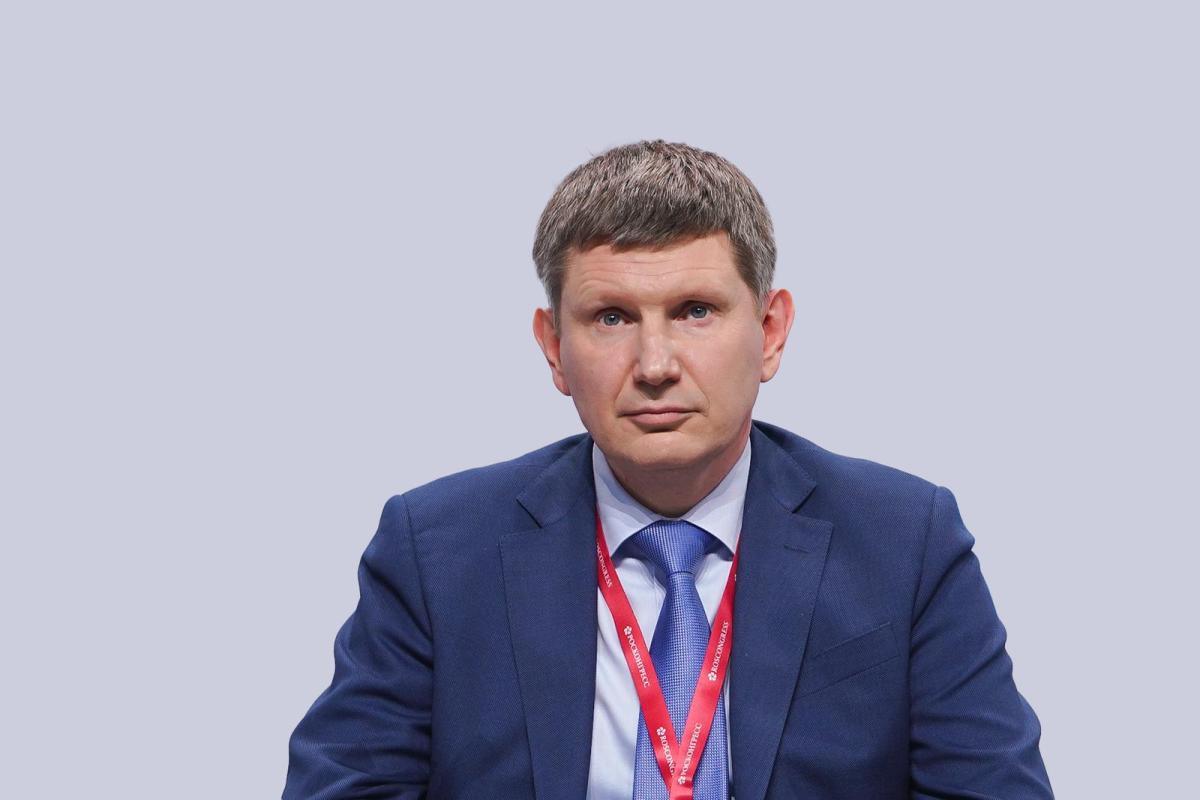
A member of Russian President Vladimir Putin's cabinet has appealed to the White House to help save an international trade order that the senior official warns is at risk of collapse.
The message comes as ministers from the world's top economies prepare to meet in Milwaukee on Wednesday ahead of a G20 leaders' summit scheduled for December at U.S. President Donald Trump's golf club in Miami.
But as the Trump administration extends a rare invite for Putin to attend the high-level gathering later this year, Russian Minister for Economic Development Maxim Reshetnikov is calling for a major overhaul of the current G20 agenda proposed by the United States.
The topics of discussion outlined by U.S. Trade Representative Jamieson Greer's office for the Milwaukee meeting include "eliminating forced labor in global supply chains, updating the Most-Favored Nation (MFN) principle, denouncing the weaponization of trade in food, and addressing structural excess capacity and production."
Reshetnikov took issue with each of them.
"The efforts of the U.S. Presidency, who were at the G20 origins, to bring the focus of our attention back to the key global issues are indeed valuable," Reshetnikov said in an article shared with Newsweek. "However, this raises a question: do all four topics put forward for discussion this year truly represent the most pressing challenges, the failure to address which poses a central threat to global trade?"
Rather, the top Russian economic official said Moscow and other G20 members shared "the hope that the U.S. would revert to using its authority and power to tackle more urgent and significant issues of the multilateral trading system, than those on today’s G20 trade agenda—the restoration of effective and fair-trade governance, including the dispute settlement system, embodied in the WTO."
On forced labor, the Trump administration introduced new tariffs in July targeting countries it said had not done enough to prevent imports of goods made by people forced to work against their will.
The list included 37 countries—China and Russia, but also a number of U.S.-friendly countries, such as U.S. allies Israel, Turkey and Saudi Arabia—and Hong Kong, all of which were slapped with a 12.5 percent tariff rate for allegedly failing to implement restrictions on imports produced using forced labor.
Also targeted were 17 other nations, including Canada, Mexico and the United Kingdom, assessed to maintain some, but insufficient laws against the practice. The European Union, Japan, South Korea, Switzerland and Taiwan were designated for additional tariffs to bring the rate to a cap of 10 or 12.5 percent.
Reshetnikov acknowledged that "no one can deny the importance of joint international efforts to combat forced labor, its ramifications and root causes."
At the same time, he argued that "this particular topic does not seem to contribute much to the restoration of the mutual trust, conducive and seamless environment for our businesses worldwide or elimination of unjustified trade barriers."
"Hopefully, the existing trade disagreements would not taint what needs to be done to eradicate this heinous human rights violation," Reshetnikov said.
As for overcapacity, an issue the U.S. often raises in connection with China's large-scale production and exports of cheap, state-subsidized goods, Reshetnikov called the concept "rather debatable—a country possessing certain comparative advantages will produce more than it consumes and will, consequently, export the surplus."
He said the question of "whether such an excess of production over domestic consumption stems from genuine competitive advantages or is the result of distortions of competition" was valid. But he also noted that many nations used state subsidies, including those "that traditionally profess their commitment to a market-based economic model."
Moreover, he argued that a range of other measures create unfair advantages in the market. Some have been frequently wielded by the U.S.
"These include tariffs and various non-tariff restrictions that ensure demand for domestic suppliers," Reshetnikov said. "Export controls, restrictions on technology transfer, and the dominance of multinational corporations can lead to the monopolization of certain industries resulting in 'extreme' overcapacity. The benefits and protection granted domestically consequently transform into the advantages on foreign markets."
Russia has been subject to heavy sanctions and other trade restrictions by the U.S. and European allies since the outbreak of the Russia-Ukraine war in February 2022.
A new bill named after the late U.S. Senator Lindsey Graham, signed by Trump earlier this month, carried new punitive measures against Moscow. But the U.S. leader has also considered easing sanctions in exchange for the release of U.S. citizens imprisoned in Russia, according to a recent report by The Atlantic.
To address potential imbalances and other grievances that may arise among G20 members, Reshetnikov proposed active collaboration to work through and improve existing processes, such as "trade remedies and the disciplines under the WTO Agreement on Subsidies and Countervailing Measures."
"The improvement and adaptation of these mechanisms is in our hands," Reshetnikov said. "We should work together in the G20 and WTO to improve the multilateral rules in order to address various forms of trade distortions in a comprehensive cross-sectoral manner."
The topic of food security has emerged as a particularly urgent challenge amid an uptick in conflicts wreaking havoc on global supply chains, such as the Russia-Ukraine war and the U.S.-Israeli war with Iran.
It's also a subject on which Reshetnikov signaled alignment between Moscow and Washington.
"As for the issue of weaponization of trade in food, we fully agree with our American colleagues: this is a particularly acute global problem," Reshetnikov said. "It is the poorest and most vulnerable people across the world who bear the brunt of restrictions imposed by major players in global markets against one another."
Where Russia sees room for progress, however, is in pursuing agreements that "cover not only measures directly related to trade in food, but also all restrictions that impede such trade. These include "restrictions on trade in agricultural inputs, including fertilizers, equipment for their production, as well as essential services such as financing, payments, insurance and transportation," according to Reshetnikov.
He also argued that the discussion over the "weaponization of trade" should extend beyond food to the growing use of the General Agreement on Tariffs and Trade (GATT)'s Article XXI, which allows members to breach certain WTO obligations as "national security exemptions."
Both the U.S. and Russia have experience with this approach.
After the Russia-Ukraine crisis first erupted in 2014, Moscow used the WTO’s national security exception to defend trade restrictions against Kyiv regarding the transit of goods through neighboring countries. The WTO accepted Russia's argument as valid in 2019.
The U.S. invoked the same exception to defend steel and aluminum tariffs under the first Trump administration in 2018, arguing that national security decisions should largely be left to individual countries. The WTO rejected this reasoning in a 2022 ruling, though Washington appealed.
"At the moment it seems that so-called national security exceptions have lost their 'exceptional' nature and been transformed into a general rule that guides trade policy decisions of certain countries, even though this sword cuts both ways," Reshetnikov said.
While Reshetnikov argued that "in the current circumstances the consensus on any solutions in this area is unlikely, if not impossible," he asserted that "it does not mean that in the course of the reform of the multilateral trading rules we can afford not to tackle this matter or to snooze it until some more fitting times."
And yet "another quite controversial issue is the fate of one of the fundamental principles of the multilateral trading system—Most-Favored Nation (MFN) treatment," according to Reshetnikov.
MFN refers to the WTO principle that countries generally apply the same standard tariff rates to imports from all WTO members rather than favoring one over another. In practice, the U.S. and other countries set an MFN duty rate for each product, although individual countries can face different rates when preferential trade agreements or other special tariffs apply.
In a paper submitted to the WTO last December, the Trump administration described the MFN principle as "unsuitable for this era" and argued that "it is time to recognize the necessity of allowing all Members to enter into mutually beneficial agreements that may not extend to every Member."
But Reshetnikov argued that, with the MFN principle serving as an "anchor" providing a baseline for trade relations among WTO members, "removing this backbone of the system would, in our view, be a mistake."
Exceptions should be "well-defined," he said, while "new, more flexible mechanisms should be introduced to enable governments to adjust their trade regimes promptly when required by urgent and objectively justified circumstances."
And given the economic weight and influence of each G20 member, he said, "none of us should arbitrarily and unilaterally alter the terms of trade."
Otherwise, he warned, the whole global trade system as we know it could unravel.
"What is the point of a system that grants its members full discretion to alter their trading regimes unilaterally and selectively?" Reshetnikov asked. "In my view, this is precisely what fragmentation of the system means—and, beyond that, its disintegration."
"I do not believe that such a scenario is in the interests of any of us."
Contact Newsweek editors on this story: Jason Lemon and Sam Wilson.