‘Fantasy’ or generational investment? Mixed reaction to Cape Town’s unfinished highway vision - IOL
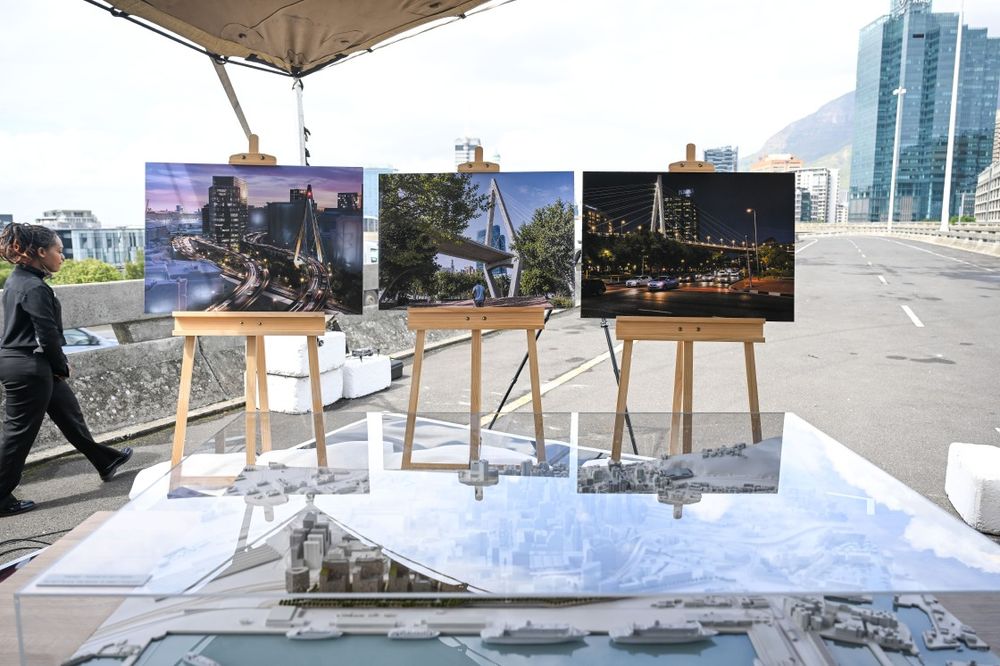
Cape Town Mayor Geordin Hill-Lewis unveils the City’s vision to transform the Foreshore’s unfinished highways into a new link bridge, tunnel, promenade and mixed-use neighbourhood.
Cape Town’s proposal to complete its unfinished Foreshore freeways has triggered a political backlash over its cost, funding and housing plans, while transport advocates describe it as a generational opportunity.
The Foreshore Precinct Project proposes a new link bridge, an underground tunnel, parks, a harbour-side promenade, affordable housing and a new neighbourhood on about 15 hectares around the unfinished freeways.
Mayor Geordin Hill-Lewis has said the project could eventually cost “many billions of rands”, although no firm estimate has been released.
GOOD secretary-general and Cape Town mayoral candidate Brett Herron said the project was financially unrealistic.
“The possibility of the city ratepayers ever being able to fund the completion of the Foreshore Freeways, or an alternative inner-city transport solution at this scale, was always regarded by the engineers and finance professionals as impossibly unaffordable,” he said.
Herron accused Hill-Lewis of presenting “a fantasy as a plan”.
“There is no plan. Just a glossy brochure,” he said.
He said tunnelling beneath reclaimed land would carry significant engineering risks, including soil instability and subterranean water. He also cited international infrastructure projects, including Boston’s major tunnel development, as examples of potential cost overruns.
“It is not impossible from an engineering perspective but it is highly unlikely to be fundable and the risks of expenditure overruns are very real,” Herron said.
The City said the proposal remained at the conceptual stage and that funding arrangements would be developed as planning progressed.
“The question of funding will be addressed as the project progresses from vision to implementation,” spokesperson Luthando Tyhalibongo said. “This project is still at the conceptual stage and will be implemented over multiple years.”
Tyhalibongo said the City was exploring innovative funding models to ensure the project’s sustainability.
Access to port-controlled land is another unresolved issue. The City said the Transnet National Ports Authority was a key stakeholder and that discussions were continuing.
The City has also not said how many affordable homes would be built. It says affordable housing will form part of the proposed second phase, but has not provided a target.
Herron said any use of public land should include a significant affordable-housing component.
The City has not provided details about what would happen to homeless people living in parts of the precinct.
Gareth Ramsay, founder and lead project engineer of Capetrain Express, welcomed the proposal as a “generational investment” in the lower CBD.
He said the development could support transit-oriented development, improve mobility and create better connections across Cape Town. He also welcomed the possibility of preserving space for a future railway line.
Under the proposal, the inbound freeway would be widened and connected to Helen Suzman Boulevard by a new bridge over Buitengracht Road.
A later phase would include an outbound tunnel near Duncan Road connecting to the N1 and N2. The existing elevated outbound freeway would then be demolished, creating space for parks, development and a promenade.
Public participation is expected as planning progresses. If approved, construction could begin before the end of the next council term and continue for more than 15 years.