
Fear of '2,000 commandos' in Greece! 'A Turkish wall in the Aegean' - Milliyet
Milliyet AppUygulamayı AçWebWeb'de Devam Et ENFear of '2,000 commandos' in Greece! 'A Turkish wall in the Aegean'NewsFear Of '2,000 Commandos' İn Greece! 'A Turkish Wall İn The Aegean'Fear of '2,000 commandos' in Greece! 'A Turkish wall in the Aegean'17.09.2026 - 15:09 | Last Updated: 17.09.2026 - 15:11
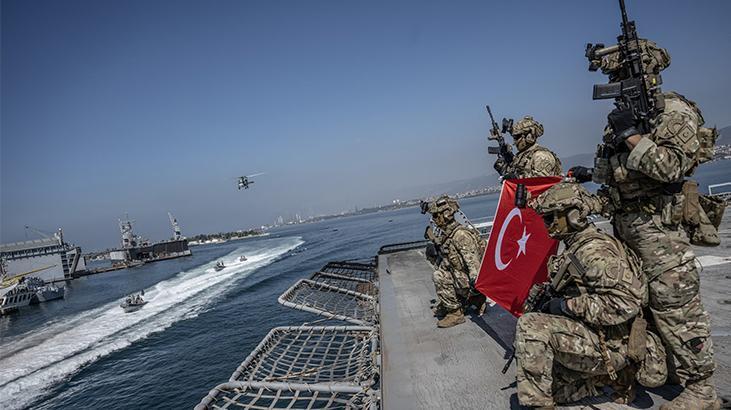
MİLLİYET.COM.TR / Türkiye’s critical move in the Aegean has taken center stage in Greece. The relocation of the 51st Commando Brigade, stationed in the Hozat district of Tunceli, to the Söke district of Aydın has made headlines in the Greek press with a series of reports.
The commandos’ move to the Söke Garrison revealed that the deployment was being closely monitored in Athens, particularly due to the new location directly across from the island of Samos.
Under the Presidential Appointment Decree issued in August, Brigadier General Yaşar Karaoğlu was appointed commander of the 51st Commando Brigade. With the brigade’s relocation from the Tunceli-Hozat corridor to the Söke Garrison, approximately 2,004 specialized commandos began serving in Söke.
According to analysts, the fact that these commando brigades consist of units experienced in counterterrorism and special operations and have been deployed to Söke is one of the Türkiye’s routine practices. Such deployment decisions are made in accordance with training and operational planning. However, the relocation of the 51st Commando Brigade to Söke—one of Türkiye’s strategic centers on the Aegean coast—was viewed from a different perspective in the Greek press.
This is because the deployment to Söke, in the Aydın province—directly across from the Greek island of Samos, the Greek territory closest to Türkiye—was interpreted in Athens as setting off “alarm bells.”
Onalert, a Greek media outlet, gave extensive coverage to Türkiye’s move in Söke and offered notable analyses. Using the phrase“Türkiye’s move in Söke did not go unnoticed,” Onalert wrote that this step signifies a strengthening of Türkiye’s Aegean Army.
The report noted that the Aegean Army possesses a network of units stretching from northwestern Anatolia to southwestern Türkiye, while citing open sources that point to a core force.
Onalert’s report highlighted the 11th Commando Brigade stationed in Denizli and Söke, the 19th Brigade along the Edremit axis, the 57th Artillery Brigade in the Izmir region, as well as additional support, command, communications, and logistics units. It was stated that the deployment of commando forces has been “further strengthened” with the transfer of the 51st Commando Brigade to Söke.
The main point of focus in the report, however, was the “quantity and quality” of forces that the Türkiye side could deploy on shorter notice in the Central Aegean. Onalert noted that the Greek side had taken note of the 51st Brigade’s move from the mountains of Tunceli to the Aegean coast—specifically to Söke, across from Samos—and assessed that “the symbolic significance of this move is quite significant during a period of heightened tension.”
Athens-based Thetoc, meanwhile, reported the development with a much more striking headline: “Sirens in the Aegean.” The report included the statement, “Türkiye has deployed its elite commandos very close to us.”
Noting that the 51st Commando Brigade is recognized as one of the Türkiye’s elite units, Thetoc wrote that the brigade’s relocation to Söke has strengthened Türkiye’s military presence along its western coast.
The report also highlighted the presence of other key military units in the region, such as the 1st Marine Brigade in Foça, near Izmir.
Protothema, meanwhile, highlighted the development directly in its headline with the figure: “2,000-strong Turkish commando force.” The report, which noted that the 51st Commando Brigade has a special mission within the Turkish military and consists of more than 2,000 personnel, stated that the brigade’s deployment to Söke has strengthened Türkiye’s military presence along its western coastline.
Protothema linked this redeployment to Athens’ recent moves in the Aegean, particularly Prime Minister Mitsotakis’ visits to Greek islands and the defense cooperation between Greece and Israel.
The report also suggested that the deployment in Söke is part of Türkiye’s broader military deployment in the Aegean.
‘WILL THE BALANCE OF POWER CHANGE?’
Ta Nea, one of Greece’s long-established newspapers, also featured Türkiye’s move on its front page. In an article titled“Turkish Commandos Deploy Opposite Samos: How Will the Balance of Power Shift?”, it was reported that Türkiye had moved its elite 51st Commando Brigade from the Hozat region of Tunceli to the coastal area of Söke in Aydın Province, opposite Samos.
Ta Nea argued that this move was “not merely a simple internal administrative reorganization, but a move that will have profound strategic consequences.”
The report specifically highlighted that the brigade’s new base is located directly across from Samos, noting that this is a “highly concerning” situation from Athens’ perspective.
Ta Nea’s report also included assessments by defense analysts. The analysts argued that the deployment of commandos to Söke creates a unified and “extremely dangerous front.”
The report noted that the new unit is not operating in isolation but is part of a broader operational plan, it was claimed that the concentration of forces forms a solid offensive line stretching from Çanakkale and Gökçeada to İzmir and Söke, leading to the assessment that “a Turkish wall is officially taking shape in the Aegean.”
The report also claimed that Türkiye’s rapid airlift and amphibious operation capabilities have increased significantly, arguing that the current military balance in the central and southern Aegean could shift.
Miçotakis had paid a three-day visit to the island of Meis during a period of escalating tensions between Türkiye and Greece .
Footage taken during Mitsotakis’ visit, showing the official delegation alongside Greek military personnel and armed forces, sparked a major backlash.
The sighting of Greek armed forces on Meis Island—which was transferred to Greece under the condition that it remain “non-military” pursuant to Article 14 of the 1947 Paris Peace Treaty—sparked a new debate over the island’s status.


