‘Fifty times easier’: Why our best AI founders are moving to America
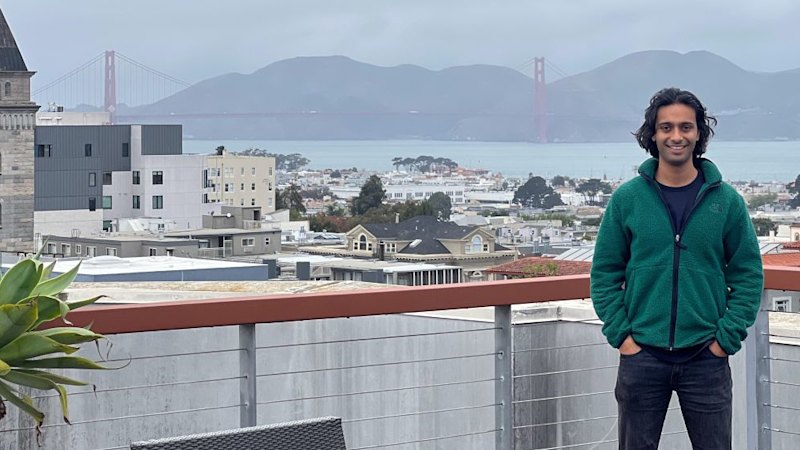
San Francisco: Queensland-educated start-up founder Sam Senior has just spent two weeks in Sydney and Melbourne, meeting some of the country’s largest companies to sell them software. At one large utility, the conversation turned from his product to where he lives.
As he recounts it, the executives told him he seemed like he had “a time machine for what’s two or three years ahead of what we are doing today”. Could he help them whiz ahead too?
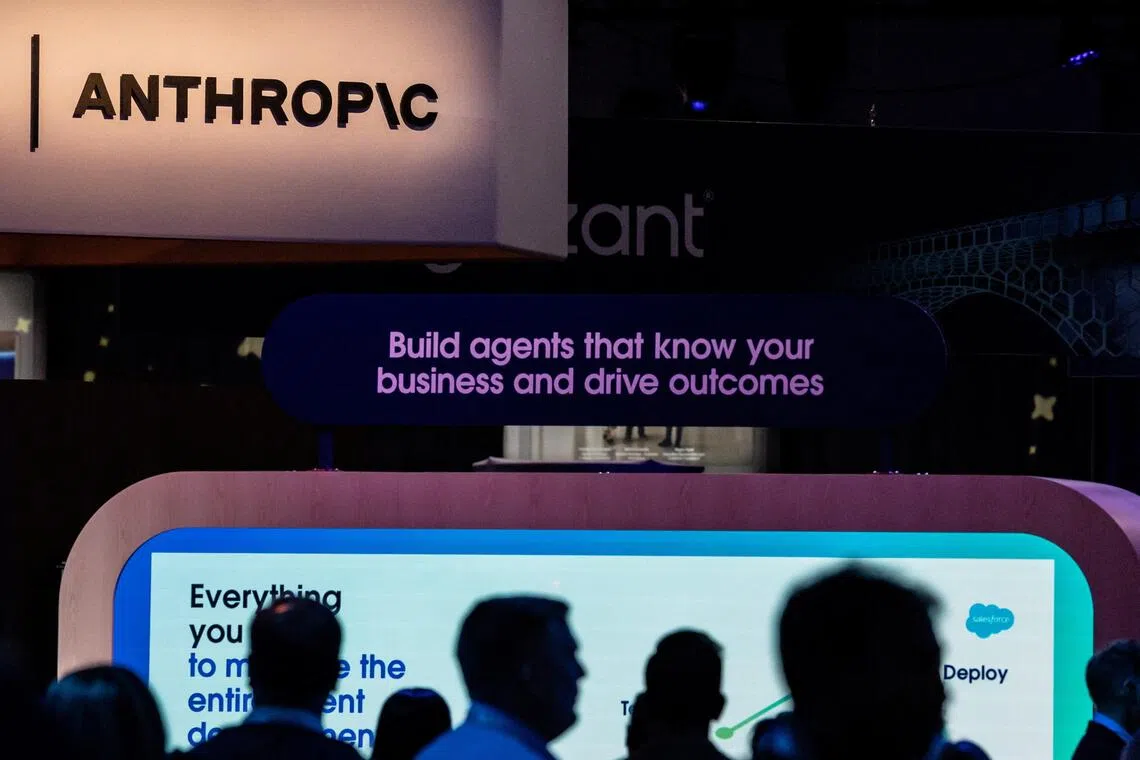
Airtree principal Sid Kasbekar in San Francisco.The machine is San Francisco. Senior, founder and chief executive of Monarch, has lived in the US for 11 years. He is regularly at Anthropic’s office and works with OpenAI over shared Slack channels, which is common for tech executives in the city. Big Australian companies want to know what he sees there.
Over non-alcoholic beers in San Francisco this week, Senior, four other founders and an investor explained what drew them to the centre of the AI boom, and what keeps pulling them home. All but one, a New Zealander who spent five years in Sydney, are Australian.
About 112,000 Australian-born people live in the US, according to the US Census Bureau, about 7000 of them in the Bay Area.The AgeAustralia raised most of them, and Australian investors funded two of their companies. Each of them decided to build in San Francisco anyway.
Australia has spent two decades hoping for more Atlassians and Canvas, multibillion-dollar tech companies that grow up in Australia, generate huge amounts of cash and invest that money seeding fresh companies founded by their alumni.
This country can still produce the talent, even in an age of artificial intelligence. Last week alone, one Australian who was reportedly on a pay packet of more than $2 billion at Meta jumped ship to Anthropic. Another Australian, who was close to solving a major prize in mathematics, spoke out after being gazumped by OpenAI. And then there are the founders like Senior and his friends.
So the question for Australia is: can it keep them?
American start-ups raised $US412.7 billion ($580 billion) in the first half of this year, according to the PitchBook-NVCA Venture Monitor.
Australian start-ups raised about $5 billion in the whole of 2025, according to Cut Through Ventures, an industry data provider.
Of course, the United States has more than 10 times the population of Australia and the world’s largest economy. Some of that population is made up of Australians. About 112,000 Australian-born people live in the US, according to the US Census Bureau, about 7000 of them in the Bay Area.
For Nick Rudder, the move was never in question. The former finance worker, originally from Sydney, came over when his first start-up was accepted into Y Combinator, the Silicon Valley accelerator. That company failed. The idea for his second came out of it: Sphere, a company he founded in 2021 that automates tax compliance for companies including the social media link-in-bio tool Linktree, website builder Replit and software platform Lovable.
Nicholas Rudder founded Sphere in 2022 after struggling with tax obligations across multiple countries while running a marketplace start-up.SphereEverything he needed, from customers to investors, was here, he said. “It was just an obvious decision.”
Micah Hill-Smith is co-founder and chief executive of Artificial Analysis, which tests how AI models perform and what they cost. It employs just over 50 people, with its headquarters in San Francisco and an office in Melbourne.
“Every time I’m outside of the city and come back, I’m reminded ... there is this one physical place in the world where AI is getting invented,” he said.
The same people are quick to name the downsides. Rudder said the investors he meets here tend to repeat one another. “There’s very little original thought,” he said. Australian companies often stand out in their marketing, he said, because they can watch the frontier while bringing a different mentality to it.
Alex Valente left because Australian buyers were too slow. He is co-founder of Quarterzip, which helps large software and AI companies get their customers using what they have bought, and his previous start-up sold security software to Australian companies. What he heard from buyers, he said, was mostly about compliance and what the legal team thought. American customers wanted to know how to become more competitive and lift their margins.
“All I wanted to do was move faster,” he said. He sold that business and pointed the next one at America.
Senior, back from selling at home, described Australia as a “risk-off” country. Budget was rarely the obstacle on his trip, he said. Security and governance teams were, and layers of caution make it hard for anything new to take root.
Australian investors are cautious too, according to Alex Brogan. He grew up in Perth and began his career at Goldman Sachs before moving to the US with an Australian start-up, and is now starting his third company. The problem, he told this masthead, is who local venture capital is willing to back.
“We’ve been very conservative with the profiles of founders that we look for, and that’s actually led to just a lot of really talented young Australians not being able to raise funding in Australia,” he said.
Raising money in America is not two or three times easier, Brogan said. “It’s probably like 50 times easier.”
Jackie Vullinghs, a partner at one of Australia’s largest venture capital funds, Airtree, said the scale of the American market explains much of it. The US venture sector and population are many times larger, she said, and the country is in an AI arms race that is defining its economy.
Airtree partner Jackie Vullinghs.NineAdvertisement“I’d say it’s more about the maturity of our start-up ecosystem than appetite,” she said. Airtree has backed five founders under 25 so far this year.
And the fund has just sent principal Sid Kasbekar to San Francisco to back Australian and New Zealand founders who start companies there, or move there after starting at home.
The tax treatment of start-up equity is changing as well, which matters most to the people who take shares instead of salary.
From July 1, 2027, the federal government plans to replace the 50 per cent capital gains tax discount with indexation and a minimum tax.
It is consulting on a concession that would preserve a 50 per cent discount for founders and staff holding shares in eligible start-ups, but the detail is not settled.
Heading to the United States to found, or keep growing, a start-up is not a one-way street. Many companies based in San Francisco and operated by Australians still employ people at home. Monarch is about to open an Australian office. Artificial Analysis already has one.
Quarterzip has 15 people working in Australia and five in the US. Valente, the co-founder of the company, keeps hiring in Australia on purpose. His graduate job was at Atlassian, and he wants others to get the same start. “I want Australia to have a tech ecosystem. I was a beneficiary of that,” he said.
Asked whether Australia should be fighting harder to keep people like him, Valente was relaxed. “All the ships, mate, they come back to the shore.”
Vullinghs said Australia cannot and should not try to stop its talent going global. Australians and New Zealanders run some of the world’s most valuable AI companies, she said, and those founders open doors at home, including hiring Australian engineers while based in the US.
“The goal should be making it easier to build the next Canva in Australia, not harder,” she said. A founder weighing Surry Hills against San Francisco should not be worse off either way.
The discussion kept coming back to what life in San Francisco costs. It is about to cost more, if Marc Benioff is right. The veteran chief executive of the $US200 billion enterprise tech company Salesforce expects this year’s AI floats to bring San Francisco a wave of jobs and new arrivals, and supercharge old fights over gentrification.
Salesforce chief executive Marc Benioff at the Dreamforce conference in San Francisco on Tuesday.Bloomberg“We ride that roller coaster very well, but it is always a roller coaster,” Benioff said this week at Dreamforce, his company’s conference. “So everyone should buckle up.”
Rudder had already found out what it can cost.
While his first start-up was failing and his co-founder was leaving, his wife was carrying twins in a rare, high-risk pregnancy. Their American health insurance didn’t cover it. The policy carved out that type of twin pregnancy.
“I thought this is what insurance is all about,” he said.
Appealing meant his wife spending six or seven hours on the phone, only to be hung up on.
In the end, the couple left. His wife is a British citizen, and the twins were born in the UK, where the family stayed three months before returning.
“It’s probably one of the most distressing things, because you’re going through a high-risk pregnancy,” he said. “That’s just not the sort of thing that you should have to deal with.”
His family was comfortable, he said. “Imagine people that don’t have any income.”
Senior, the start-up founder, is expecting his first child. His father has health conditions and won’t visit, worried that travel insurance won’t cover him and uneasy about safety and the country’s politics.
“I feel like I have to knock it out of the park to have the life that I hope for myself and my family here,” Senior said. “Regardless of how things turn out here, I can still have a fantastic life in Australia.”
Valente gets the same reminder every morning. His apartment looks over Aquatic Park, a cove closed off from the rest of the bay, where the water is calm enough for swimmers.
Most mornings he wants to go in. He doesn’t. There is nowhere to leave his keys and clothes, and he says the chance they will be stolen is real.
So he watches from the window. In Sydney, he lived across the road from the beach.
Australia’s biggest companies may want a seat in Senior’s time machine. His own father, he says, will have to be dragged out of the house “kicking and screaming” just to visit.
David Swan travelled to San Francisco as a guest of Salesforce.
The Business Briefing newsletter delivers major stories, exclusive coverage and expert opinion. Sign up to get it every weekday morning.
You have reached your maximum number of saved items.
Remove items from your saved list to add more.