
Flooded hospital, no power, but doctors stay on to treat patients in Bengal's Malda
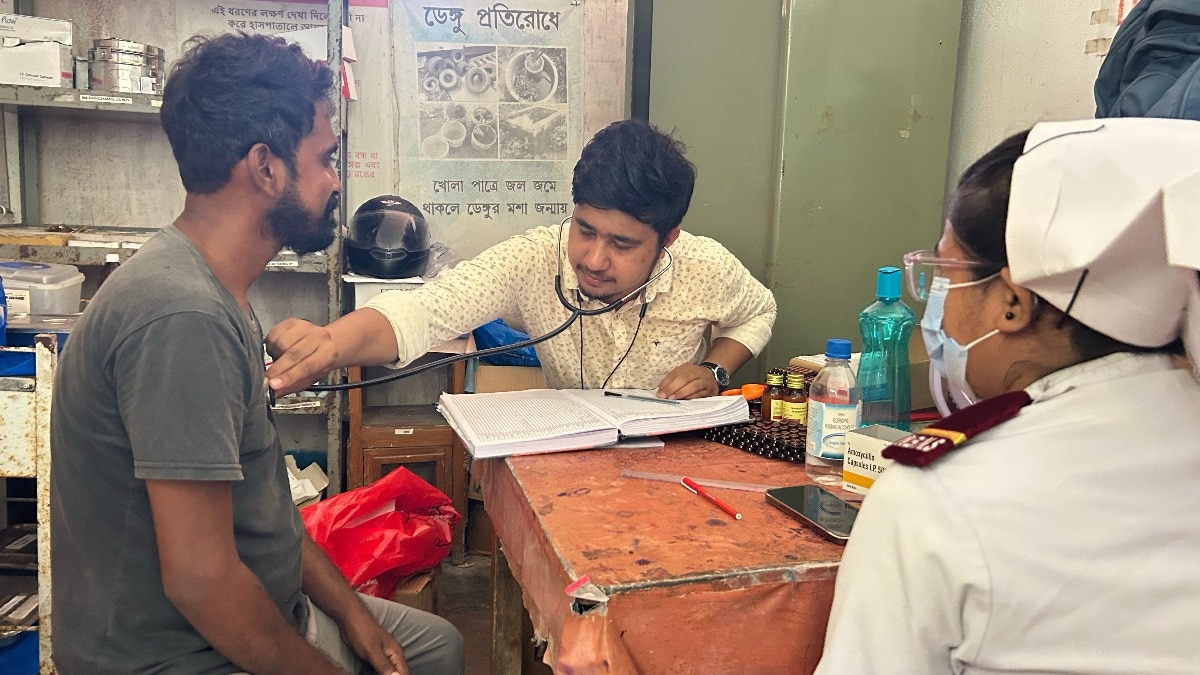
“In danger, in adversity, cling to your principles and ideals,” Sir William Osler, one of the pioneers of modern medicine, once wrote.
For Dr Arijit, those words have taken on a stark meaning in flood-hit Malda. When the swollen Ganga breached Ratua Block Hospital in West Bengal's Malda and left nearly 40 per cent of it underwater, most people were forced to leave. But Dr Arijit and a small group of medical staff stayed back, continuing to treat patients in a hospital cut off from the outside world.
The hospital can now be reached only by country boat. There is no electricity, while floodwaters have turned its corridors into a hazardous passage where poisonous snakes and insects have found their way inside.
Yet Arijit continues to report for duty. Wading through knee-deep water, he attends to patients who have nowhere else to go as the flood and soil erosion displace hundreds of people across Ratua, Manikchak and Ratanpur.
“It is very hard, but it is also important that we doctors and medical staff continue to treat patients. This is the time when people need us the most. This hospital is infested with snakes and insects, but our duty of care is more important during this adverse time,” Dr Arijit said.
The conditions inside the hospital reflect the wider crisis in the block. The flood has disrupted basic services, with the entire area without power. Roads and regular routes have been cut off, leaving country boats as one of the few ways to move through the inundated region.
For Dr Arijit, however, leaving the hospital is not an option.
“The hospital has no power supply because of the flood, but the situation is the same everywhere in the block. So, leaving the hospital is never an option for a doctor,” he said.
For the people trapped by the flood, the hospital has become more than a building. It is one of the few places where help is still available when almost every other route has been cut off.
And so, even as the waters rise around him, Dr Arijit remains where he believes that he is needed — a reminder that, in a crisis, the duty of a doctor is sometimes measured not by the conditions in which medicine is practised, but by the decision to stay when leaving would be far easier.- EndsPublished By: Akash ChatterjeePublished On: Sep 12, 2026 18:28 IST


