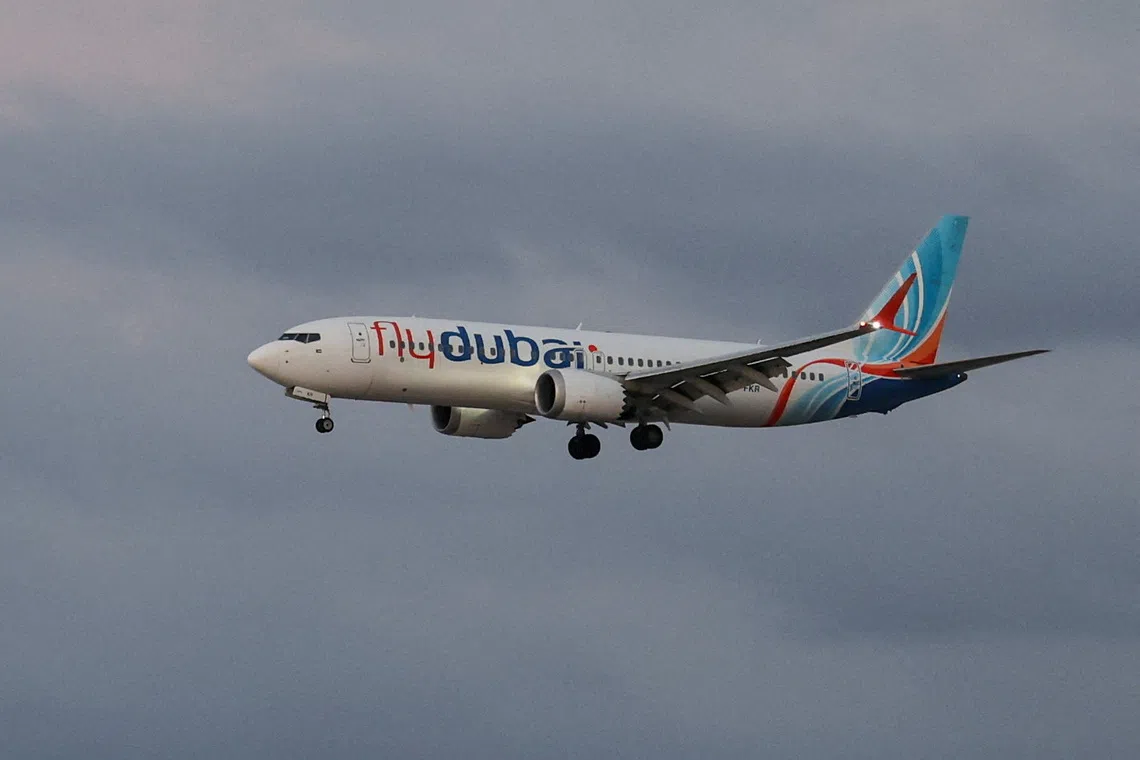
FlyDubai cockpit attack exposes security lapses on Tel Aviv flight

Authorities in the United Arab Emirates shared with Israel a list of passengers and crew before a FlyDubai flight to Tel Aviv on which a pilot allegedly tried to seize control and crash the aircraft, regional officials said on Sunday. The disclosure has raised fresh questions about how the attacker was not detected before the flight.
As the investigation continues, preliminary details have pointed to a series of major security lapses. Officials have already said the Omani co-pilot had been barred from flying by his own country over concerns about his extremist views, while it also remains unclear how a citizen of Oman, an Arab country that has no diplomatic relations with Israel, was allowed to operate a flight carrying Israelis to Tel Aviv.
The UAE, which is leading the investigation, said the co-pilot attacked the flight captain with the cockpit crash axe and tried to take control of the aircraft in a "terrorist attack" on Wednesday. His actions nearly caused the plane, which had 182 people on board, to crash before the Indian captain managed to open the cockpit door, allowing passengers and others to rush in and subdue the attacker.
Regional officials said Emirati authorities had shared details of the passengers and crew, including their nationalities, with Israel before the flight. Israel had not raised any red flags over any passenger or crew member, the officials said. They spoke on condition of anonymity because they were not authorised to brief reporters on the investigation.
The passengers who helped stop the attack and regain control of the aircraft have been hailed as heroes in Israel. At the same time, officials have begun raising difficult questions and trading accusations over the security failures that could have led to a major disaster.
Israel's domestic security agency, Shin Bet, said the Transport Ministry is responsible for checking passenger lists from foreign flights. Transport Minister Miri Regev told public broadcaster Kan that the security agencies are responsible for flight security and that her ministry had not been given a list of passengers or any warnings.
Prime Minister Benjamin Netanyahu said on Thursday that Israel has long-standing agreements with foreign carriers to prevent pilots who are citizens of countries without diplomatic relations with Israel from flying into the country.
Questions also remain over how FlyDubai, the low-cost Emirati airline operating flights between Israel and the UAE, did not identify the Omani pilot as a security risk. Philip Baum, a visiting professor of aviation security at Coventry University in England and the author of a book on aircraft hijackings and bombings, said background check systems vary from country to country and there are limits on the information that can be shared.
"In terms of aviation security itself, obviously we want to have as robust background checks as possible. But there are huge limitations on doing background checks in any case, especially in cross-border checks," he said.
The incident has now brought scrutiny on how the co-pilot was cleared to operate the Israel-bound flight, even as investigators in the UAE continue to examine the attempted takeover and the security failures surrounding it.