‘Food waste poses bigger health risk than plastic in Lagos’ neighbourhoods’ - The Guardian Nigeria News
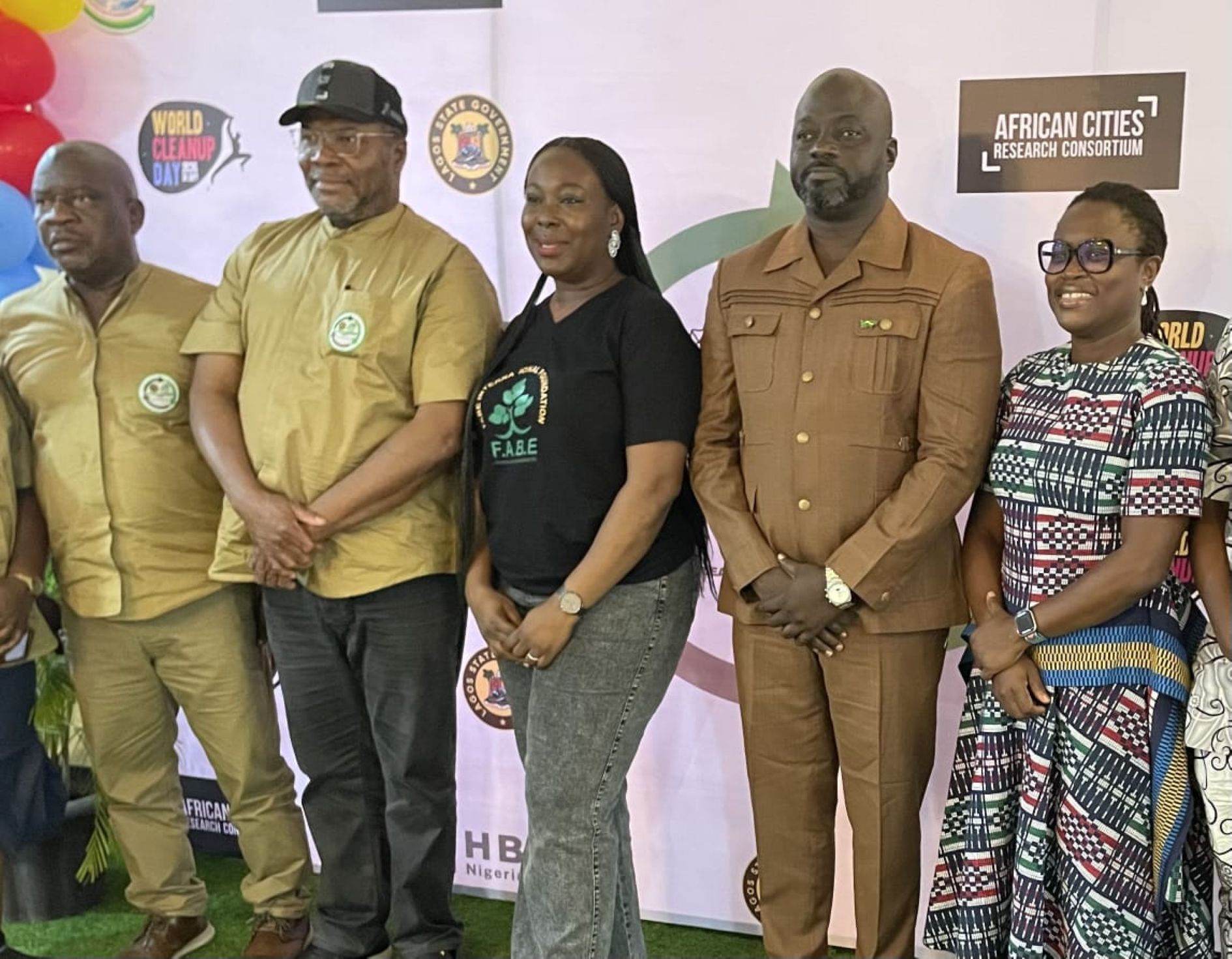
Representative of the Director of Sanitation Services, Lagos State Ministry of Environment, Mr Raheem Fagbolade (left); Permanent Secretary, Office of Environmental Services, Gaji Tajudeen; Founder, FABE Foundation, Temitope Okunnu, Special Adviser to Governor on Environment, Olakunle Rotimi-Akodu and City Manager, African Cities Research Consortium (ACRC) Lagos, Dr Temilade Sesan during this year’s World Clean-Up Day organised by the Lagos State Ministry of the Environment and Water Resources in collaboration with ACRC in Lagos.
Representative of the Director of Sanitation Services, Lagos State Ministry of Environment, Mr Raheem Fagbolade (left); Permanent Secretary, Office of Environmental Services, Gaji Tajudeen; Founder, FABE Foundation, Temitope Okunnu, Special Adviser to Governor on Environment, Olakunle Rotimi-Akodu and City Manager, African Cities Research Consortium (ACRC) Lagos, Dr Temilade Sesan during this year’s World Clean-Up Day organised by the Lagos State Ministry of the Environment and Water Resources in collaboration with ACRC in Lagos.
A community-led study by the African Cities Research Consortium (ACRC) has identified food waste, rather than plastic, as the biggest health risk in Lagos neighbourhoods without formal waste collection.
The study, conducted by Rethinking Cities under the ACRC Lagos programme, domiciled at the Centre for Housing and Sustainable Development (CHSD), University of Lagos, was presented to government, community and industry stakeholders during a World Cleanup Day event organised by the Lagos State Ministry of the Environment in collaboration with ACRC.
The event, themed “From Clean Plates to Clean Cities,” also highlighted the state’s efforts to develop community-based waste management solutions.
Between April and June 2026, researchers and trained community scientists collected and hand-sorted waste from different locations in Ajegunle-Ikorodu into six material categories. Although PET plastic accounted for the largest share by weight, the study found that organic and food waste posed a significantly higher operational health risk because of its rapid decomposition, tendency to block drainage and potential to create conditions for disease transmission.
The research combined a household survey across three community development associations, focus group discussions with landlords, tenants, women, youths and informal waste pickers, key informant interviews and physical waste quantification.
The study found that most households in the settlement lacked formal waste collection. Narrow streets prevent access by compactor trucks, while an earlier attempt to introduce a collection fee collapsed after residents found the proposed household charge unaffordable, particularly because several households often occupy a single building.
It also found that many households experience flooding during the rainy season, with waste-blocked drainage identified as a major contributing factor. Residents in affected areas reported a high incidence of waterborne diseases.
Speaking at the forum, ACRC Lagos City Manager, Dr Temilade Sesan, said the findings showed the links between waste, flooding, health and climate risks.
“Two of our four action research projects in Lagos are in the same settlement. One arrived asking about climate, the other about waste, and they met at the same canal,” she said.
According to Sesan, waste blocks drainage, blocked drainage contributes to flooding, while flooding exposes communities to climate and health risks, making the challenges interconnected rather than isolated sectoral problems.
In response, the project converted an open plot that was becoming an illegal dumpsite into an integrated community hub combining plastic recovery, food-waste composting and urban farming.
Residents bring recyclable materials to the hub and receive cash payments, while food waste is processed through a three-chamber composting system. The resulting compost is used on farming beds at the site, while recovered plastic is used for farm structures and irrigation.
The facility is operated by community members on a rotating basis, with informal waste pickers engaged and paid to supply the hub. The Lagos State Ministry of the Environment has since begun replicating the model at Ojokoro LCDA and Amuwo-Odofin Local Government Area.
“The material with the most money in it is plastic. The material doing the most damage is food,” said the Co-Founder of Rethinking Cities and co-author of the study, Deji Akinpelu.
He said Lagos had developed a recycling economy around plastics while paying less attention to food waste, which becomes particularly problematic during the rainy season.
Akinpelu described the move as an important step towards institutionalising community-led waste management, but said the model required regulatory approval, reliable buyers for compost and dedicated funding to expand.
He said commercial districts and informal settlements required different collection approaches. While commercial areas generate concentrated food waste from identifiable premises, informal settlements produce similar waste across narrow streets that conventional collection trucks cannot easily access.
“Both are collection problems, but they are not the same collection problem,” he said, adding that Lagos’ waste-processing facilities would require feedstock from both sources.
ACRC urged local councils and LCDAs to replicate the model, issue permits and integrate informal waste pickers into community hub systems.
It also called on the Lagos Waste Management Authority (LAWMA) and the Lagos State Environmental Protection Agency (LASEPA) to create a licensing category for community-scale waste hubs, develop policies specifically addressing food waste and establish a procurement framework for certified community compost for public and private use.
The consortium further urged the Ministry of the Environment to provide a 2027 capital allocation for community hubs in low-income wards under a proposed “One Ward, One Hub” programme, converting the existing pilot sites into a funded state-wide initiative.
In his welcome speech, the Permanent Secretary, Office of Environmental Services, Lagos State Ministry of Environment and Water Resources, Mr Gaji Tajudeen, urged Lagos residents to embrace responsible waste management, saying cleaner cities begin with individual actions at home.
Tajudeen said reducing food waste, sorting refuse at source and preventing littering would help keep streets and drainage systems clean while improving public health.
He said the initiative also supports Lagos’ circular economy drive by promoting recycling, creating green jobs and turning waste into valuable resources.
Tajudeen commended the ACRC, private-sector partners and other stakeholders for supporting the campaign, urging residents to extend the discipline of clean homes to public spaces and take collective responsibility for a cleaner, healthier and more sustainable Lagos.
The Special Adviser to the Governor on Environment, Olakunle Rotimi-Akodu, called for stronger collaboration among government, citizens and the private sector to sustain environmental cleanliness beyond World Cleanup Day.
He stressed youth participation, partnerships with schools, NGOs and businesses, policy reforms and enforcement, adding that waste reduction, resource recovery and daily civic responsibility were essential to tackling pollution at source and building a cleaner, healthier Lagos.