Fragmented vote puts coalition politics at the heart of upcoming elections - IOL
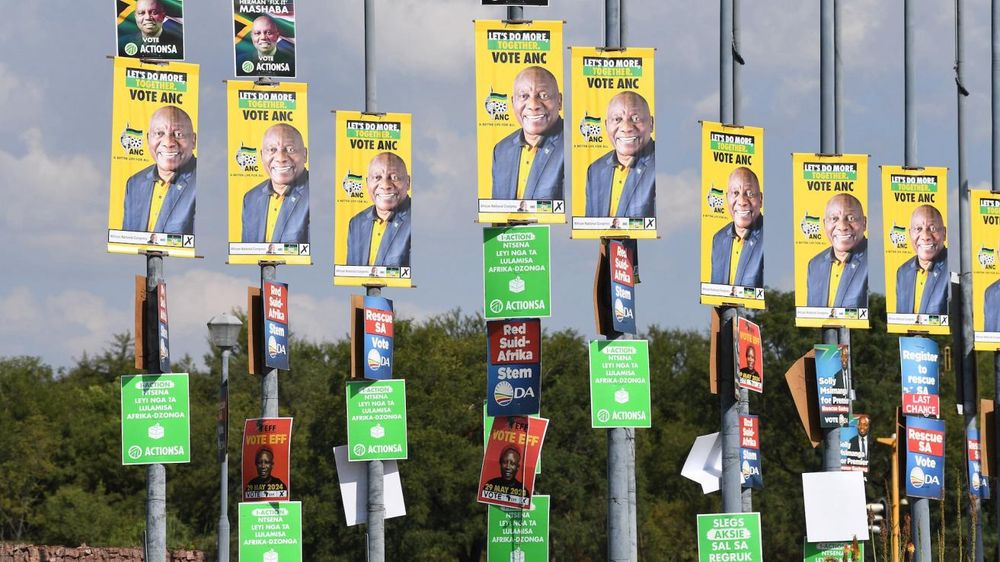
With more than 136 000 candidates and an ANC already locked out of contesting some seats, this will be the country’s most fragmented local election yet.
ON NOVEMBER 4, South Africans will vote for the councils that control essential daily services, from water and electricity to roads, waste management and municipal budgets.
Yet, with more than 136 000 candidates and an ANC already locked out of contesting some seats, this will be the country’s most fragmented local election yet. In several major cities, the decisive battle will not be which party comes first, but which parties can work together afterwards.
The sheer scale of the contest illustrates how far the electoral landscape has moved from the dominance of a handful of major parties. A record 136 790 candidates are contesting 10 526 council seats. Of these, 98 219 are contesting ward seats, 38 571 are on proportional representation lists, and 621 are independent ward candidates.
This crowded field has created practical ballot challenges; In Johannesburg alone, 75 parties are contesting the PR ballot, necessitating double-column ballots. Consequently, smaller parties will hold powerful kingmaker positions in councils where no single party secures an outright majority.
The ANC enters the election with an unusual handicap: The Electoral Court dismissed its challenge against the exclusion of 181 candidates. The ANC argued its candidate information had been loaded onto the IEC’s online system before the deadline, but the commission maintained the final submission process was incomplete.
The Court found that failure to comply with the election timetable had consequences in law. This exclusion, particularly significant in the Eastern Cape municipalities of Port St Johns and Ngquza Hill, alters the political balance in areas where the party has traditionally been dominant before a single vote is cast.
Meanwhile, polling data remains volatile and contradictory. An Ipsos survey places the ANC at 31% nationally, followed by the DA at 25%, MKP at 14% and the EFF at 11%. Yet, another radically different poll puts the DA at 42% and the ANC at just 18% in Johannesburg.
In Tshwane, Ipsos gives the DA 31% against the ANC’s 22%, while MKP is projected at a dominant 55% in eThekwini. These discrepancies highlight the difficulty of reading the contest from polling alone, though they confirm that the major metros are highly competitive with no uniform national pattern.
Consequently, smaller parties are projected to become kingmakers. Experience with hung councils since 2021 shows a party need not finish first to exercise considerable influence.
In metros like Johannesburg, Tshwane, Ekurhuleni, Nelson Mandela Bay and eThekwini, the balance of power will hinge on post-election coalition negotiations. Ultimately, polling numbers are not council seats; a party’s ability to govern depends on seat distribution and the agreements struck after the results are declared.
Crucially, South Africa may be heading into this cycle of coalition negotiations before the regulatory framework is fully settled. The proposed Coalition Bill seeks to create a legislative framework to address hung council instability, including provisions for coalition agreements and the removal of office-bearers.
Earlier versions proposed a controversial 1% threshold for council representation, which critics argued would disadvantage smaller parties. For residents, businesses and investors, the critical question is whether the governments emerging from these negotiations will be stable enough to pass budgets and keep councils functioning.
Beneath the coalition arithmetic lies a severe turnout challenge. Following a record low of 45.79% in 2021, estimates suggest turnout could fall to around 42%.
With younger South Africans less likely to be registered, the parties are not just competing for votes, but for the attention of apathetic citizens who may decide not to vote at all.
This “missing voter” is at the centre of a new initiative by the International Centre for Political Campaigns and the Nelson Mandela School of Public Governance to develop the Global Political Campaign Index. As ICPC’s Glen Mpani notes, election results show who won but do not reveal whether citizens were heard or offered meaningful choices.
The index aims to assess campaign integrity, inclusion, policy substance, and the citizen experience, asking whose concerns went unheard and what campaigns can do better.
South Africa is heading into an election with an exceptionally crowded political field, but the paradox of 2026 is that the most important numbers will not be on the ballot paper. Voters will determine the council composition, but parties will determine who governs through post-election negotiations.
The ultimate question is not just who wins the most votes, but whether this increasingly fragmented system can produce stable municipal governments that actually govern. That answer will only emerge in the weeks after the votes are counted.
* This article was first published in the African Chronicle.
** Karabo Ngoepe is a journalist with over 15 years of experience in political, investigative, and human interest journalism who specialises in pan-African politics. The views expressed here do not reflect those of Pretoria News.
Karabo Ngoepe is a journalist with over 15 years of experience in political, investigative, and human interest journalism.