‘Free to practise religion of choice’: Allahabad High Court orders youth who embraced Islam to be set free - The Indian Express
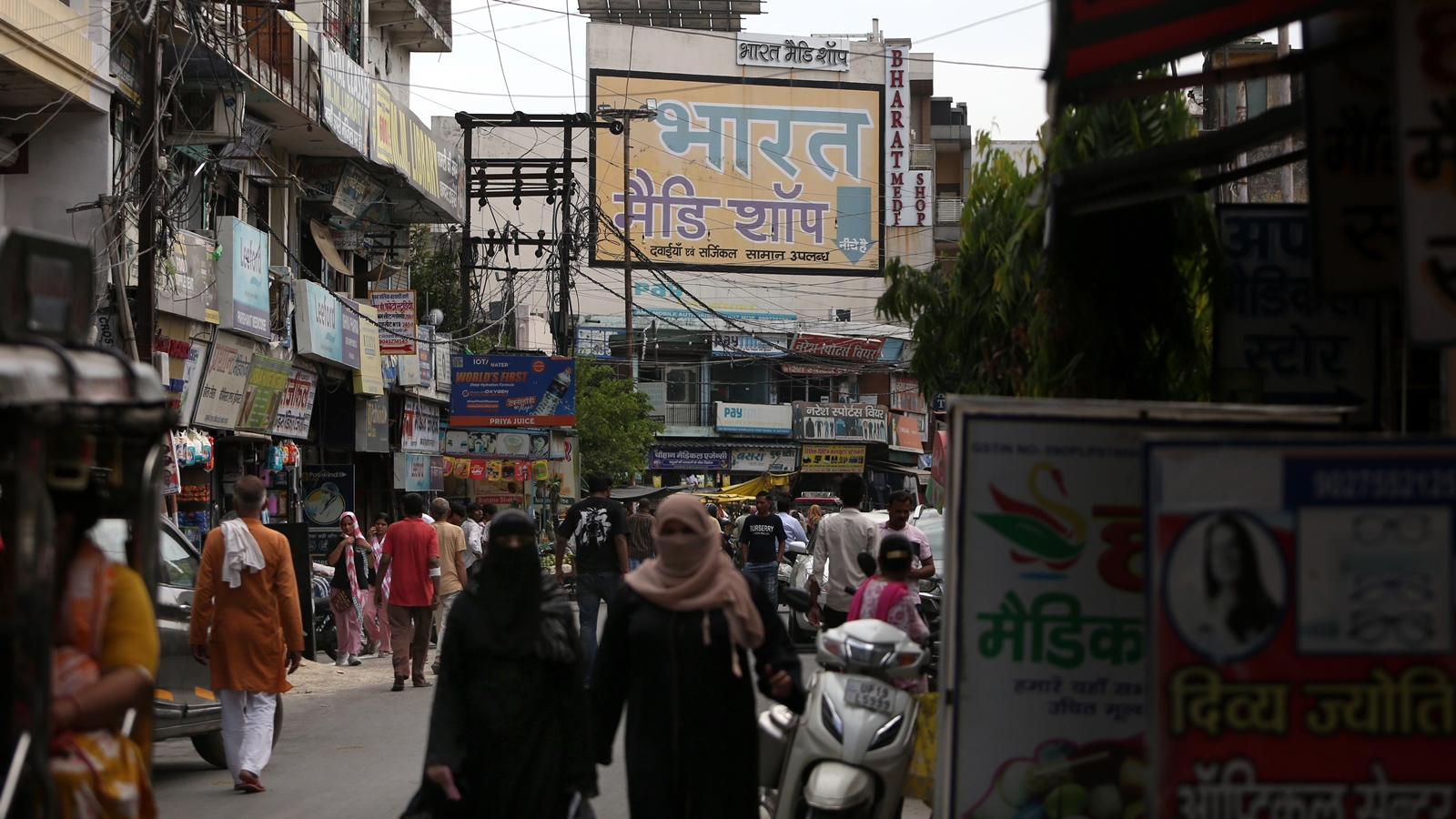
Observing that an adult person has the right to decide on the faith to follow and one’s life partner, the Allahabad High Court on Wednesday ordered that Shamli resident Ayush Malik, who had earlier embraced Islam and married a Muslim woman, was at liberty to practice a religion of his choice and decide about his matrimonial relationship.
After hearing the justifications given by Ayush’s father to restrain Ayush, the single bench of Justice Sandeep Jain said, “The concern expressed by the father regarding the welfare of his son is understandable in the context of the familial relationship. However, such concern cannot, by itself, override the constitutionally protected autonomy of an adult person who is competent to take decisions concerning his faith, residence and choice of life partner.”
Ayush’s friend, Sultan, had filed a habeas corpus petition in the High Court alleging that the Shamli youth had been illegally detained by his father, Devraj Singh Malik, at his house in collusion with the State.
Sultan, through his counsel, informed the court that Ayush had embraced Islam and married Chandni Qureshi. Ayush’s father had got an FIR registered against Chandni and her father on various charges, including the provisions of the anti-conversion law in June, and both were put in jail.
Hearing the petition, the bench on September 9 had directed Malik and the State government to produce Ayush before the court on September 16.
In compliance with the court’s order, Ayush was produced before the court on Wednesday by Shamli police.
During his interaction with the judge in the court, Ayush said he was about 31 years of age and educated up to B.Pharma. He stated that he voluntarily embraced Islam in 2014 and that his decision to do so was taken of his own free will, without any coercion, threat, undue influence or inducement from any person. He further stated that, after embracing Islam, he has been following its essential practices, though his decision was not acceptable to his parents and other family members.
He also told the court that he decided to marry Chandni Qureshi and intended to solemnise the marriage with her, which was not acceptable to his parents.
According to him, owing to his decision to marry Chandni Qureshi, an FIR was registered on June 6 on various charges, including sections of the UP Prohibition of Unlawful Conversion of Religion Act at Shamli police station against Chandni Qureshi and her relatives. He asserted that criminal proceedings against Chandni and her relatives were a consequence of his said choice.
He also told the court that he was subjected to threats and unlawful confinement and was kept under house arrest from June 4.
The High Court also interacted with his father, Devraj Singh Malik. The latter refuted the allegations made by his son and stated that he has been “influenced or brainwashed” by certain persons and has not, according to him, voluntarily embraced Islam. The father expressed concern about the welfare of his son and, for that reason, did not approve of his decision to embrace Islam or solemnise marriage with Chandni.
Ayush, however, categorically disputed the assertions made by his father and reiterated before the court that his decisions have been taken voluntarily, independently and after due deliberation.
After hearing the statements, the High Court stated that it was apparent that “Ayush has attained the age of majority and is capable of taking decisions concerning his own life”.
“His categorical statement before the Court is that he has voluntarily embraced Islam and that such decision was neither induced nor occasioned by any threat, coercion, undue influence or pressure. Nothing has been brought on record which may persuade this Court to disbelieve the statement made by the corpus (Ayush) in the course of his interaction with the Court,” the order stated.
The court observed that freedom of conscience and the right freely to profess, practise and propagate religion are guaranteed under Article 25 of the Constitution.
“A person who has attained majority is ordinarily entitled to determine his faith according to his own conscience. Such a choice, being an expression of individual autonomy and freedom of conscience, cannot be displaced merely because it is not acceptable to his family members,” the High Court said.
Likewise, it added, the right to choose a person with whom one wishes to establish a matrimonial relationship forms an integral facet of the right to life and personal liberty guaranteed under Article 21 of the Constitution.
“The choice of an adult as to whom he or she wishes to marry or with whom he or she wishes to establish a relationship is a matter of individual autonomy. The mere fact that such choice may be contrary to the wishes or expectations of the family cannot, by itself, furnish a legitimate basis for curtailing such choice,” it added.
Noting that Ayush has been living under police presence at his house and has been produced before the High Court pursuant to the directions issued in the case, Justice Jain said the court found no lawful justification for continuing any restraint upon the personal liberty of Ayush.
“Once an adult person has unequivocally expressed his free will and choice before the Court, such choice is ordinarily entitled to be respected, unless its exercise is shown to be vitiated by circumstances recognised in law,” it added.
Bhupendra Pandey is the Resident Editor of the Lucknow edition of The Indian Express. With decades of experience in the heart of Uttar Pradesh’s journalistic landscape, he oversees the bureau’s coverage of India’s most politically significant state. His expertise lies in navigating the complex intersections of state governance, legislative policy, and grassroots social movements. From tracking high-stakes assembly elections to analyzing administrative shifts in the Hindi heartland, Bhupendra’s reportage provides a definitive lens on the region's evolution. Authoritativeness He leads a team of seasoned reporters and investigators, ensuring that The Indian Express’ signature "Journalism of Courage" is reflected in every regional story. His leadership is central to the Lucknow bureau’s reputation for breaking stories that hold the powerful to account, making him a trusted figure for policy analysts, political scholars, and the general public seeking to understand the nuances of UP’s complex landscape. Trustworthiness & Accountability Under his stewardship, the Lucknow edition adheres to the strictest standards of factual verification and non-partisan reporting. He serves as a bridge between the local populace and the national discourse, ensuring that regional issues are elevated with accuracy and context. By prioritizing primary-source reporting and on-the-ground verification, he upholds the trust that readers have placed in the Express brand for nearly a century. ... Read More