From laboratory cleaner to professor: Puseletso Mofokeng’s remarkable journey - IOL
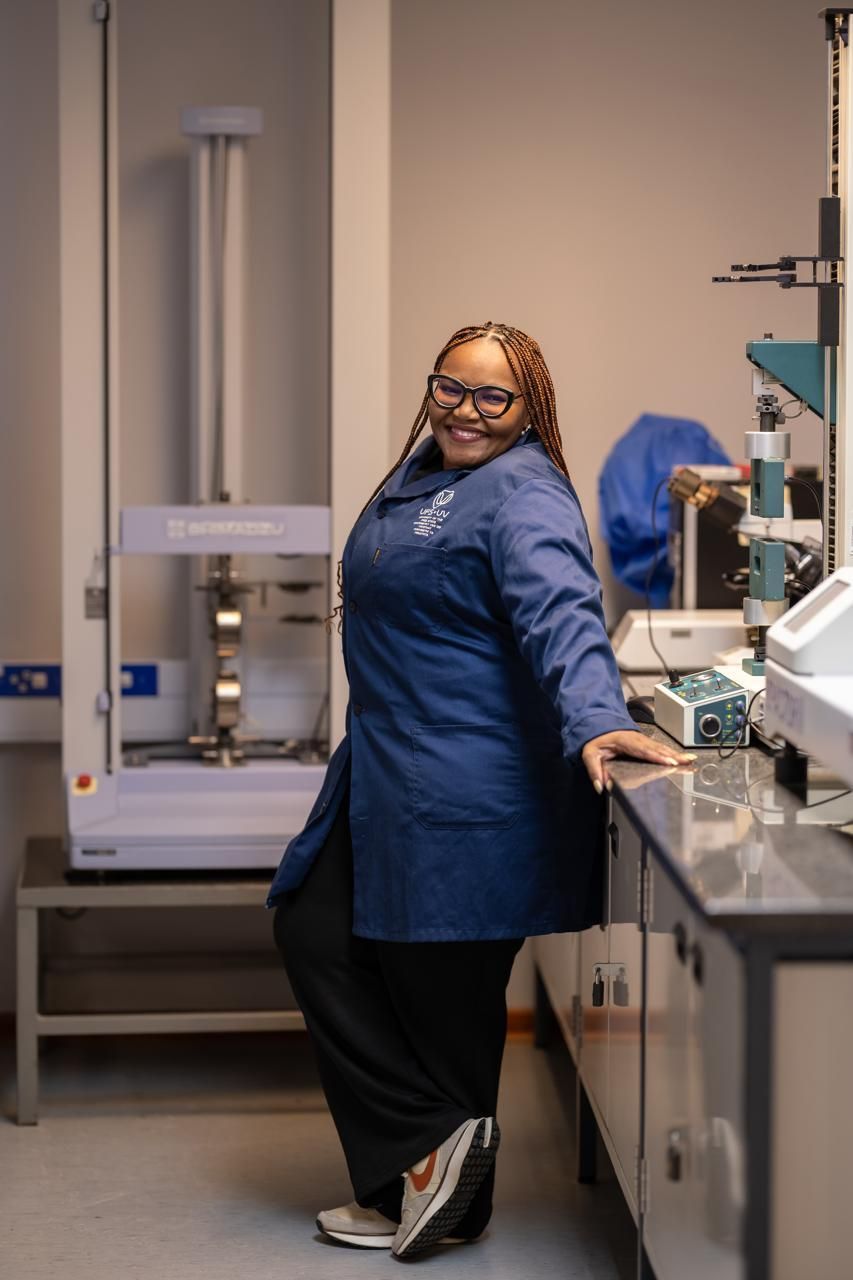
When she was 19-years-old, Puseletso Mofokeng arrived at the University of QwaQwa with a job that involved cleaning chemistry laboratories and washing the glassware used by postgraduate students and staff.
Today, she is an Associate Professor and Director of the Centre for Global Change at the same institution.
Between those two points are years of hardship, uncertainty, hard work and opportunities that Mofokeng could never have predicted would eventually lead her into academia.
Before joining the university, Mofokeng had already learned what it meant to take whatever work was available.
She worked on a farm, cooked, cleaned and worked as a cashier at a general dealer. At one point, she could not afford the R750 needed to attend a computer college.
Then, in 1998, she experienced a violent robbery that would leave a lasting emotional scar.
Mofokeng was working at a store when armed robbers stormed in as the business was preparing to close.
They took money and expensive alcohol before returning to where she had been ordered to kneel.
Three guns were pointed at her head. She was shouted at and struck on the head with a firearm.
“I have never pleaded with another human being the way I did that evening,” she recalled.
More than two decades later, she can still remember the song that was playing on the radio that night: “Mohla ke Tsamayang” by Spokes H.
After the robbery, she decided to leave the job and began searching for another opportunity.
That opportunity came in March 1999, when she was employed as a research assistant at the then University of QwaQwa.
Her first months at the university were largely spent cleaning Chemistry laboratories, washing glassware and maintaining the equipment used for experiments.
But the job gradually introduced her to something that would change the course of her life.
Mofokeng began assisting with experimental laboratory work, giving her an opportunity to see science beyond simply cleaning the spaces where it happened.
“I joined University of QwaQwa in 1999 at the age of 19,” she said.
“Initially, a significant part of my work involved cleaning the Chemistry laboratories, washing the glassware and apparatus used by postgraduate students and staff in the Department of Chemistry.”
That exposure encouraged her to pursue her own studies at the university.
While working, she enrolled as a student and continued building her academic qualifications. In April 2011, she obtained a Master of Science degree in Polymer Science.
The laboratory cleaner had gradually become a scientist.
Years later, her journey had taken her even further. Mofokeng became an Associate Professor and eventually took on leadership responsibilities, including her appointment as Director of the Centre for Global Change.
The position carries a particular meaning because of her history with the institution.
She is now leading a research centre at the same university where she once cleaned laboratories as a teenager.
Her journey from farm work and a general dealer to academia is not something she separates from who she is today.
“My appointment as Director of the Centre for Global Change is deeply meaningful to me, both personally and professionally,” she said.
“It makes me reflect not only on where I started at the University, but on the journey that came before that.”
Mofokeng's story is one she hopes young people can learn from, particularly those who may feel limited by their circumstances or their first opportunity.
She believes the job someone starts with does not have to be the job they finish with, and that an unexpected opportunity can sometimes open a door to something much bigger.
“Do not allow where you start to determine where you believe you can finish,” she said.
“Your first opportunity may not resemble your dream. Take it seriously anyway. Learn from it, observe, work hard and remain open to possibilities.”
Mofokeng could not have known at 19, while cleaning laboratories at the University of QwaQwa, that she was already standing inside the place where much of her future would unfold.
The same institution where she once cleaned laboratory equipment would eventually become the place where she built her career, became an Associate Professor and took on the responsibility of leading a research centre.