
Fuel Price Crisis | How the vicious cycle is squeezing your wallet from every angle - IOL
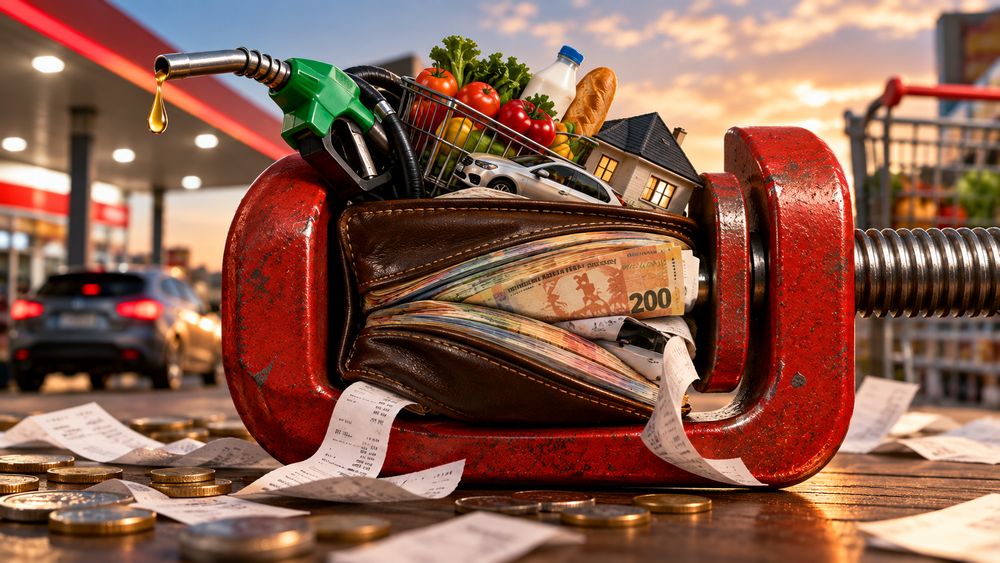
Higher fuel costs will push up inflation and could lead to an interest rate hike.
South Africans could face another interest rate hike as soaring fuel prices feed into inflation, setting off a vicious cycle that eats into already stretched household budgets.
Investec chief economist Annabel Bishop expects petrol and diesel to increase by around R3 a litre in October, which she said “will push up CPI inflation again towards 5% year-on-year, and could fuel another hike in the repo rate for South Africa in November”.
Inflation came in at 4.4% in August, a slight increase on July’s rate, with the pace of the increase in costs of transport pushing up 8.8% year-on-year.
“Market fuel price concerns over the war in the Middle East on the supply and price impact on oil, petroleum products and oil feedstocks have risen as the Middle East war intensified, along with concerns of it spreading further in the region as well,” said Bishop.
Bishop said another 0.25 percentage point hike is being priced in for the remainder of the year. If another 25 basis-point hike takes prime to 11%, the effect will reach households before they even fill their tanks.
If another rate hike takes prime from 10.75% to 11%, a R1.5 million home loan over 20 years would increase from about R15,228 to R15,483 a month, adding R255 a month to the repayment.
A R500,000 car financed over six years would increase from about R9,453 to R9,517 a month, adding another R64 a month.
That would add about R319 a month for a household carrying both debts, before the impact of higher fuel, transport and food costs is taken into account.
The South African Reserve Bank's latest Quarterly Bulletin shows household debt stood at 62.2% of disposable income in the first quarter, while the cost of servicing debt was 8.4%.
The picture is considerably worse among consumers already under financial pressure.
DebtBusters' 2026 Money-Stress Tracker, based on almost 18,000 respondents, found 53% were spending more than 40% of their take-home pay on debt repayments, up from 48% last year.
Among respondents taking home more than R20,000 a month, 75% were spending more than the recommended 30% on debt, while those earning more than R50,000 a month would theoretically be paying more than they take home on paying back loans.
The vicious cycle of higher fuel prices.
Consumers applying for debt review are even more stretched.
The South African Financial Pressure Index found the median applicant to Debt Solutions 4U between June and August was already committing 58.4c out of every R1 they take home on debt repayments.
The data covers 1,174 debt-review applicants and is not representative of South African households generally.
The money available to absorb these increases has barely grown. PayInc data shows average take-home pay increased from R21,399 in March to R21,622 in August, a rise of just more than 1%.
In real terms, average take-home pay in August was R20,164, 2.6% lower than a year earlier.
Meanwhile, inland 95 petrol has gone from R20.30 a litre in March to R26.92 in September, and the latest Central Energy Fund data indicates another increase of about R3.16 a litre in October.
That would put 95 petrol at around R30.08 a litre before other adjustments are taken into account.
The same diesel-price shock is hitting the trucks carrying food and other goods around the country.
The Road Freight Association says fuel accounts for about 35% to 55% of road-freight companies' operating costs. Based on the September diesel increase, it estimated freight operating costs could rise by around 4% to 6%.
More than 80% of land-based freight is transported by road, including food moving between farms, processors, distribution centres and retailers.
Yet higher freight costs do not necessarily translate directly into equally higher prices on supermarket shelves.
Fuel prices as a percentage of take-home pay have increased dramatically.
PSG senior economist Johann Els said there had so far been very little visible feed-through from higher petrol and diesel prices into food and other consumer goods. “Food inflation has actually come down from earlier this year to where it is now,” he said.
Instead, consumers who have to spend more on fuel and transport have less to spend elsewhere, creating what Els described as a substitution effect.
Wholesalers and retailers may also absorb some of the increase rather than pass it on to consumers and risk losing sales, Els said. He said higher fuel costs could therefore create “deflationary forces” as consumers spend more on transport and less elsewhere, while businesses try to protect sales volumes.
Despite this, the cost of a food basket as measured by the Pietermaritzburg Economic Justice and Dignity Group’s Household Affordability Index has increased 2% year-on-year to an average of just under R5,500. Year-on-year, the average cost of the foods prioritised and bought first in the household food basket increased by 2.9%.

