Gas Prices, Budget Debate, Yellow Vests: How Social Unrest is Threatening the 2027 French Presidential Election - Le Figaro
Pour sauvegarder un article vous devez être connecté, vous pourrez ainsi les consulter sur tous vos appareils.
The latest rise in gas prices is fueling fears of a social crisis that could disrupt the 2027 presidential race and potentially benefit the Rassemblement National (RN) and La France Insoumise (LFI), all amid budget negotiations and the threat of a financial crisis.
The threat of a social — as well as financial — crisis looms larger than ever over France’s 2027 presidential campaign, and it could provide ammunition for candidates who are making the country’s general decline a campaign issue. The latest surge in gas prices, nearing a record high (an average of €2.15 per liter for SP95 unleaded gasoline), has even raised the possibility of a movement similar to the Yellow Vests protests, which set the country ablaze in 2018. But seven months before the presidential election, events could inevitably take on a whole new dimension.
Some presidential candidates seem to be encouraging street protests, convinced that it could mobilize their electorate and further undermine the credibility of the centrist bloc. At the Fête de l’Humanité festival in early September, Communist Party (CPF) leader and presidential candidate Fabien Roussel called on the French people to “occupy the roundabouts,” an obvious reference to the Yellow Vest protests eight years ago. “We will need the French people to get involved. If they don’t mobilize now to get lower gas and energy prices, they’ll get fleeced. Yellow vests, red, blue, green… Every color!” he told reporters.
An inter-union protest was held on September 29, and another, spontaneous one could take place on October 17, amid rising living costs. Both La France Insoumise (LFI) and the Socialists (PS) support these calls, as well as Greens leader and presidential candidate Marine Tondelier.
“Trying to rationalize the Yellow Vests means not understanding them. But if there is an anti-tax revolt, we will be there to support it,” said a Rassemblement National (RN) leader, who remains skeptical, however, about politicians’ ability to influence a movement of this kind.
Nevertheless, it could happen as the government seeks to finalize the country’s 2027 budget. That would be a real headache for the minority government, which is caught between the need for austerity measures and the threat of a no-confidence motion from the National Assembly. The context also raises the threat of a financial crisis that would not only hit French citizens’ wallets but also disrupt the presidential race. “I think we’re going to have a whole lot of trouble during the presidential campaign. The social climate could be difficult, and we could face a financial crisis at any moment,” a source said in the halls of the prime minister’s office.
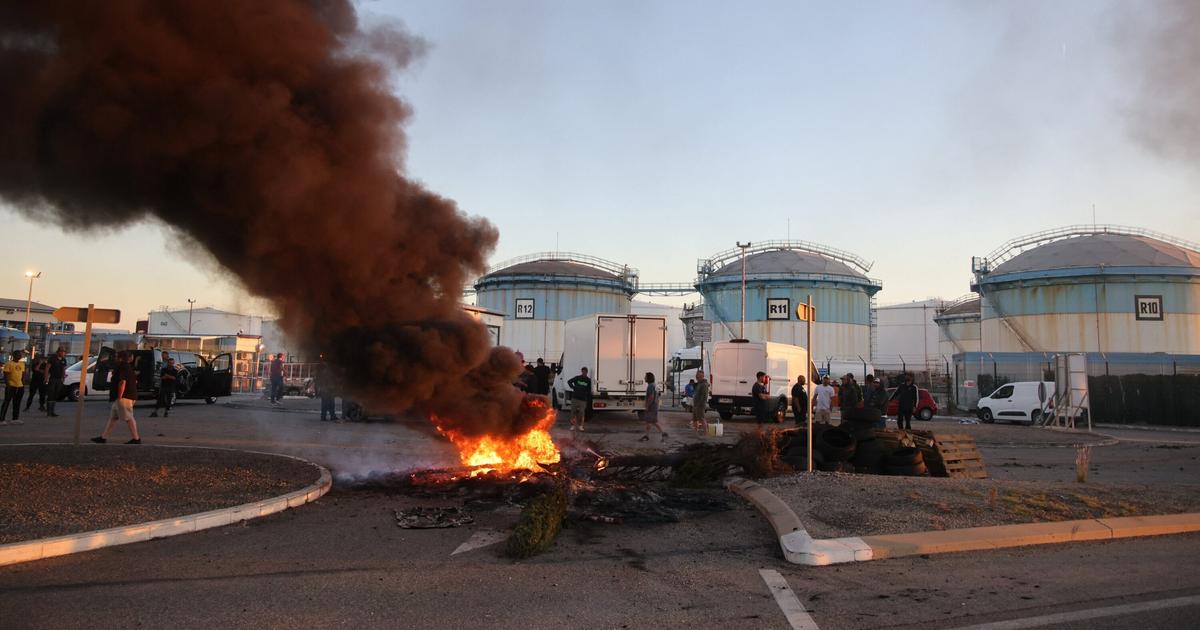
Fishermen blocked oil depots in the southern ports of Fos-sur-Mer on September 15 and in Frontignan on September 16, giving a first glimpse of this social tension linked to the latest spike in gas prices, which affects not only drivers but an entire sector of the economy. Faced with this explosive situation, the government is not changing course and is maintaining its targeted aid measures. Prime Minister Sébastien Lecornu has asked his ministers to “extend” these measures through December 31. During the September 16 Cabinet meeting, President Emmanuel Macron demanded that the government “fully mobilize to ensure fuel supply and control fuel prices,” spokesperson Maud Bregeon said.
Yet there is still no question of lowering the VAT on fuel, as RN leader and presidential candidate Marine Le Pen has demanded. LFI, for their part, are reviving their proposal to cap prices at €1.70 per liter.
During a press conference on September 15, Bruno Retailleau also tried to address the cost-of-living issue: the Les Républicains (LR) leader and presidential candidate proposed eliminating energy-saving certificates (CEE), which he said would save consumers 15 to 17 cents at the pump.
In a post on his X account, Horizons candidate Édouard Philippe backed the government’s approach but called for the “immediate doubling” of targeted aid.
Purchasing power is likely to remain the top issue in this closely contested presidential campaign, as many voters express a sense of widespread weariness. In its latest study, the Ipsos BVA-CESI School of Engineering research institute found that these feelings of anxiety (59%) and uncertainty (51%) are shared by a majority of French people, along with fatigue (34%), anger (30%), and even rebellion (24%). Those feelings far outweigh happiness (7%) and enthusiasm (5%). In fact, seven out of 10 respondents said they want “real social and political change,” with nearly as many saying they are certain they will vote in the April 2027 election.
“This anger and exasperation stem from deep-seated feelings, from the sense of having tried everything for the past 40 years and now facing yet another failure under Emmanuel Macron. The revelation of the budget deficit, at a time when the French feel they are paying a lot, appears to be the last straw,” said Ipsos Deputy Director General Brice Teinturier. In a previous study, the polling firm also found a strong perception that France is in decline (85%), with 28% even believing this is “irreversible.”
Certain candidates now use this phrase, particularly when assigning blame — namely, those in power over the past decade. The RN and LFI are the first to use this argument to propose a new narrative for the country, namely, a “renaissance” for the RN’s Le Pen and a “new France” for LFI candidate Jean-Luc Mélenchon. The LR’s Retailleau even goes so far as to describe a country “on the path to third worldization.”
“The risk of a financial crisis and this rise in fuel prices only heighten this sense of decline, because they demonstrate our extreme dependence, our powerlessness, and the fact that we no longer control our own destiny,” said Fondapol executive director, Dominique Reynié, who, in his latest major study, explores the “anguish of the French people” as the presidential election approaches. Recent events have only reinforced this impression of the country’s general decline, from a failing justice system (the murder of 11-year-old Lyhanna) to a scorching summer (wildfires in Gironde) and the collapse of the school system (the OECD’s latest PISA ranking).
“I do not believe in a Pavlovian response to a social crisis like the Yellow Vest movement, because the context is completely different: In seven months, we will be voting, and that will be a way to channel anger,” Teinturier said. “The candidates want to position themselves as the spokespeople for this anger without letting it spill over into anything other than the ballot box,” the analyst added.
Social unrest and disorder can backfire on their instigators, which also explains the strategic restraint shown by some candidates as they await the outcome of the complex budget debate ahead.