Gayton McKenzie’s call for morning prayers in schools sparks debate over religious freedom - IOL
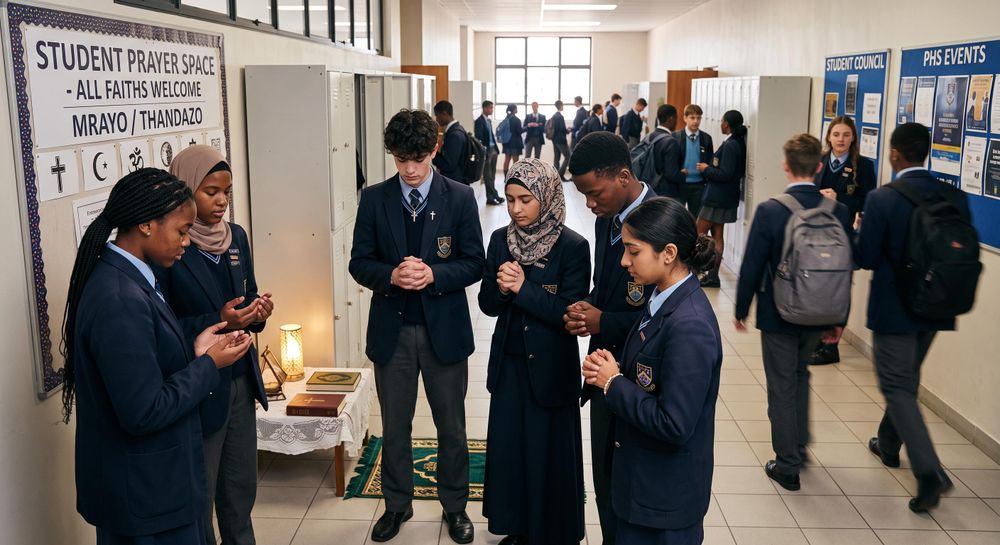
Patriotic Alliance leader Gayton McKenzie’s call for morning prayers in schools has prompted debate over discipline, religious freedom and how observance should work in South Africa’s diverse public-school system.
A PLAN to “put God back into schools” has sparked a debate over whether prayer can help tackle the growing problems of violence, bullying and indiscipline among pupils.
This comes after Patriotic Alliance (PA) leader and Minister of Sports, Arts and Culture, Gayton McKenzie said the party would reintroduce morning prayers in schools if elected into power following the local government elections.
He was speaking at the party's recent mayoral campaign launch in East London (KuGompo City) in the Eastern Cape.
“You see, all our problems in South Africa stem from one thing. We have taken God out of our schools. Under the PA regime, we will put God back into schools. Our children will learn scripture before they learn anything else,” said McKenzie.
While religious leaders say prayer and spiritual guidance can contribute to children's moral and emotional development, questions remain about how such practices could be implemented in South Africa's diverse public-school system.
Reverend Cyril Pillay, founder of the Peoples Church of God in Chatsworth, said introducing children to prayer and holy texts at an early age could help develop literacy, moral frameworks and critical reflection.
He said regular school prayer created a daily routine of self-reflection, and it shaped behaviour by encouraging humility, accountability and empathy, helping children internalise concepts of right and wrong through spiritual accountability rather than just rules.
Pillay said an early spiritual foundation could serve as an “emotional and moral anchor” when young people later faced difficulties.
“This foundation gives youth a sense of purpose, identity, and healthy coping mechanisms to handle stress, peer pressure, and anxiety.”
He said schools were also facing challenges including bullying, physical fights and disrespect towards authority.
“Religious guidance and prayer directly address these by teaching self-discipline, conflict resolution, and the inherent value of every human life, transforming a school's overall culture.”
Pillay said any approach should respect South Africa's religious diversity.
“Schools can implement inclusive or reflective moments rather than enforcing a single doctrine. This includes offering moments of silence, allowing voluntary prayer groups for different faiths, and teaching about world religions objectively to foster mutual respect.”
Pundit Lokesh Maharajh, chairperson of the Priest's Council of the South African Hindu Maha Sabha, said starting the school day with prayer or reflection could help children centre their minds and prepare for learning.
“In the Hindu tradition, the transition from rest to action requires centring the mind, which makes starting the day with reflection or prayer a form of mindful practice,” said Maharajh.
He said that when introduced to prayer and scripture at an early age, children cultivated egolessness and humility as scriptural reflection taught them that they were part of a vast, interconnected cosmos.
Maharajh added that regular prayer could reinforce values such as non-violence, truthfulness and forgiveness, while helping children develop greater self-control, and that the introduction of prayer into public schools must respect South Africa’s religious diversity.
“Public schools must avoid imposing dogmatic or exclusionary doctrines, opting instead for universal, non-denominational invocations focused on light, wisdom, peace, and unity.
“Practices such as silent reflection, universal verses for peace, or generic prayers thanking the divine for truth and knowledge can honour every child's heritage while fostering a shared communal bond.”
Moulana Tariq Mohamed, the Imam at the Aleemia Mosque in Phoenix, said that starting the day with prayer would bring inner peace to children. But added that prayer should ideally start at home and not at school.
He said that while prayer could play a role in addressing prevalent issues such as gun violence, assaults and bullying in schools, the Department of Education should look at reintroducing guidance counsellors.
On religious diversity, Mohamed said pupils must not be subjected to one particular form of prayer.
“Every child should be respected and also afforded an opportunity to pray in his or her belief.”
Vee Gani, chairperson of the KZN Parents’ Association, said that while faith had an important place in the lives of many South Africans, prayer and religion could not be presented as an antidote to the complex social, institutional and governance problems confronting schools and communities.
“The root causes of many of our difficulties lie elsewhere: fraud, corruption, theft, poor governance, inadequate resources, failing infrastructure, overcrowded classrooms, insufficient personnel and the lack of adequate support services such as guidance and counselling,” he said.
Gani said discipline and accountability were critical, and that violence, bullying, disruptive behaviour and ill-discipline remained ongoing concerns in many schools.
“Where disciplinary rules exist but are inconsistently applied, or where serious misconduct does not result in appropriate consequences, the authority of the school is undermined. Schools need clear codes of conduct, properly implemented disciplinary procedures and meaningful accountability for those who violate them.
“The Department of Education also has a responsibility to support schools in creating safe and orderly learning environments. This includes ensuring that schools have the personnel, infrastructure, resources and the professional support necessary to deal with behavioural and social challenges effectively,” he said.
Gani said that if religious observance was introduced or expanded within schools, the question of equal treatment could not be ignored.
“If religion has a role to play, that role must be consistent with our constitutional commitment to equality, freedom of religion and diversity.”
Sultan Khan, a professor of sociology at the University of KwaZulu-Natal, said religious traditions often provided principles about right and wrong, responsibility, honesty, compassion, justice, and respect, and that religious education could therefore contribute to a pupil’s moral development and encourage them to think about ethical questions.
“Religion can also help schools and families transmit values from one generation to another. Values such as respect for others, service, tolerance, generosity and responsibility may be incorporated into educational programmes,” he said.
Khan said education could help pupils understand their own and others’ religious traditions, and this could contribute to an understanding of culture, history and identity.
“In addition, schools are important institutions of socialisation, and religion can influence how pupils understand their responsibilities towards family, community and society. Religious teaching may encourage participation in community life and service to others.
“When religious education is taught comparatively and inclusively, it can expose pupils to different beliefs and traditions. This may promote religious literacy, dialogue and mutual respect, particularly in religiously diverse societies.”
But he cautioned that religion’s role in education could also create challenges.
“In religiously diverse societies, schools must consider how to avoid favouring one religion over others. Questions can arise concerning religious instruction, religious dress and practices, curriculum content, and the rights of pupils from different or non-religious backgrounds.
“In multicultural and secular societies, education needs to balance religious perspectives with inclusivity, freedom of belief, critical thinking and respect for different worldviews,” he said.