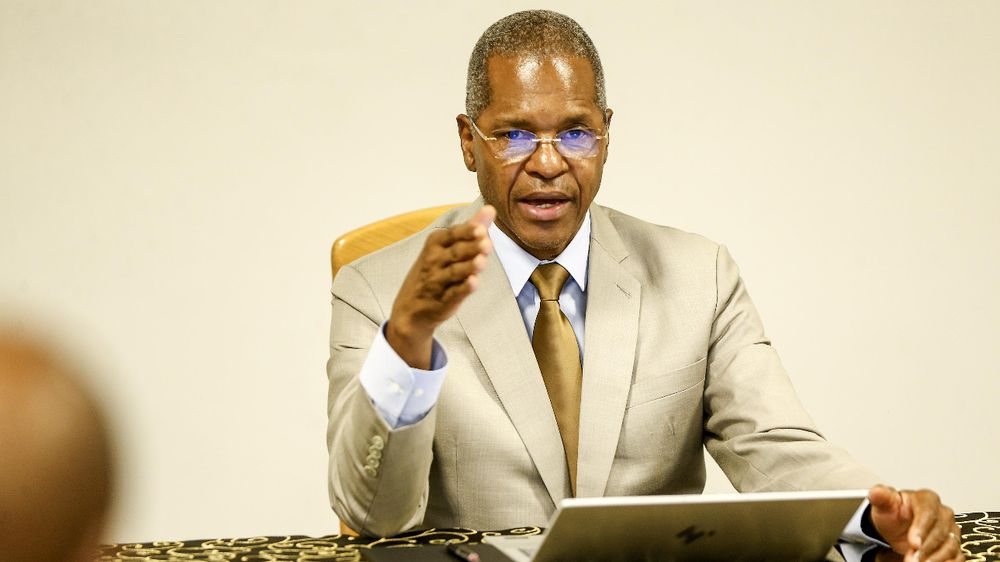
GBF advocate Kovini Moodley says Ekurhuleni murders has heightened fears among women in Gauteng - IOL
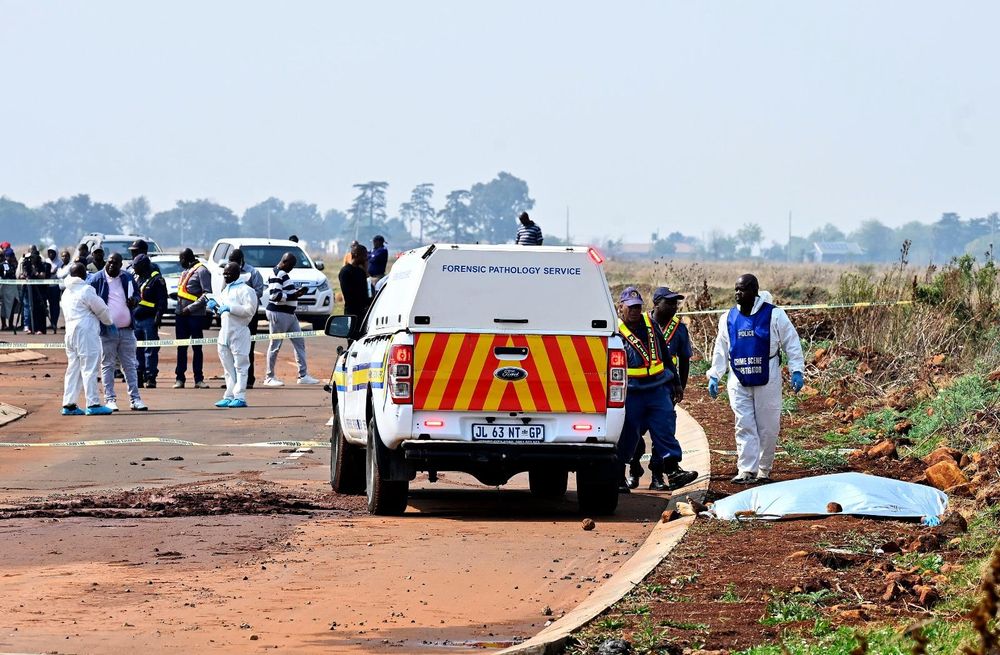
The body of the ninth women was discovered by a jogger in Dawnpark, Ekurhuleni, on Thursday, September 17, following a gruesome discovery of 8 other women who were dumped in different parts of Ekurhuleni.
THE discovery of the bodies of nine women in Ekurhuleni, on the outskirts of Johannesburg, has heightened fears among women across Gauteng, with gender-based violence (GBV) advocates warning that the killings have reinforced concerns about personal safety.
The women identified were: Busisiwe Mahlangu, Itumeleng Kekana, Elizabeth “Tsontso” Moselakgomo, Dineo Evelyn Motapane, Nomfesane Mjobo, Jabulile Ntimba and Gracious Nkomo.
Over nine weeks, their bodies were found in fields, beside roads, near the R21, in a river, and behind a hotel.
The latest discovery was the body of a partially clothed woman in an open area on Lama Street on Thursday.
Police said she suffered a fatal throat injury.
It has not yet been confirmed if the cases were connected.
Each name, say GBV advocates, represents not just a statistic but a life lost - filled with families, dreams, and future aspirations now extinguished.
Kovini Moodley, a Gauteng-based governance, risk and compliance expert and GBVF advocate, said: "As a woman, but as a South African who has spent years speaking about GBV, workplace dignity, ethical leadership and risk, and advocating for policies against GBVF, these killings are distressing.”
Moodley said the killings heightened her safety concerns, as she was increasingly thinking about ordinary things differently: going for a run, walking alone, travelling, arriving home, being followed, sharing her location, parking her car, or simply being outside.
"Women should not have to conduct a continuous risk assessment simply to participate in everyday life. That is perhaps one of the most disturbing consequences of GBVF: it changes how women experience freedom.”
From her perspective as a risk and governance professional, Moodley said GBVF should be addressed as a systemic societal risk rather than as a series of isolated criminal incidents.
She said prevention could not begin after a woman had disappeared or been killed.
Moodley pointed to South Africa’s National Strategic Plan on GBVF, which included areas such as prevention, accountability and coordination, justice and safety, response and care, and economic empowerment.
"The challenge now is implementation, accountability and measurable outcomes. The establishment and operationalisation of the National Council on Gender-Based Violence and Femicide is an important institutional development. The Council is specifically mandated to provide strategic leadership, coordination and monitoring of the national response to GBVF. But structures alone will not save women. We need execution.
"We need properly resourced law enforcement and specialised investigative capacity. We need effective prosecution. We need survivor-centred support services. We need safer communities and public spaces. We need better coordination between SAPS, prosecutors, healthcare, social services, schools, workplaces, communities and civil society.”
Moodley added that prevention needed to begin at an early age, with boys and men taught about consent, respect, accountability, emotional regulation, healthy relationships and the consequences of violence.
Dr Zubeda Dangor, executive of the National Shelter Movement of South Africa, said women were afraid to go to work, afraid of taking transport, whether it was e-hailing services or walking to the bus stop.
She called on municipalities to improve public safety by ensuring adequate street lighting and maintaining overgrown grass and other areas that could provide hiding places.
She said police advice to women to remain indoors and take precautions were insufficient if men were not also being engaged in efforts to prevent violence.
"Men need to talk out in their circles and institutions so that women are safe all over. Because this is outrageous. Women need to feel safe just going jogging.”
Dangor described GBV and femicide as a societal issue requiring collaboration across communities and institutions.
"We have a wounded nation. GBV has been a pandemic. I hope this tragedy of losing women is going to cause us to wake up as a society because I think we don't have a strong enough political will to make sure the resources are available to address GBV and femicide in this country.”
“Every member of society has a role to play," she said.
Dr Shaheda Omar, a social justice activist and child protection practitioner, said the killings were particularly distressing because of their impact on children and families.
"What happens to the children when a woman is murdered?.”
Omar said every woman killed was someone's mother, daughter, sister, partner or caregiver.
"Her death does not end with the crime scene. It reverberates through an entire family and community. Children can suddenly lose their primary caregiver, their sense of security and their understanding of the world as a safe place.
"The killings in Ekurhuleni creates an unbearable psychological burden. We increasingly calculate where we walk, when we travel, whether we should run alone, whether we should use public transport, and whether it is safe to be out after dark. Women should not have to organise their entire lives around the possibility of being attacked or killed.”
Omar said the reaction among women included fear, anger and exhaustion, and wondering whether they or someone close to them could be next.
"There is also a profound loss of trust. When women hear about another body being discovered, the immediate questions are: Where was she found? How did she disappear? Was she identified? Could this happen to my daughter or me?"
She said fears were particularly acute among women working early or late shifts, those walking to transport points, women living in areas with inadequate lighting or policing, and parents whose children travel independently.
Omar added that what concerns her as a child protection practitioner is that children were also absorbing the fear.
"They hear conversations at home, see stories on social media and television, and may begin to believe that violence is inevitable. Children who have already experienced violence can be particularly vulnerable to having their trauma reactivated."
Omar said government, law enforcement, communities, schools, civil society, faith-based organisations, healthcare professionals and families all had a role in addressing GBV.
"The question cannot only be, ‘How do we keep women safe?’ It must also be, ‘How do we create a society in which men do not believe they have the right to harm women, and children do not grow up learning violence?’ That is where sustainable change has to begin.”
Priya Ranchod, Missing in Southern Africa head of communication, said the killings had created a real sense of fear among women, who should be able to go about their daily lives without constantly questioning whether they would make it home safely.
"We need action, accountability and urgency. Reports of GBV must be taken seriously, and investigations need to be thorough and followed through. Families and victims also need proper support throughout the process.
“Most importantly, we want the perpetrators responsible for these killings to be identified, arrested, and brought before the courts. We want justice for the victims and answers for their families," said Ranchod.