German-Nigerian cultural diplomacy and the struggle for global equity - The Guardian Nigeria News
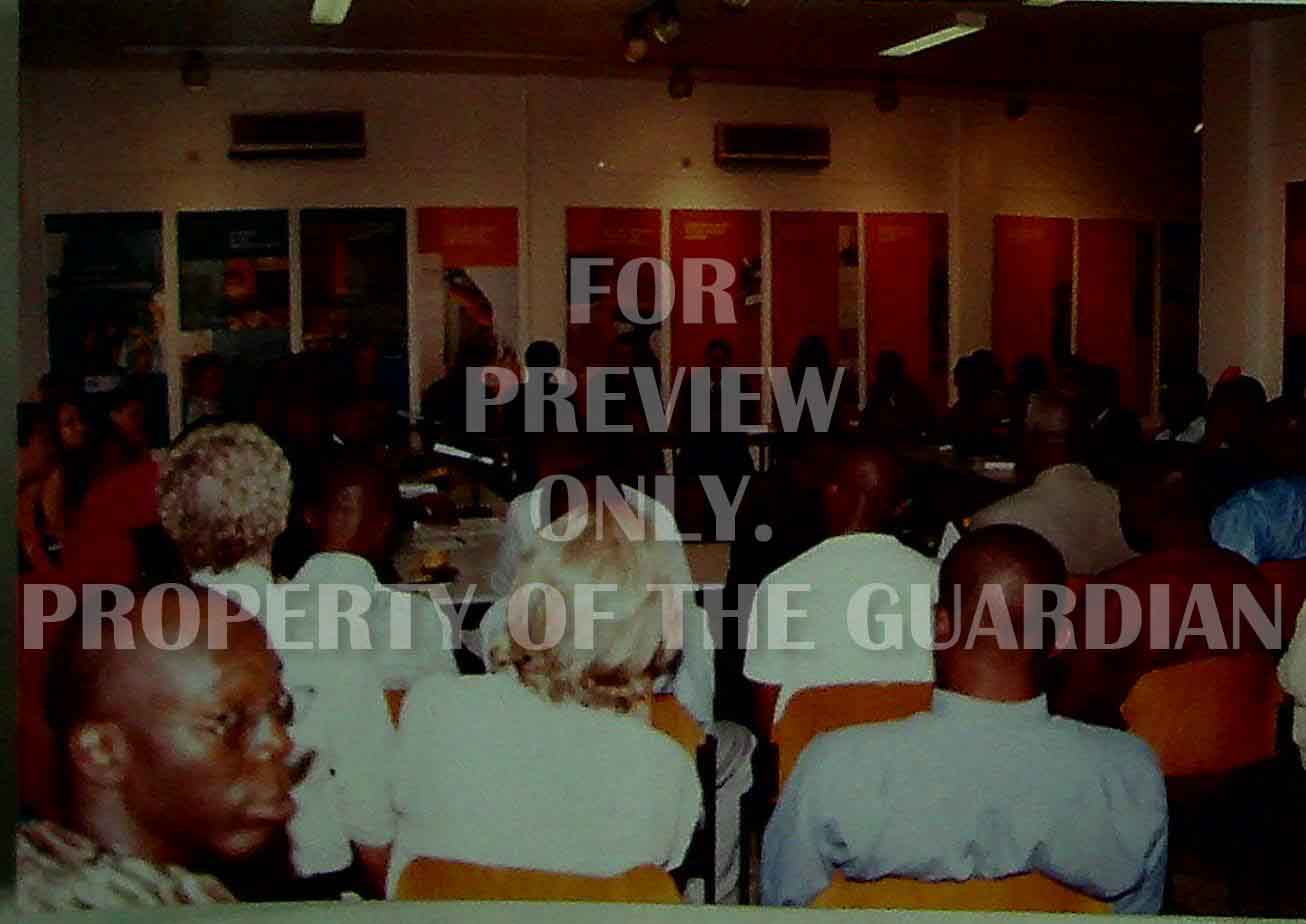
History feels like a fast-moving canvas. Yet, certain moments remain permanently as foundational pillars of intellectual and diplomatic engagement. A look back at the archival records of September 2005 in Lagos showcases an intellectual ecosystem where global policy, local heritage, and cross-continental partnerships converged.
Through a series of landmark events co-hosted by the German Embassy and the Goethe–Institut Lagos, the city solidified its reputation not merely as Nigeria’s commercial heartbeat, but as a crucial incubator for global discourse. Viewed through the lens of twenty-one years of subsequent geopolitical shifts, these images remind us of cultural diplomacy, African political thought, and the enduring power of intellectual exchange.
Unlike traditional statecraft, which often confines itself to the closed doors of ministries and economic summits, this event brought diplomacy directly into the public sphere. Leading this charge were key figures such as Dr Wolfgang Mang, the then Deputy Head of Mission at the German Embassy, and Petra Schneider, the Director of the Goethe-Institut Lagos at the time. Their collaborative efforts highlighted a long-standing truth: that genuine international alliances are built on shared intellectual curiosity and mutual respect.
For decades, the Goethe-Institut Lagos has functioned as a vital bridge spanning the miles between Berlin and Abuja, transforming its physical space into a sanctuary for creative expression and rigorous debate. The September 2005 itinerary was not an isolated gesture of goodwill; it was part of a sustained continuum of cultural diplomacy.
By funding exhibitions, hosting symposia, and facilitating interactions between European diplomats and Nigerian visionaries, these institutions moved away from transactional politics. They championed an ethos where soft power became a tool for deep, systemic understanding. It was an era where the exchange of ideas was valued just as highly as the exchange of commodities, establishing a blueprint for how two vastly different nations could find common ground through the universal language of intellectual enquiry.
2005 Policy debates were perhaps the most intellectually charged moment of that month, during a high-level roundtable discussion titled “Africa and the United Nations.” Held at the Goethe-Institut, the forum gathered some of the most formidable academic and policy heavyweights of the era. The panel featured the late, legendary philosopher Professor Sophie Oluwole; renowned historian and diplomat Professor Jide Osuntokun; and a distinguished cohort of researchers from the Nigerian Institute of International Affairs (NIIA).
She challenged Western frameworks of binary opposition by proposing a Yoruba-based philosophy of binary complementarity to advocate for global equity and African representation.
The central theme of their debate was both urgent and historic: the structural reform of the United Nations and Africa’s precarious standing within global governance frameworks.
In 2005, the world was marking the 60th anniversary of the UN, and African nations were aggressively pushing the “Ezulwini Consensus” a unified position demanding at least two permanent, veto-wielding seats on the UN Security Council for African countries.
The arguments made by Osuntokun, Oluwole, and their contemporaries reveal an astonishing level of foresight. They forewarned of an increasingly fragmented global order if the UN failed to democratise its core structures.
Professor Oluwole, through her philosophical lens, questioned the moral authority of a global body that sidelined an entire continent of over 800 million people (at the time).
Meanwhile, the NIIA researchers provided pragmatic, data-driven critiques of how international security policies consistently failed to address the root causes of African conflicts.
Contrasting those two-decade-old debates with today’s geopolitical realities reveals a sobering truth: while the global landscape has shifted, the fundamental grievances remain unchanged. The intellectual foundational work laid down in Lagos in 2005 continues to echo in today’s speeches at the UN General Assembly, proving that the struggle for African representation on the global stage is a marathon, not a sprint.
Beyond the weighty political rhetoric, the physical premises of the Goethe-Institut in 2005 served as a historic melting pot where civil society leaders, radical artists, seasoned diplomats, and eager students mingled without hierarchy. It was a space where local heritage met international policy head-on.
As we look back at these images today, they serve as a reminder that the present is shaped by the dialogues of the past. The German-Nigerian exchanges of September 2005 did not fade into irrelevance. Instead, they laid the groundwork for the robust cultural, artistic, and political collaborations we see today. They proved that when nations listen to one another with an open mind, the resulting discourse can echo across generations, offering timeless wisdom for a changing world.